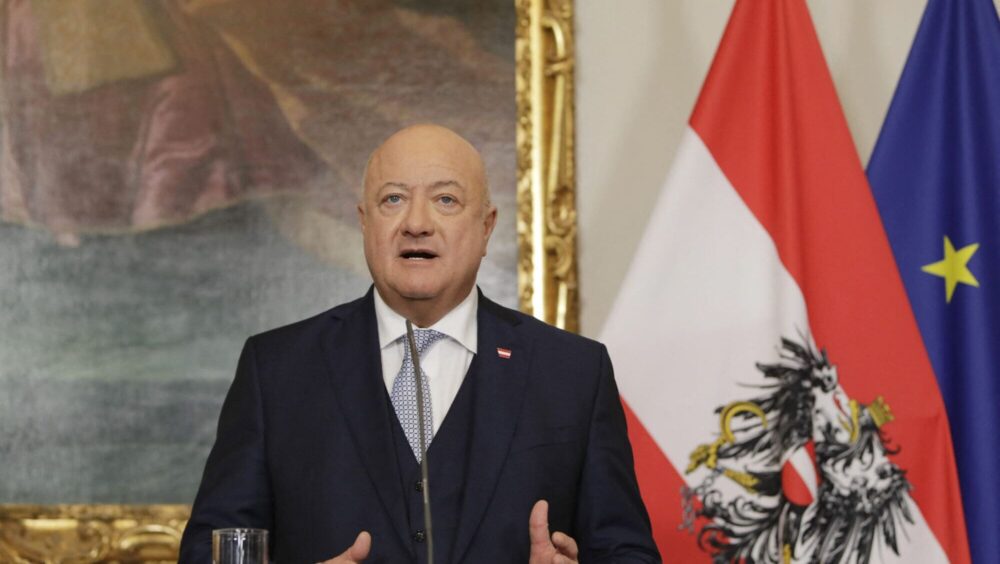
Newly appointed Austrian chancellor Christian Stocker
Alex HALADA / AFP
Austria’s new, centrist three-party coalition was sworn in on Monday, March 3rd—a government that, for the first time since 1949, will consist of more than two parties: the centre-right People’s Party (ÖVP), the Social Democrats (SPÖ), and the liberal NEOS.
Sixty-four-year-old lawyer Christian Stocker, who became ÖVP leader earlier this year, will lead the government as chancellor.
Welcoming the three party leaders and the new ministers, Austrian President Alexander Van der Bellen said it is important to have a stable government in “challenging” times due to geopolitical tensions. He referred to the tense exchange of words between U.S. President Donald Trump and his Ukrainian counterpart, Volodymyr Zelensky, on Friday.
Though the government will be stable and command a majority with 110 MPs in the 183-seat parliament, it is not the government Austrians desire. The election in September was won by the right-wing Freedom Party (ÖVP) on an anti-immigration platform, but the party was first sidelined and then unable to form a coalition with the ÖVP due to the latter’s demands.
Austrians cannot hope for change because the new coalition will be a continuation of a series of governments led by either the ÖVP or the SPÖ that had failed to address the biggest crises of the past decade—such as illegal migration, soaring energy prices, and economic hardship.
The coalition programme announced last week has already made it clear that there will be no U-turn on pro-migration policies, and Austrians will face new tax burdens as well as online censorship through the surveillance of messaging services. The new government will also have to deal with rising unemployment, a recession, and a gaping hole in the budget.
According to Christian Stocker:
I stand in front of you today with great respect for the tasks that await, and I am very well aware of the great responsibility that comes with these tasks.
Es ist mir eine große Ehre und Freude, als Bundeskanzler dieser Republik Verantwortung zu übernehmen. Die Menschen in Österreich können sich darauf verlassen, dass dieses Land bei jeder meiner Entscheidungen an erster Stelle steht. Ich werde diese Aufgabe im vollen Bewusstsein… pic.twitter.com/56jVH1eXrU
— Christian Stocker (@_CStocker) March 3, 2025
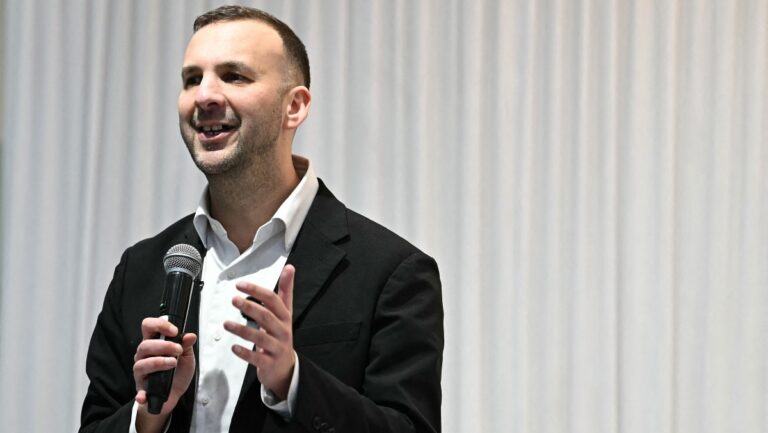
SPÖ leader Andreas Babler has become the new vice chancellor, and NEOS leader Beate Meinl-Reisinger took over the ministry of foreign affairs.
FPÖ leader Herbert Kickl, whose party has risen in the polls by six percentage points to 34% since the election, said the only thing that is keeping the new coalition together is the “lust for power.” He stressed that the coalition will deliver policies against its own population: “EU servitude, illegal immigration, warmongering, censorship of opinion.”
Viele Überschriften, aber keine konkreten Maßnahmen – das Einzige, was diese Verlierer-Ampel verbindet, ist die Gier nach Macht.https://t.co/7rrpAgOsVc
— FPÖ (@FPOE_TV) March 3, 2025