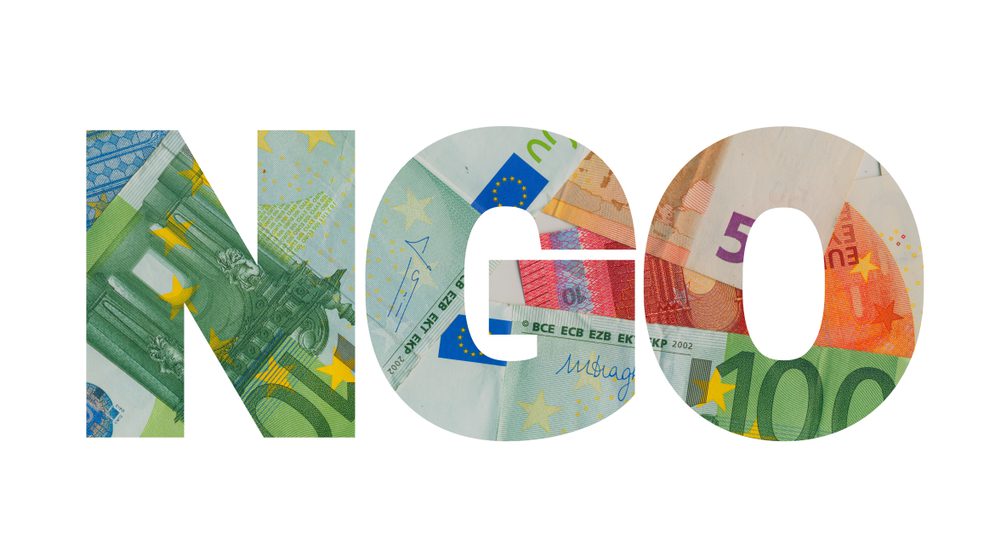
The European Union appears to be preparing its own version of a ‘foreign agents law,’ which has NGOs and consultancies worried that they will soon have to report foreign revenues under the new, binding regulations.
NGOs began to suspect that Brussels might be preparing a similar law to the U.S. Foreign Agents Registration Act when a survey, sent out on behalf of the European Commission (EC) and obtained by Politico, asked them whether they received any funding from outside the bloc. So far, the document has only an informative purpose, but many are concerned about its future implications.
The particular question about the funding “took a lot of people back [sic],” Nick Aiossa, a senior representative of Transparency International, and one of the participants of the oral questionnaire, said. “The guiding questions suggested they were evaluating whether Transparency International was a threat to democracy.”
The measure, if implemented, will be part of the Commission’s ‘Defense of Democracy Package’, announced by EC President Ursula von der Leyen last year, aimed at regulating the transparency of political advertising by keeping track of the funding of European political parties and foundations. As The European Conservative wrote back when the reforms were first announced, the legislation has the potential “to be wielded in such a way as to precisely circumvent democratic outcomes by pretending these are the result of shadowy interference.”
The legislative package, which is being prepared by the office of the Commission Vice President for Justice Věra Jourová, was initially hailed by civil society organisations as an important step to curb right-wing authoritarianism financed from abroad. A joint letter, signed by a dozen European NGOs (including Transparency International), was sent to the Commission welcoming the reform only last month, saying that it is “crucial in the context of escalating geopolitical turmoil, authoritarian tendencies, and recent attacks on the foundations of democracy.”
But the tables might be turning now, it seems. According to the three unnamed sources close to Politico, these leftist NGOs now feel increasingly uncomfortable disclosing their own funding to the EU, “worried that they are effectively putting themselves on a future list by answering a survey.”
The timing also raised a couple of eyebrows, as the survey asking about foreign funding went around in Brussels just days after the Commission formally condemned a similar law recently adopted—then, in the wake of protests, quickly withdrawn—by Georgia, that would have declared all media and NGOs with over 20% of foreign funding as “agents of foreign influence.”
So far, Commission VP Jourová did not comment on the survey, or the concerns of the NGOs involved. The EU reform package is expected to be finalised and presented by May 2023.