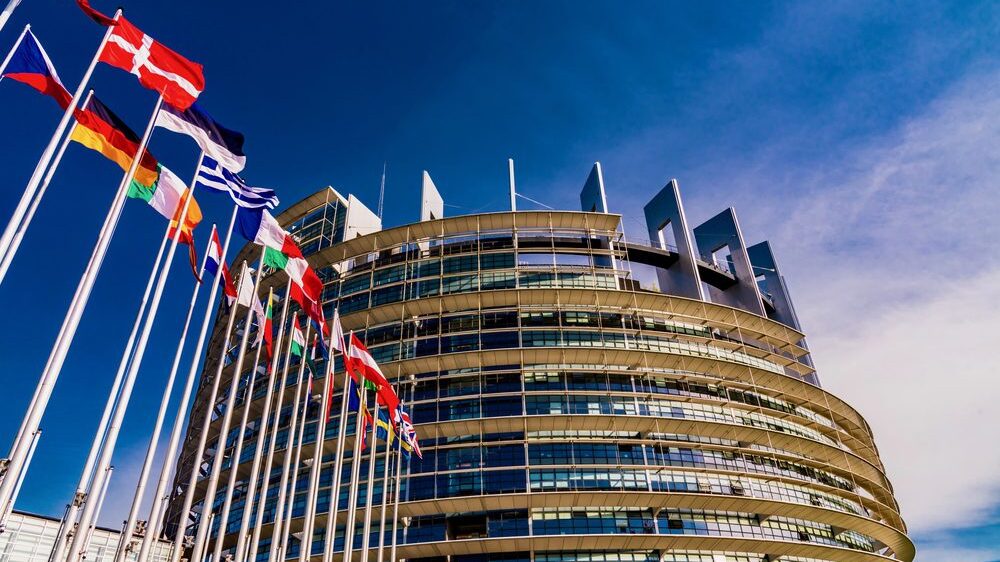
European Parliament building, Strasbourg.
Photo: DiegoMariottini / Shutterstock.com
In response to the Qatargate corruption scandal that has tarnished the institution’s reputation and legitimacy, the European Parliament on Monday, April 17th, announced the tightening of its lobbying rules, stating that former MEPs will not be allowed to lobby legislators for six months after leaving the EU lawmaking body.
The European Parliament’s announcement of the rule change, which is set to go into effect May 1st, took place after senior MEPs approved a plan by Parliament President Roberta Metsola (EPP) as part of the EU legislature’s attempt to crack down on corruption, the German daily newspaper Die Welt reports.
The EU lawmaking body also announced that former MEPs who wish to work as lobbyists or representatives must “be registered in the transparency register,” and will not be “entitled to access rights and opportunities that they had as former MEPS” such as the automatic right to a parliamentary access pass that is given to ex-lawmakers.
Additional measures to rein in former MEPs’ ability to exert undue influence on current lawmakers will be looked at in the weeks ahead, the statement said.
German MEP Daniel Freund (Greens/EFA) says the new regulations will not bar ex-MEPs from taking lobbying jobs, but that they would “make access to the parliament more difficult during a transitional period when the risk of conflicts of interest is greatest.”
The Qatargate scandal, in which the Gulf Emirates of Qatar and Morocco allegedly sought to influence the European Union by bribing its representatives from the EU Parliament, erupted last December when Belgian authorities raided several homes and offices in Brussels, recovering €1.5 million in cash and arresting Greek MEP Eva Kaili (S&D) in the process.
Both Qatar and Morocco reject the allegations.
Shortly after news of the scandal broke, Charles Michel, the president of the European Council, said that it had shaken the European Parliament, and had been “damaging” to the bloc’s credibility. He called for the bloc to take firm, punitive action against corruption to prevent similar scandals from taking place in the future.
The EU has already enacted several reforms for increased protection against foreign influence.