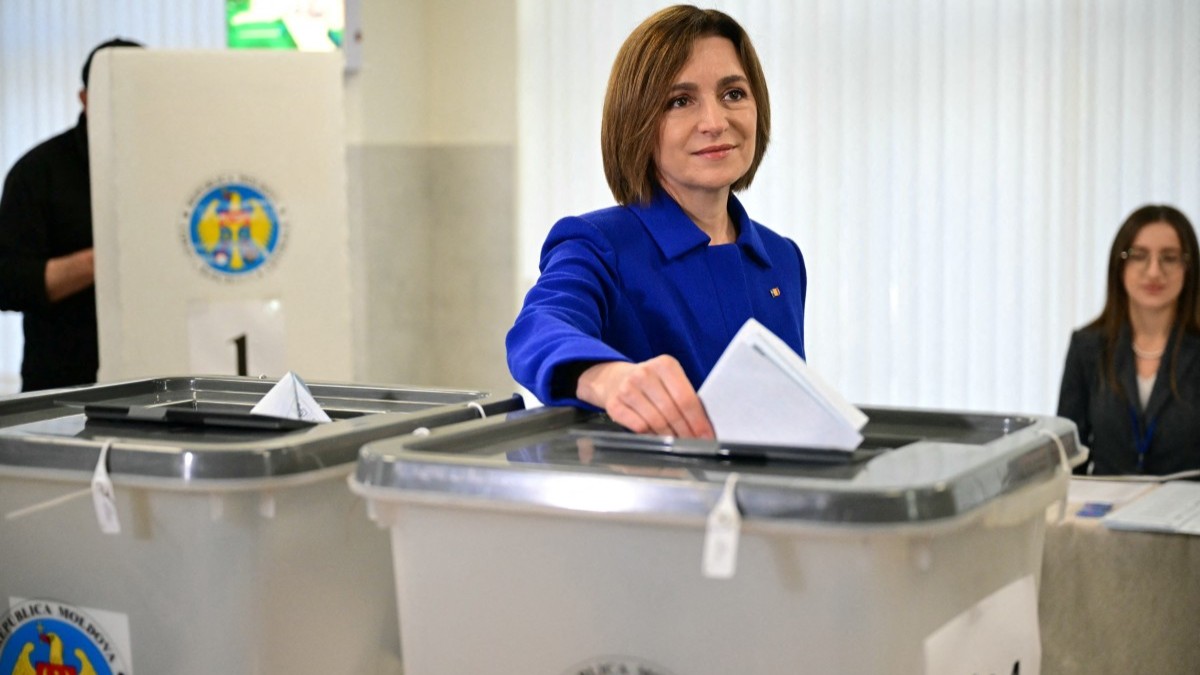
Moldova’s pro-Brussels ruling party secured more than half of the votes in Sunday’s parliamentary election, despite the process being clouded by allegations of Russian involvement.
With more than 99.5% of ballots tallied, President Maia Sandu’s Party of Action and Solidarity (PAS) secured 50.03% of the vote, enough to elect members in the 101-member parliament.
As we previously reported, Sandu accused Moscow of “pouring hundreds of millions of euros” into Moldova to buy votes, spread disinformation, and foment unrest.
That stood against 24.26% for the Patriotic Bloc, a party frequently branded ‘pro-Russian,’ according to official results.
As the party pulled ahead in the count on Sunday, analyst Andrei Curararu of the Chișinău-based think tank WatchDog.md said: “Statistically speaking PAS has guaranteed a fragile majority.” He warned that “danger” had not passed “as a functional government is difficult to form.”
The election took place amid EU claims of vote buying, unrest, and what Brussels called “an unprecedented campaign of disinformation” by Russia—accusations that Moscow has firmly rejected.
Opposition leaders accused Sandu’s government of using political intimidation. Former president Igor Dodon—now heading the Patriotic Bloc—declared: “The criminal regime is trying to intimidate us, frighten the people, and silence us.”
The Patriotic Bloc promotes a “balanced and open” foreign policy, viewing Brussels as only one partner among many. Its leaders warn against rushing into full EU membership if it comes at the expense of Moldova’s economy or sovereignty. They also argue that the progressive social agenda tied to ‘EU values’ conflicts with Moldova’s Orthodox traditions. While frequently branded ‘pro-Russian,’ the bloc insists it seeks to enshrine permanent neutrality in law—keeping the country clear of entanglement in wars such as the ongoing conflict in Ukraine.