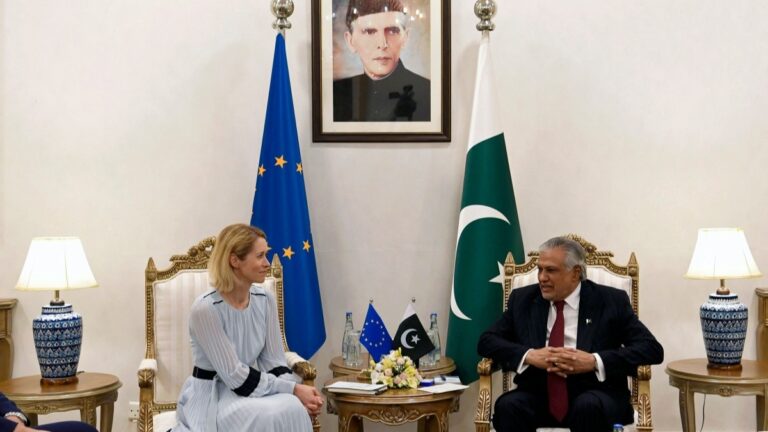
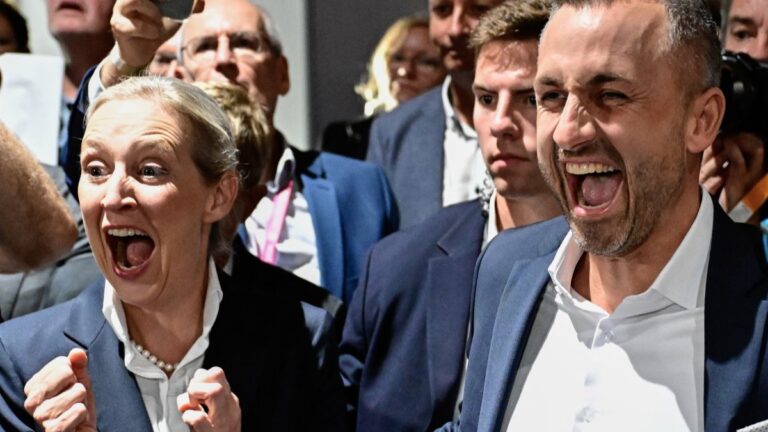
European Commission President Ursula von der Leyen returned to the European Parliament on Monday to defend her mandate in a debate that exposed even more the growing divisions within the EU’s political establishment. Three days ahead of Thursday’s double confidence vote, the mood in Strasbourg was one of fatigue, frustration, and mistrust.
Two separate groups—Patriots for Europe on the right and The Left on the opposite flank—introduced censure motions calling for von der Leyen’s resignation. Although neither is expected to pass, both reflect the mounting disillusionment with her leadership and the paralysis gripping the European project.
Von der Leyen, for her part, stuck to the same formula she used in her State of the Union address: unity, resilience, and the eternal Russian threat. “Europe is being tested, from the East and from within,” she told MEPs. “Our adversaries are seeking to exploit our divisions. The answer must be unity.” Here she was throwing poisoned darts at her partners, who were very concerned about the rise of the ‘far right’ but showed no self-criticism for the current situation of paralysis.
She spoke of “shared responsibility” and “collective strength,” but offered no sign of changing course. Her speech, heavy with institutional rhetoric and light on substance, avoided any mention of the policy failures that have eroded Europe’s competitiveness, strained its farmers, and deepened the cost-of-living crisis.
On the other hand, talking about unity and understanding while the Commission maneuvers to bypass the veto imposed by countries such as Hungary against the EU treaties themselves is, at the very least, a sign of the hypocrisy that reigns in the corridors of the European Parliament.
For the Patriots, the problem is not Moscow but Brussels itself. Their leader, French MEP Jordan Bardella, accused von der Leyen of betraying Europe’s economic and social foundations. “You have signed the commercial surrender of Europe,” he said. “You’ve abandoned our farmers, strangled our industries, and turned the Union into the world champion of bureaucracy. Voting you out will not destroy Europe—it will save it.”
The Left’s Manon Aubry struck a radically different tone but arrived at the same conclusion. She denounced von der Leyen for “cowardly complicity in the genocide in Gaza” and for having “vassalized Europe to Donald Trump and to the multinationals.” Her speech, however, soon drifted into ideological territory—defending abortion rights, the LGBT cause, and climate activism—in sharp contrast to the Patriots’ focus on sovereignty and practical governance.
Von der Leyen listened impassively, offering the same appeal to unity that has become her trademark. “Our enemies are watching us closely,” she warned. “The strongest message we can send is that of a Europe that stands together and delivers together.” But even among her allies, few seemed inspired.
The most awkward moment of the debate came when European People’s Party leader Manfred Weber rose to defend her. With an unconvincing smile, he dismissed the motions as “propaganda” and mocked the opposition. “Maybe you should form a new group—call it We Are Against,” he said, prompting murmurs of disbelief across the chamber. Weber’s tone of bureaucratic arrogance—thanking von der Leyen “for her service” while ridiculing critics from both sides—underscored just how detached the EU’s ruling class has become.
Socialist leader Iratxe García Pérez, while rejecting the motions, also distanced herself from the Commission president. “We cannot afford a paralyzed Europe while Putin escalates his war and Trump wages a trade war against our workers,” she said. Her words hinted at unease within the center-left, increasingly torn between loyalty to Brussels and growing domestic backlash.
The Greens offered similarly hesitant support. Their co-president, Terry Reintke, accused von der Leyen of losing direction and turning the Commission’s “simplification agenda” into “headless deregulation,” but argued that toppling her would “solve nothing.”
By the end of the debate, the atmosphere was one of resignation. No one seemed willing to defend von der Leyen on political grounds, yet few dared imagine an alternative. Thursday’s vote is unlikely to end her tenure. But the political message could hardly be clearer. The EU’s foundations are cracking, not under Russian pressure but under the weight of its own contradictions—an elite obsessed with its own survival, incapable of self-criticism, and deaf to the growing frustration of the citizens it claims to represent.