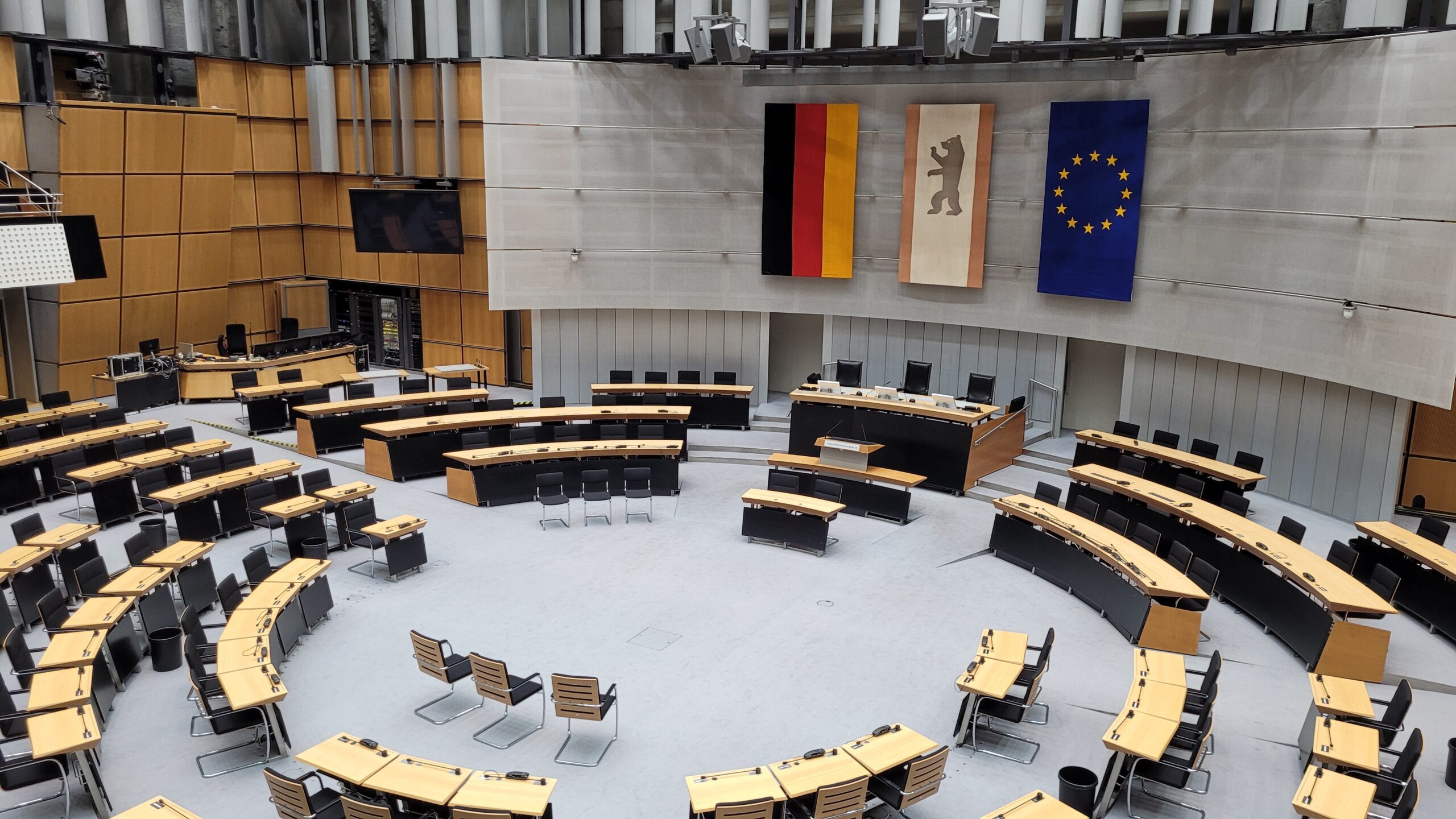
Plenary chamber of the Berlin House of Representatives
UMO1, CC BY-SA 4.0, via Wikimedia Commons
Berlin is preparing a record €90 billion budget for 2026 and 2027, funded largely by new borrowing as debt per resident nears €19,000.
The CDU–SPD coalition plans to spend €44.4 billion in 2026 and €45.3 billion in 2027. Together, this would make it the largest budget Berlin has ever approved.
To pay for it, the city will take on billions in new loans. Net new borrowing in the core budget is expected to reach €3.8 billion in 2026 and €3.7 billion in 2027. Total deficits are estimated at €5.3 billion and €5.0 billion over the two years, with the gap filled by loans and withdrawals from reserves.
The plan also allows for billions more in credit to support state-owned companies. This includes funding for housing projects and capital support for Berlin’s public transport operator BVG, hospitals such as Vivantes and Charité, and the city’s energy company.
With a population of around 3.9 million, spending would rise to about €11,400 per person in 2026 and €11,600 in 2027. Berlin already owed about €64 billion at the end of 2024. Under the new plans, debt per resident is expected to exceed €18,000 in 2026 and approach €19,000 in 2027.
The record budget comes as Germany’s economy is under pressure. Bankruptcies and unemployment are rising, and industrial production has fallen to its lowest level since the pandemic.