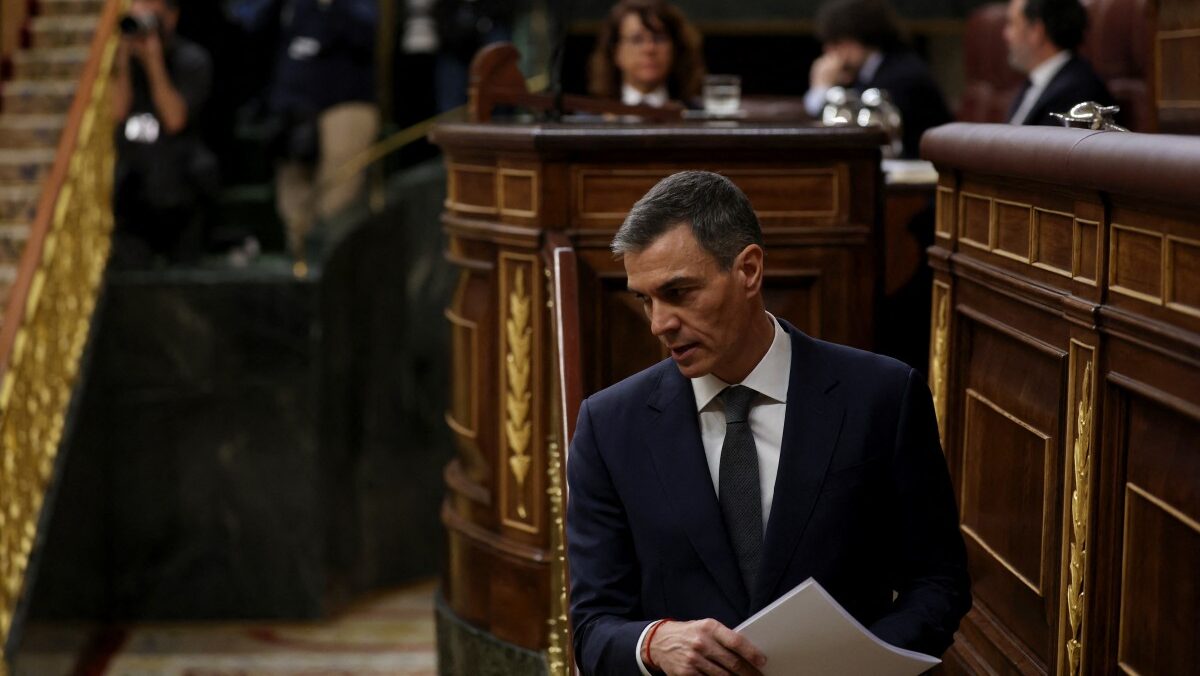
Spanish prime minister Pedro Sánchez
Pierre-Philippe MARCOU / AFP
The Spanish Government spent nearly €233,000 of public money on producing and printing 55,000 copies of a primary school book series titled Discovering Islam, according to documents released following a transparency request.
The material was commissioned under a 2009 agreement between the Pluralism and Coexistence Foundation and publisher Ediciones Akal. The foundation—created in 2005 under José Luis Rodríguez Zapatero’s Socialist government and attached to the Presidency—covered the full cost of the project, which totalled €232,588 and was financed until 2012.
The print run included 5,000 copies for first-year pupils and 10,000 for each year from second to sixth grade. Distribution was handled by the publisher, meaning the foundation does not hold records of which schools ultimately received the books.
The foundation lists among its objectives the “recognition and accommodation of religious diversity.”
The publication took place as Spain’s Muslim population grew steadily. According to the Andalusí Observatory, more than 2.5 million Muslims now live in the country, with Islamic culture becoming increasingly visible in public life in parallel with large-scale immigration in recent decades.
Islamic cultural education in Spain extends beyond printed materials. The Programme for Teaching Arabic Language and Moroccan Culture operates under bilateral agreements between Spain and Morocco and is currently active in twelve autonomous regions, including Madrid, Catalonia and Andalusia.
The programme is mainly aimed at pupils of Moroccan origin and is taught by teachers appointed by Morocco’s Ministry of Education. Classes can be offered as voluntary extracurricular sessions or integrated into the school timetable, although they are most commonly run outside regular school hours.