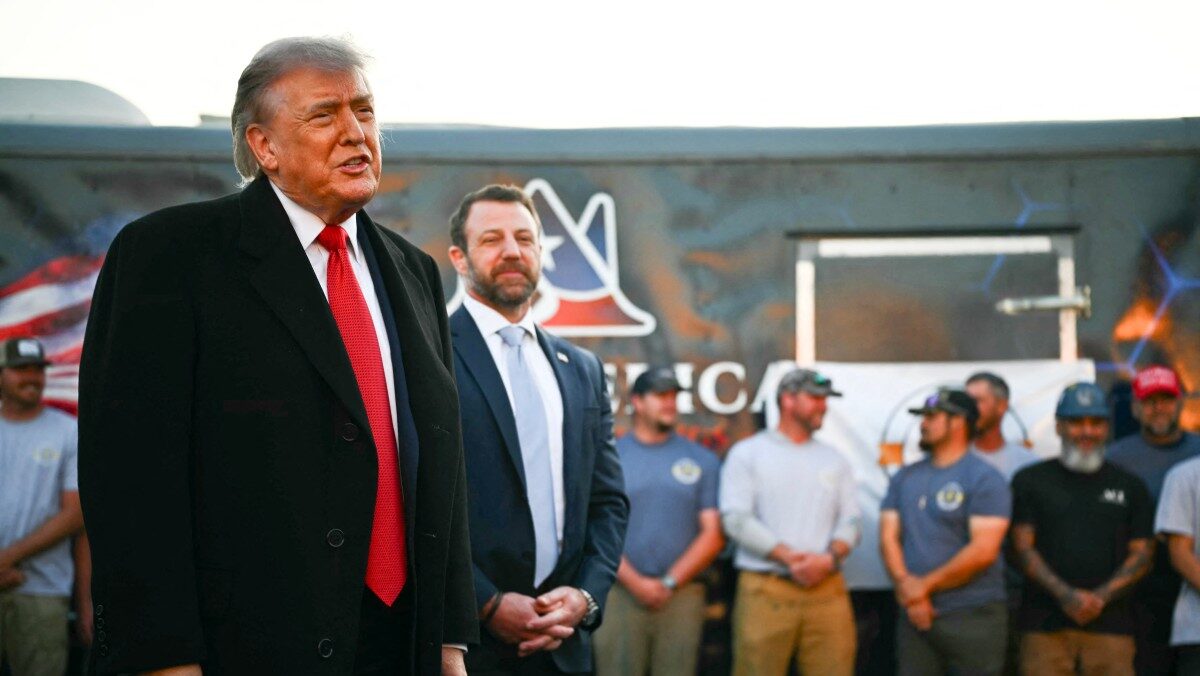
Donald Trump
Kent NISHIMURA / AFP
President Donald Trump has given Brussels a blunt ultimatum: approve the stalled trade deal with Washington by July 4—or face sharply higher tariffs.
The warning comes as Trump’s wider tariff strategy is under growing legal pressure at home, adding urgency to his push for bilateral deals abroad.
The agreement with the European Union, struck last July, would set tariffs on most European goods at 15%. But despite approval from the European Parliament, it remains stuck in the bloc’s slow-moving ratification process, awaiting sign-off from member states.
Trump said he spoke directly with European Commission President Ursula von der Leyen, agreeing to extend the deadline to America’s 250th Independence Day—but warned patience is running out.
“I’ve been waiting patiently for the EU to fulfill their side of the Historic Trade Deal,” he wrote, accusing Brussels of failing to deliver.
Von der Leyen insists “good progress” has been made. But the deal is still not in force—and the clock is ticking.
At the same time, Trump’s fallback tariff measures are being chipped away by U.S. courts. On Thursday, the United States Court of International Trade ruled against his temporary 10% global tariff, finding it was not justified under the 1974 Trade Act provision used to impose it.
The decision—for now limited to two companies and the state of Washington—could open the door to wider legal challenges. The court ordered refunds for affected importers and gave officials five days to comply.
That ruling follows an earlier blow from the U.S. Supreme Court, which struck down large parts of Trump’s previous tariff regime, triggering a wave of refund claims from businesses.
Washington had introduced the 10% duty as a temporary fix after that decision. It is due to expire in late July unless Congress extends it.
The administration is now scrambling for more durable tools, launching investigations into trading partners over forced labour and industrial overcapacity—moves that could pave the way for new tariffs.
Notably, key sector tariffs—on cars, steel, and aluminium—remain untouched by the legal challenges. Trump has already threatened to raise duties on EU vehicles to 25%, a step that would hit Europe’s industrial base hard.
For all the talk of “progress,” Brussels still has not delivered ratification. Cyprus, which holds the rotating presidency of the Council of the EU, says it wants to maintain “momentum” in talks later this month.
But with legal setbacks mounting in Washington and deadlines looming, pressure is now building on both sides of the Atlantic.