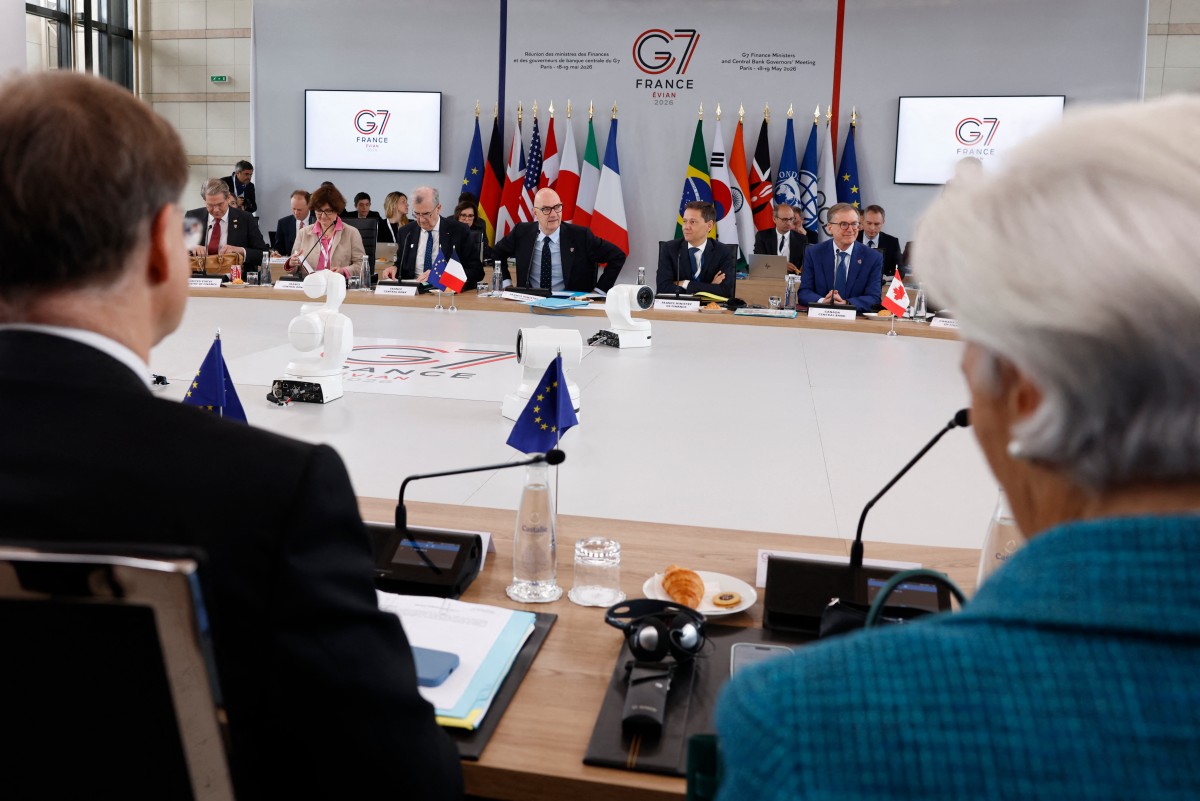
France’s Economy, Finances and Industry Minister Roland Lescure (C) chairs a meeting of G7 Finance Ministers and Central Bank Governors in preparation for the summit of heads of State and government to be held in June 2026 in Evian, in Paris on May 19, 2026.
Kenzo TRIBOUILLARD / AFP
The European Union criticised on Tuesday, May 19th the latest United States decision to extend a waiver on sanctions targeting Russian oil—a move announced during G7 finance ministers’ talks in Paris aimed at addressing global economic pressures.
According to Washington, the waiver is intended to help reduce energy prices, which have risen sharply since the launch of U.S-Israeli military action against Iran in February, disrupting shipping through the Strait of Hormuz and restricting Gulf oil tanker traffic.
However, EU economics commissioner Valdis Dombrovskis strongly criticised the decision, warning that it risks easing pressure on Moscow while the war in Ukraine continues. Speaking to journalists on arrival at the G7 meeting, he said:
From the EU point of view, we do not think that this is a time to ease pressure on Russia.
In fact, Russia is the one which is gaining from the war in Iran and the increase in fossil fuel prices. If anything, we would need to strengthen the pressure.
Dombrovskis also noted that the extension follows an earlier temporary measure. U.S. Treasury “Secretary [Scott] Bessent was reassuring us that this is a temporary measure, but we know that it’s already a second extension of the measure which initially was meant to last only 30 days,” he said.
Bessent was attending the G7 meeting in Paris, which is being hosted by France, the current holder of the group’s rotating presidency.
French finance minister Roland Lescure claimed discussions among G7 partners had been frank but constructive, adding that a joint statement was expected despite differing views:
We’ve had extremely frank discussions between people who do not necessarily agree on everything, but who are able to talk about everything.