An Effect of Benediction
Those of a certain age will remember with fondness the celebrations of Christmas past, not in a ghostly fashion, but with the interior warmth of the brandy-soaked Christmas pudding.

Those of a certain age will remember with fondness the celebrations of Christmas past, not in a ghostly fashion, but with the interior warmth of the brandy-soaked Christmas pudding.

I have spent my career debating Marxists of all shades. One small dose of Hegel and history is usually enough to sober them up. In our Gothic world of theoretical hallucinations, there is not even a chance of genuine debate. One must either consent to the hallucination or else shut up.

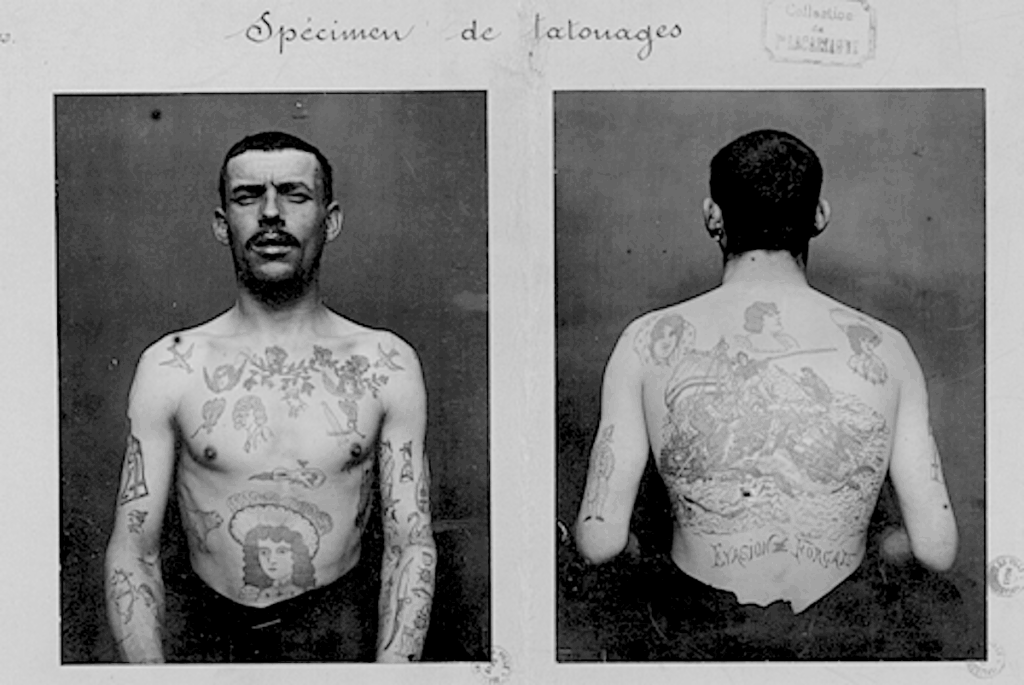
Alexandre Lacassagne, the French forensic pathologist who published a book on tattoos in 1881, would have been astonished at, and puzzled by, the explosion of elaborate and professional tattoos in the general population in the last three decades.

People often go to considerable trouble to make themselves ugly, or as ugly as possible. Nor is this simply a trait of rebellious youth that is trying to assert its independence and that will take the easiest route available to shock its elders. Now, perhaps for the first time, the ugliness of youthful rebellion has become inscribed deeply into society, virtually as the norm.

Jorge González-Gallarza explores the legacy of the intellectual godfather of Latin America’s new Right, Olavo de Carvalho. While his online popularity was dismissed by those who would refuse to engage with him, he reached millions more than were possible from within the ivory tower and he drew a blueprint of how new institutions can be built when the old can’t be reconquered.

A tactical choice has been made as to who pays the price for multiculturalism. One would hardly offer up one’s own daughter, but a vulnerable working class girl? Perhaps one might just look the other way.

Portugal’s post-revolutionary malaise is a warning to the West. The Carnation Revolution promised freedom but, through left-wing cultural hegemony and the destruction of national capacity, delivered dependence, parochialism, and poverty.

Afrikaner culture is a unique nexus between the West and Africa. If Afrikaners have no future in Africa, then our culture does not have any future at all. However, a similar existential threat awaits us should we stay in Africa but neglect or reject our Western roots. It is precisely the preservation of this combination of two heritages which has made Afrikaners who we are.

2025 marks the 75th year since the inception of the Schuman Plan. It was said that Schuman “didn’t really understand the treaty which bore his name.” Indeed, this is the intended strategy of architects of Euro-federalism: make the structural process so byzantine that few, especially the population at large, can understand what is happening. Technocracy, rather than democracy, is the project’s driving force.

Today’s iconoclasts seek little more than a photograph in the newspaper, if not a prison sentence—think of the media-ready antics of Just Stop Oil, throwing soup on Van Gogh or spraying Stonehenge with orange paint. Any attention they might lend to their cause is smothered in a self-serving narcissistic love of the image of themselves performing destruction.
Those of a certain age will remember with fondness the celebrations of Christmas past, not in a ghostly fashion, but with the interior warmth of the brandy-soaked Christmas pudding.
I have spent my career debating Marxists of all shades. One small dose of Hegel and history is usually enough to sober them up. In our Gothic world of theoretical hallucinations, there is not even a chance of genuine debate. One must either consent to the hallucination or else shut up.
Alexandre Lacassagne, the French forensic pathologist who published a book on tattoos in 1881, would have been astonished at, and puzzled by, the explosion of elaborate and professional tattoos in the general population in the last three decades.
People often go to considerable trouble to make themselves ugly, or as ugly as possible. Nor is this simply a trait of rebellious youth that is trying to assert its independence and that will take the easiest route available to shock its elders. Now, perhaps for the first time, the ugliness of youthful rebellion has become inscribed deeply into society, virtually as the norm.
Jorge González-Gallarza explores the legacy of the intellectual godfather of Latin America’s new Right, Olavo de Carvalho. While his online popularity was dismissed by those who would refuse to engage with him, he reached millions more than were possible from within the ivory tower and he drew a blueprint of how new institutions can be built when the old can’t be reconquered.
A tactical choice has been made as to who pays the price for multiculturalism. One would hardly offer up one’s own daughter, but a vulnerable working class girl? Perhaps one might just look the other way.
Portugal’s post-revolutionary malaise is a warning to the West. The Carnation Revolution promised freedom but, through left-wing cultural hegemony and the destruction of national capacity, delivered dependence, parochialism, and poverty.
Afrikaner culture is a unique nexus between the West and Africa. If Afrikaners have no future in Africa, then our culture does not have any future at all. However, a similar existential threat awaits us should we stay in Africa but neglect or reject our Western roots. It is precisely the preservation of this combination of two heritages which has made Afrikaners who we are.
2025 marks the 75th year since the inception of the Schuman Plan. It was said that Schuman “didn’t really understand the treaty which bore his name.” Indeed, this is the intended strategy of architects of Euro-federalism: make the structural process so byzantine that few, especially the population at large, can understand what is happening. Technocracy, rather than democracy, is the project’s driving force.
Today’s iconoclasts seek little more than a photograph in the newspaper, if not a prison sentence—think of the media-ready antics of Just Stop Oil, throwing soup on Van Gogh or spraying Stonehenge with orange paint. Any attention they might lend to their cause is smothered in a self-serving narcissistic love of the image of themselves performing destruction.
Molnar recognizes that the fundamental questions of political philosophy have remained the same since Plato: Whence does power come? Who holds it? And on what basis?
We are a strange people, we descendants of the 17th and 18th century French pioneers in North America.