Smoke plumes billow from the site of airstrikes near Azadi Tower in western Tehran on March 10, 2026.
ATTA KENARE / AFP
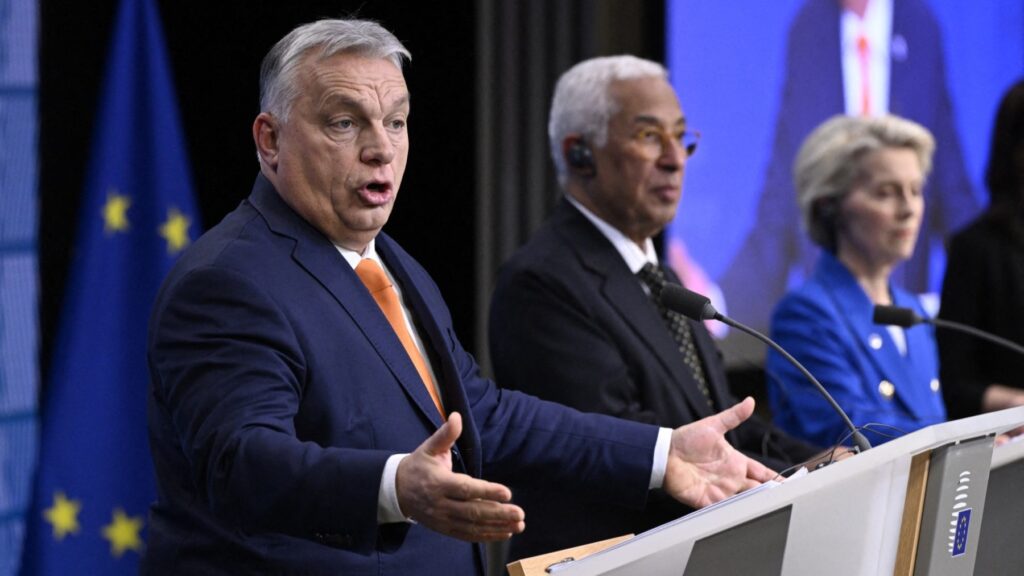
“If the European Union starts to consider democratically elected governments illegitimate simply because they do not share the dominant political line in Brussels, then the problem is no longer Viktor Orbán.”

Carlos de Antonio Alcázar is a retired colonel in the Spanish Army. During his military career, he has participated in numerous operations outside Spain, including in the Middle East, Africa, and the Balkans.
The execution of this operation against Iran represents a new turning point, with structural implications that extend far beyond the strictly military domain. Once again, the Israel Defense Forces (IDF) are operating in full operational synchronisation with the United States in Operation ‘Roaring Lion’ (‘Epic Fury’ in the United States). From the outset, efforts have been directed at degrading the political and military capacity of the regime by destabilising its decision-making core.
We are entering the cognitive domain of warfare, in the hybrid warfare incorporating conventional kinetic elements, where high-value strategic targets associated with the leadership of the regime are being eliminated. On the first day, Supreme Leader Ali Khamenei and at least ten senior Iranian officials were reportedly killed. At the same time, efforts are being concentrated on destroying critical military infrastructure in order to compel Iran not merely to accept an agreement but rather to move towards surrender and regime change.
The military deployment has been, and continues to be, exceptional: two aircraft carrier strike groups (with a third on its way) and their escorts, air-superiority aircraft, air-defence systems, tanker and transport aircraft, submarines, and other assets. Iran has escalated the situation by attacking American bases, cities, oil facilities and airports in Saudi Arabia, the United Arab Emirates, Bahrain, Qatar, Kuwait and Jordan.
This operation is expected to continue for weeks, involving precision strikes against military, political and religious authorities, Iranian security installations, and nuclear infrastructure. In these initial days, Iran’s offensive capability has suffered significant degradation in three key military areas: missile and drone-based firepower, the command-and-control system, and military infrastructure together with integrated air defence.
Air superiority has already been achieved over almost the entire Iranian territory. All of this suggests the development of a campaign aimed at neutralising Iran’s offensive capabilities. Israel carried out an initial attack with approximately 200 aircraft against more than 500 targets in two successive waves. On that first day, Iran launched a massive missile and drone attack intended to saturate air-defence systems. The second day saw the peak use of drones, although the United States and Israel began targeting mobile launchers, bases and logistical depots. From the third day onwards, a clear phase of attrition began, with a reduction in Iranian launches.
The fourth day marked a change in the control of airspace, as the United States and Israel achieved localised air superiority and expanded their operations within Iranian territory. On the fifth day, the pace of Iranian attacks collapsed, with fewer coordinated salvos and a greater number of isolated launches, which usually indicates the loss of operational launchers and degradation of command and control. On the sixth day, this degradation intensified, with smaller-scale attacks and more than two thousand military targets struck by the air campaign. From the seventh day onwards, Iran’s offensive capability has declined further, although it remains capable of inflicting significant damage.
Before the conflict, Iran was estimated to possess more than two thousand ballistic missiles and several hundred mobile launchers, in addition to large reserves of attack drones. After more than a week of operations, several indicators confirm the decline of Iran’s offensive capacity: a reduction in the rate of fire, degradation of the command system, and the gradual shift towards more asymmetric tactics. Looking ahead, the most likely scenario is the evolution towards a medium-to-low intensity conflict based on sporadic attacks and attritional operations. Nevertheless, there remains the possibility that the conflict could expand through the activation of Iranian-aligned proxies across different countries in the Middle East or, in a scenario of greater escalation, through attacks on Gulf energy infrastructure, maritime navigation in the Strait of Hormuz, or Western military bases in the region.
No. Planning a joint combined operation is difficult, and executing it is even more complex. This military campaign was not improvised. It required extremely complex planning, conducted in detail over long periods of time.
Preparation includes intelligence gathering over weeks or months, the identification and precise selection of strategic military targets, the study of aerial routes and secure corridors, the planning of aerial refuelling operations, and the integration of missile defence systems across the entire region. It also requires extremely close political and military coordination.
Within operational planning there is also an essential logistical dimension. Naval and air assets must be pre-positioned, forward bases prepared, precision munitions stockpiled, and command and control communications and intelligence networks activated. All of this requires time, preparation and coordination among different military structures.
What can happen—and often does in periods of international tension—is that the political decision to execute an existing plan may be brought forward or delayed relative to the original timetable. From a military analytical perspective, it is important to distinguish between improvisation and early execution. Early execution simply means that the planning had already been completed and that political or strategic considerations led to the decision to implement the plan sooner or later than originally intended.
Therefore, this was not an improvised operation. It is far more likely that a previously developed military plan already existed and that the evolving strategic situation, together with a perceived window of opportunity, led to the decision to advance its execution in order to ensure a coordinated response and maintain control over the conflict’s evolution.
The expansion of Iranian attacks against multiple countries—even Turkey, Cyprus and Azerbaijan—may appear surprising. It seems to contradict the classical military logic of concentrating forces and effort. From a strategic perspective, however, this behaviour represents a combination of deterrence, political signalling and compensation for conventional military weakness.
Iran is pursuing three principal objectives: expanding the conflict in order to increase the political and military costs of the offensive against it, creating strategic uncertainty for the United States, Israel and their allies, and reinforcing the regime’s internal narrative.
One of the most sensitive episodes involved the launch of a ballistic missile heading towards Turkish airspace that was intercepted by NATO missile-defence systems in the Mediterranean. This incident is extremely delicate because Turkey is a NATO member. The Alliance condemned the attack and reaffirmed its commitment to collective defence, although Article 5 was not invoked. Iran’s strategy is based on what many analysts describe as ‘regional saturation warfare.’ aimed at overwhelming enemy defences and multiplying simultaneous fronts. However, this strategy carries serious risks. Attacking too many countries may produce the opposite effect: the consolidation of a broader coalition against Iran. In military terms, the wider the conflict becomes, the more difficult it will be for Iran to sustain it against powers possessing overwhelming technological and aerial superiority. Ultimately, Iran’s strategy is based on an integrated regional asymmetric war. Its objective is not to defeat the United States or Israel militarily in a conventional war but rather to deny them a rapid victory and to increase the political, military and economic costs of the conflict.
Indeed, Iranian attacks have shown a declining trend in intensity. It is unlikely that Iran possesses miraculous systems or entirely new technologies that have not already been documented by Western military intelligence and satellite imagery.
What is known is that Iran possesses large arsenals that have been technologically improved compared with previous generations. These include medium- and long-range ballistic missiles with improved guidance systems, reinforced warheads and cluster-type payloads. These systems have been studied for years by intelligence agencies, strategic-analysis institutes and specialised defence journalism. From the perspective of Western military analysis, they do not constitute a surprise. The official rhetoric of the Iranian regime suggesting the existence of “hidden weapons” is generally part of a strategic narrative designed to generate uncertainty and reinforce internal cohesion.
If more sophisticated missiles and advanced drones begin to run short, Iran may intensify the use of proxy groups. These forces can conduct indirect attacks, sabotage operations or attritional actions, extending the theatre of operations beyond Iranian territory. Iran might also redirect its efforts towards non-purely military targets such as energy infrastructure, maritime transport routes, communication systems, airports and industrial zones in order to generate political and economic pressure.
In this context, references to unseen or ‘miraculous’ weapons should be interpreted more as an attempt to influence the strategic and psychological perception of the conflict than as evidence of a hidden arsenal capable of decisively altering the course of the war. Nevertheless, Iran could theoretically use approximately 400 kilograms of enriched uranium to construct radiological ‘dirty bombs,’ although such an action would be extremely serious.
A prolonged military campaign implies sustained consumption of precision missiles, guided bombs and fuel for aircraft, helicopters and naval vessels. Both countries possess considerable industrial capacity and reserves to maintain large-scale operations for more than a month; however, logistical attrition may eventually force adjustments in operational planning and limit the sustained ability to strike strategic targets.
Moreover, it would also increase the probability that other regional actors might enter the conflict directly or indirectly. This could include attacks by militias and proxy groups aligned with Iran, as well as the possibility of hybrid terrorist actions at the global level. Domestically, the United States and Israel could face increasing internal pressure if the military campaign fails to produce rapid results. This could involve criticism from public opinion and opposition parties, debates about the necessity of deploying ground forces, and eventually broader questioning of the strategy and duration of the campaign.
A prolonged conflict could also reduce political flexibility and shape future strategic decisions. Moreover, a sustained war in the Middle East could significantly affect global energy and trade markets. Potential disruptions to oil shipments through the Strait of Hormuz, increases in crude oil and natural gas prices, and economic pressure on countries dependent on energy imports or industrial exports could generate additional political pressure on the governments of the United States and Israel to seek a faster resolution.
Yes. Hezbollah’s offensive against Israel is extremely risky and close to what some analysts would describe as a ‘suicidal adventure.’ In its previous confrontation, Hezbollah was unable to overcome the technological, aerial and intelligence superiority of the Israel Defense Forces. The campaign resulted in significant damage to its military infrastructure, numerous casualties, and the exposure of launchers and logistical routes to preventive strikes.
The fact that it is now attacking, despite warnings from the Lebanese government, adds a political dimension of considerable risk. Lebanon itself could be directly drawn into the conflict, affecting the civilian population—many of whom are already fleeing—and undermining the country’s stability, something the organisation had historically sought to avoid. The decision to attack may be explained by several factors: internal ideological pressure, an attempt to demonstrate regional relevance, or coordination with Iran, given that members of the Revolutionary Guard are actively working with Hezbollah.
Russia seeks to weaken U.S. influence, maintain high energy prices and continue strengthening anti-Western alliances. Russia and Iran have been cooperating for at least the past three years in missile and drone technology. With considerable caution due to its weakened strategic position, Russia will support Iran diplomatically and through intelligence-sharing, while simultaneously conducting a disinformation campaign against the West.
China, by contrast, places economic interests above military commitments. Its strategic relationship with Iran is based primarily on economic and energy exchange rather than military alliances or security guarantees. For years, Iran has been one of Beijing’s principal suppliers of crude oil. China is fundamentally pragmatic and prioritises stability over military expansion in the Middle East. Far from being willing to enter a military conflict on Iran’s behalf, it has expressed its position through diplomatic channels and rhetorical condemnations, calling for an “immediate cessation of military operations.”
It is therefore highly unlikely that China could force Iran to negotiate. Moreover, the United States would not accept a dominant Chinese role in mediation, as this could reduce American strategic influence in the region, constrain its freedom of military action, and grant legitimacy to a global rival.
Regime change in Iran without a military presence on the ground would be extremely difficult. The Kurds have traditionally been allies of the United States and Israel and possess experience in guerrilla warfare and local territorial control. In theory, they could play a role in limited operations within border regions or strategically significant areas of Iran.
However, there are important limitations. Kurdish forces do not possess the capability to occupy and control major cities or centres of political power within Iran. Any attempt at large-scale infiltration or attack would likely be rapidly neutralised by the Revolutionary Guard and Iranian security forces. Regardless of whether American special operations personnel are present on the ground, it is important to recognise that relying exclusively on proxy forces significantly increases the risk of strategic failure and massive retaliation.
The Kurdish option might support attritional operations or sabotage, but it could not substitute for the direct deployment of US forces if the genuine objective were regime change. A decisive intervention in Iran would require high-capacity expeditionary forces capable of controlling key cities and centres of political and military power, rapidly neutralising the Revolutionary Guard and its militias, securing supply lines and logistical support across a vast and hostile territory, and coordinating air, cyber and ground operations in a synchronised manner. It is possible that the United States is considering such a scenario. However, this would entail a highly risky and costly deployment, with considerable exposure to military casualties.
After costly and prolonged military experiences in Iraq, Afghanistan and Syria, the United States remains extremely reluctant to deploy ground troops in high-risk conflicts in the Middle East—particularly in Iran, a vast and heavily militarised country with advanced asymmetric warfare capabilities.
Overthrowing a regime such as the Iranian one is inherently complex and fraught with risks. The regime is currently in a moment of weakness and may continue to commit brutal acts. However, the worst scenario must be avoided: an Iran resembling Libya, another Iraq, the disaster of Afghanistan, or a ‘second Syria.’ This military campaign may represent a pathway towards a more durable peace in the region and, above all, an opportunity for the noble people of ancient Persia. One can only hope that someone has carefully studied the lessons of past actions, conflicts, and revolutions—particularly in the Middle East—and is planning a better future for the Iranian people: one that, even if imperfect and partly uncertain, is at least not drenched in blood.