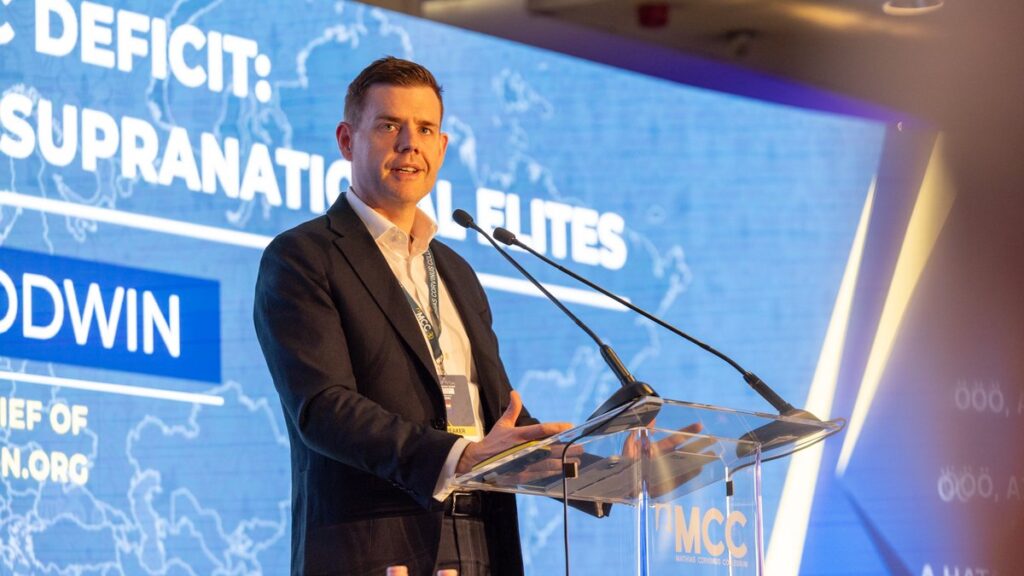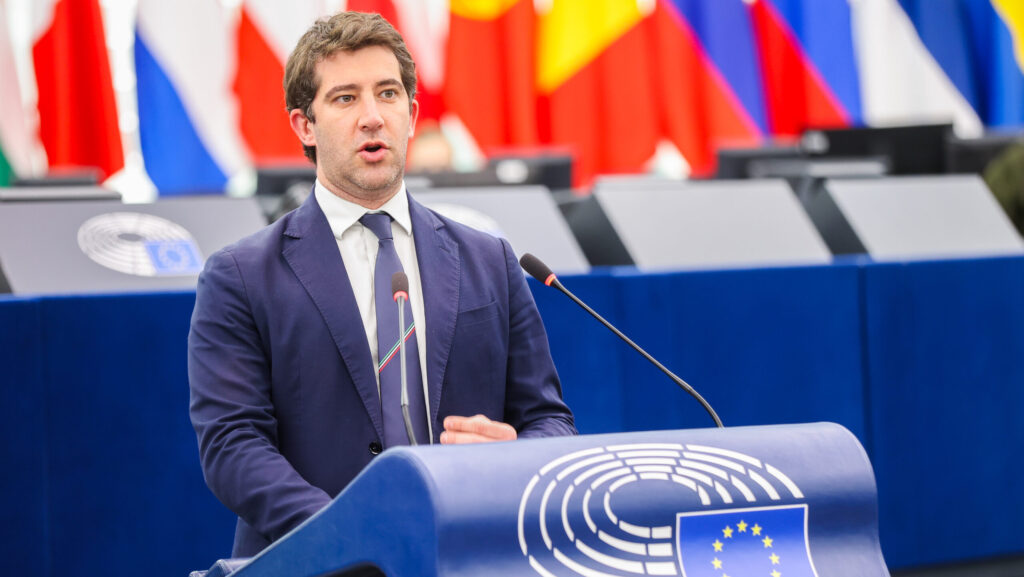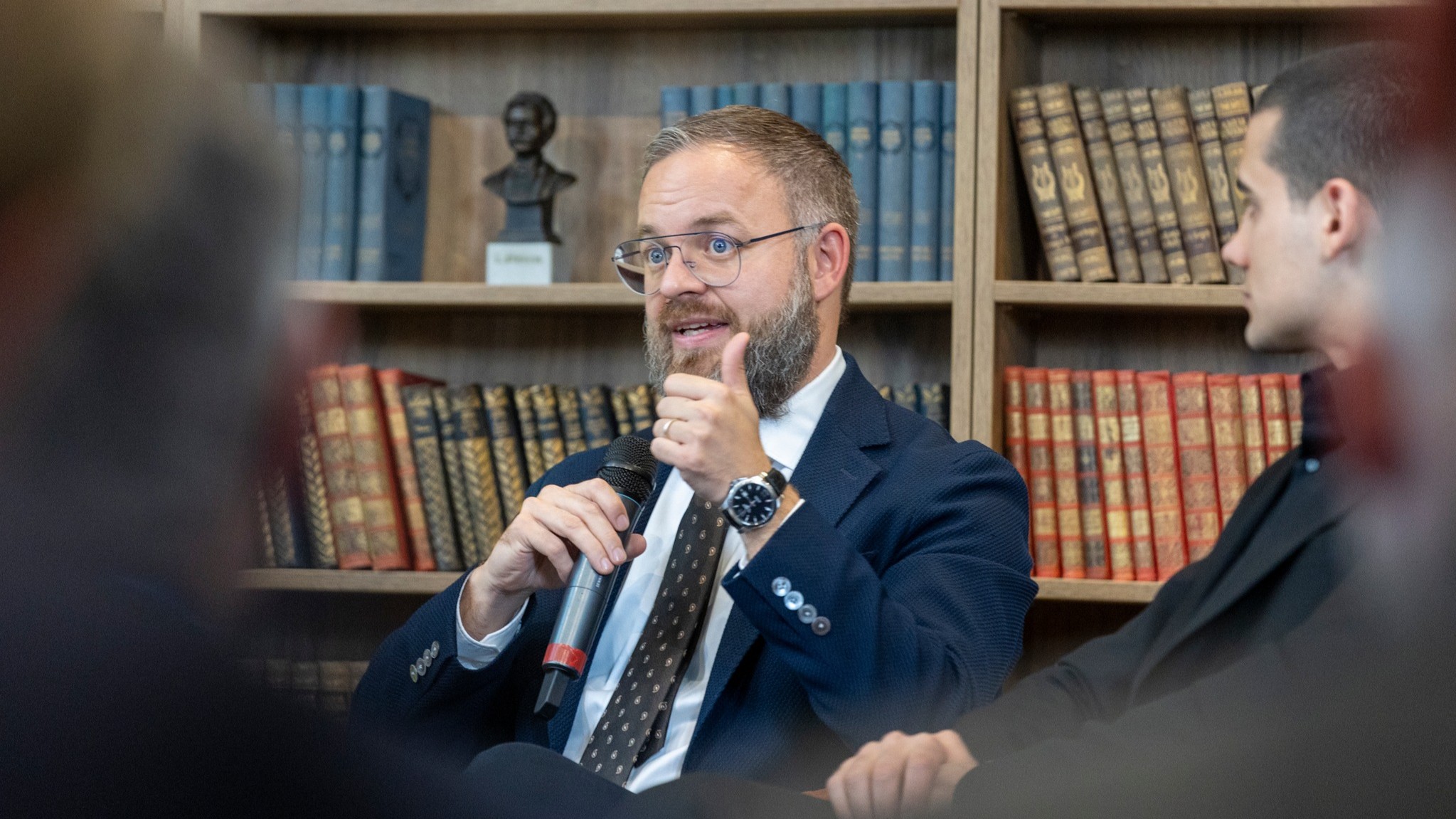
Political Director of the Hungarian Prime Minister Balázs Orbán
Balázs Orbán on Facebook, May 31, 2025
Ever since the major breakthroughs of the 2024 EU elections, national conservative forces have been on the rise across Europe, with a solid chance for the Patriots to become the largest party in the European Parliament by the next election, said Balázs Orbán, the political director of Hungarian Prime Minister Viktor Orbán in an exclusive interview with europeanconservative.com.
The discussion took place in Paris, where Orbán traveled to take part in the Patriots for Europe (PfE) summit last week, which marked the first anniversary of the EU elections and the establishment of what quickly became the third-largest and main opposition group in Brussels.
“We want to be the largest group, and we want to overthrow Brussels. That is the goal, and it’s possible,” he said. The reason why it’s possible is that the mainstream parties—especially the center-right EPP, which he calls the ‘former Right’—have betrayed their voters, who, above all, wanted change, Orbán argued.
“Migration, gender ideology, war, green transition, economy, competitiveness, and so on: these are civilizational conflicts,” Orbán said. “And in all issues, the mainstream parties from the former Right and the Left betrayed their voters. So I think the shift in politics in every single European country will be bigger and faster than we expect.”
"The EU elites betrayed their voters."
— The European Conservative (@EuroConOfficial) June 14, 2025
We set down with @BalazsOrban_HU to discuss the most burning issues in Europe today, from migration to gender and from lawfare to foreign interference, which all come to down to one thing: national sovereignty. pic.twitter.com/oNHiqFRhv0
Right now, the three conservative blocs—PfE, ECR, and ESN—hold more seats together than the EPP, Brussels’ largest party, and would have an absolute majority in the Parliament if the center-right were to join them. And that was the plan originally, Orbán explained, to “unite the Right” in order to counterbalance Brussels’ progressive, globalist agenda.
However, it quickly became obvious that the conservatives could not rely on the center-right when it decided to form a coalition with the leftist Social Democrats (S&D), the liberals (Renew), and the Greens instead, and put up an undemocratic and unlawful cordon sanitaire against would-be allies on the Right.
“Now, I see the Patriots as the only real opposition of the Brussels elite. And they are getting more and more united, coordinated, and professional. Since then, almost every party that belongs to the Patriots group has been winning the elections on the national and local levels. So we feel that it’s very promising what’s going on.”
Of course, Hungary’s playing a lead role in this transformation—not only because its ruling Fidesz party was one of the co-founders of the Patriots, but also because it’s the only governing party within the group at the moment (with the exception of Matteo Salvini’s Lega, which is a junior coalition partner in Italy).
And that’s part of the reason why Brussels targets Hungary like no other with its relentless political attacks disguised as the protection of the rule of law and “European values.” But whether it’s about protecting children from harmful gender ideology, limiting the electoral interference of foreign-funded NGOs, or securing the country’s borders against human traffickers, Hungary will not give in to the financial and political pressure coming from Brussels, Orbán stressed, because each country should have the right to decide its own path.
“Our national identity is based on the fact that we were fighting for our sovereignty for a thousand years,” the director explained. That’s also why Hungary, no matter the government, will never agree to the EU’s current reform proposals that would scrap member states’ veto power in the Council. “Finally, after we regained our sovereignty after a very critical 500 years, we voluntarily give it up to Brussels? I cannot see that happen.”
2/ If European countries want to preserve democracy and freedom, they have to say no to migration. If the migration crisis continues the way it was going in the last ten years, then it will change democracy in Europe. Those who are coming – sooner or later – will become voters…
— Balázs Orbán (@BalazsOrban_HU) June 14, 2025
Ukraine’s fast-tracked EU accession is currently another hot topic in Hungary, where the government is holding a large public consultation on the issue, prompted by the EU Commission’s plans to complete the membership process before the end of the decade, no matter the costs for the EU taxpayers.
According to estimates from the World Bank and Kyiv, just the post-war reconstruction of Ukraine will cost between $500 billion and $1 trillion, and that’s on top of the €100 billion that’s needed for the functioning of the country annually. According to all serious analyses from Western economic think tanks, all European member states (except maybe Bulgaria) would become net contributors overnight if Ukraine is integrated, meaning all cohesion and agricultural funds will end up in Ukraine, the political director explained.
“Honestly, they really don’t care about the consequences,” Orbán noted. “The EU Commission is pushing and pushing [for Ukraine’s accession] every day, saying that it should be finished by 2029 or 2030. Obviously, they have this deadline because they want to avoid this issue playing a role in the next European election. This means they want to finish this process before the next EU elections, so that European voters wouldn’t have the right to say ‘no’ to this.”
As to why Brussels is pushing so hard for taking in such a massive, war-torn country, ruining many small member states’ economies in the process, Orbán said it’s because enlargement is the perfect justification for further centralizing power in the EU.
We’ve heard EU officials saying time and time again that EU reforms to weaken member states must happen in “lockstep” with enlargement, because the EU won’t survive having more members without streamlining its decision-making first. But, according to Orbán, the argument is just a carefully constructed lie to justify the Commission’s power grab.
“There is a combination of federalist pro-war bureaucrats who are looking for a new identity for Brussels, using it as an argument for why they need to centralize power, and a coalition of some liberal political elites who want to continue the war with Russia as long as it takes,” Orbán said.
Looking at the global situation and Europe’s place in it more broadly—with a worsening energy crisis, lagging competitiveness, and a coming demographic collapse—it’s obvious that a strategic change is needed in Europe, otherwise it will end up as the big loser of the 21st century, the politician warned.
“And this is what we’ve been doing in Hungary,” he said. “But we’re also a member of the EU; we should work together with other European countries, and we should find a new strategy together that fits the new challenges. But so far, those institutional leaders [in the EU] have brought us into a dead end. This is why the Patriots’ top priority is to change the leadership in Brussels.”