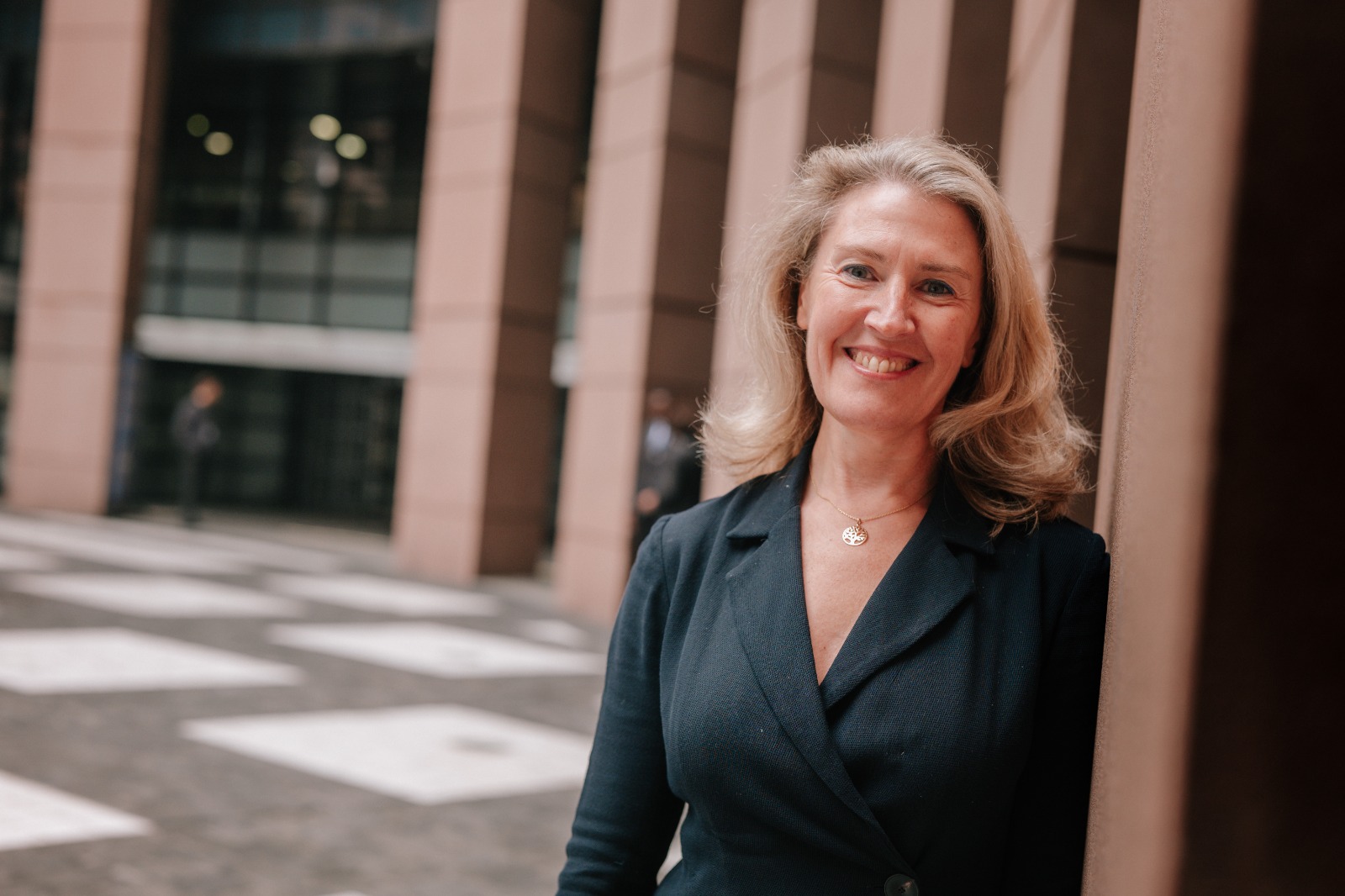
MEP Laurence Trochu
Courtesy of Laurence Trochu
Laurence Trochu, founder of the Conservative Movement—which later evolved into the Identity and Freedom (Identité-Libertés) party under Marion Maréchal’s leadership—has served as a Member of the European Parliament since 2024, representing the European Conservatives and Reformists (ECR) Group. She is also the coordinator of the Women’s Rights and Gender Equality Committee for the ECR group. Trochu spoke with europeanconservative.com’s Hélène de Lauzun about the upcoming European Parliament’s plenary debate on the practice of surrogacy and the increasing worldwide awareness of the necessity to protect mothers as well as children from the practice.
Last August, Reem Alsalem, UN Special Rapporteur on violence against women and girls, issued a damning report on surrogacy, condemning the practice as tantamount to slavery and in violation of countless international laws. On that occasion, I asked the ECR Group to request a plenary debate on this subject in September. This was not possible for technical reasons in September or during the first plenary session in October, but the debate will finally take place next week, thanks to a coalition of right-wing groups on the subject, from the EPP to the ESN Group. We have worked hard over the last few weeks to secure this support, and it is a real victory for the ECR Group to have secured a debate on a topic that is very important to our group. We must thank the EPP, whose support has been very important.
Reem Alsalem’s report, which we will be welcoming to the European Parliament in November at the initiative of my colleague Paolo Inselvini, is the only international text that unequivocally condemns surrogacy in all its forms. And it comes from the most official institution possible for all countries in the world. It is therefore unprecedented, and this opportunity had to be seized to give the European Parliament the chance to take a clearer stance on a difficult subject.
The Casablanca Declaration is a landmark text in this field. Signed by experts from around the world, Casablanca played a decisive role in putting the abolition of surrogacy on the global agenda and paved the way for advances such as the European directive on human trafficking, national laws to protect women and children, the ban on surrogacy in the Slovak Constitution, and, of course, the report signed by Reem Alsalem’s who attended the last conference organized by Casablanca in Rome in 2024. It is a great work, that we wish to continue by bringing this debate to the fore.
The issue of surrogacy is specifically mentioned in a European directive against human trafficking, which condemns “the exploitation of surrogacy.” This is a first step, but it is far from sufficient, as it leaves the door open to surrogacy that would be considered ethical because it is unpaid. We need to go further.
It could be considered a health or demographic policy issue, over which member states must indeed retain their prerogatives. But that is not the point. Surrogacy is not a form of care. There is a European Charter of Fundamental Rights which enshrines the right of the child to know both parents, for example. This is a legally binding text. The Treaty on European Union, which is also binding on member states, stipulates that the EU protects the rights of the child. Surrogacy must be universally condemned, and the tools to do so exist. We are not talking about public policy, we are talking about fundamental human rights.
I do not believe that the Union is complacent in this regard. Above all, there are major divisions. Some countries authorise it, others prohibit it, and others tolerate it. Surrogacy is nevertheless encouraged in indirect ways, notably through the recognition of the European Parental Certificate, which aims to have all member states recognise artificial parentage, authorised in one state but not in another. But the flip side of these divisions is that we avoid talking about it and draw a veil over the reality of this practice, which is quite abhorrent when you look at it closely. The aim of this debate is precisely to lift that veil.
I think it is a mistake to separate the two. By condemning surrogacy, we are protecting both women and children. Separating a child from the woman who carried it is a tragedy for both, both psychologically and biologically—the full consequences of which are not yet known. It is a dehumanisation of the woman, who is seen as a baby factory, and of the child, who becomes a consumer product like any other. It is also an anthropological and civilisational upheaval that has deleterious effects on society.
The fact that this debate is taking place is already a big step forward. We are parliamentarians, let’s talk about this very important subject. I expect it to raise awareness of the reality of the issues we face on this subject; of the reality of the daily lives of women whose wombs are exploited; of the reality of the trauma caused to children who are torn from those who carried them. If this reality is addressed without complacency and without lies, it will have consequences, and why not a resolution? In any case, that is my goal.