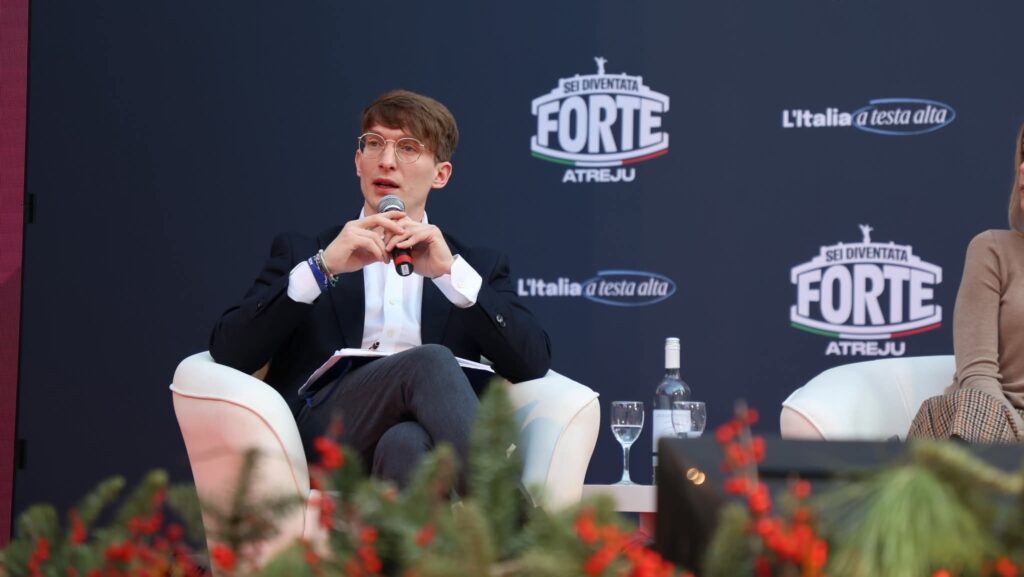
“The best response to the violence is not hatred, but the daily courage of those who continue to believe that ideas are fought with other ideas. Never with violence.”
The Donald Tusk government’s draft bill on the “status of a person closest to an individual in a relationship and a cohabitation agreement” has sparked a heated debate in the Polish Sejm and beyond. Jerzy Kwaśniewski, a Polish lawyer and public figure, best known as the co-founder and president of the Ordo Iuris Institute for Legal Culture, a conservative legal think tank based in Warsaw, argues that this marks the beginning of a process aimed at equating same-sex unions with marriage and weakening the constitutional protection of the family.
We have never been this close to introducing into the Polish legal system the institutionalisation of same-sex unions. The government bill backed by the Sejm grants same-sex relationships a range of privileges that have thus far been reserved exclusively for marriage.
Yes. The government of Donald Tusk is attacking the last bastion protecting the Polish family and the Constitution of the Republic of Poland. Article 18 of the Constitution states that “marriage, being a union of a woman and a man, as well as the family, motherhood and parenthood, shall be placed under the protection and care of the Republic of Poland.” The government’s bill seeks to create an institution competing with marriage—and therefore unconstitutional—which would obtain the key privileges reserved for marriage while being exempt from marital obligations.
The government bill is only the beginning. Its adoption will open the way to further demands that have already been announced—including same-sex adoption and the violation of the consciences of civil registry officials, teachers, and educators. Officials will be compelled to register unions competing with marriage, and school curricula—including those of Catholic schools—will be adapted to new, gender-based definitions of the family. This would amount to a destructive wave of total reprogramming of young Poles, who are to be persuaded that marriage is a patriarchal relic to be replaced by a commitment-free ‘cohabitation agreement.’
Because politicians associated with the governing camp are not hiding their intentions. They openly state that this is not merely about minor, technical facilitations for people in informal relationships. Speeches by some MPs during the parliamentary debate contained clear ideological declarations. MP Monika Rosa appeared holding the LGBT movement’s flag, while MP Anna Maria Żukowska openly spoke about her affiliation with that community. During the debate, it was repeatedly emphasised that the bill represents a “minimum option” and the first step towards further changes. These statements suggest that the proposal is not a neutral instrument designed merely to organise certain legal situations but rather a stage in a broader strategy aimed at gradually equating the status of same-sex unions with marriage.
Indeed. The government is simultaneously preparing a regulation implementing a judgement of the Court of Justice of the European Union, in which its judges ordered Poland to recognise ‘same-sex marriages’ formalised in other EU member states. The government intends to remove the terms “man” and “woman” from civil status records, replacing them with “spouse one” and “spouse two,” which would allow persons of the same sex to be entered as “married” in Polish documents. The Council of Ministers is also working on legislation introducing “express divorces,” designed to accelerate the breakup of Polish families by implementing an out-of-court divorce procedure.
The experience of many Western societies shows that introducing alternative, legally privileged forms of relationships parallel to marriage (such as civil partnerships) inevitably leads to the weakening of its special status. This is not about a single legal act but about triggering a series of social and cultural mechanisms widely described in sociological literature.
The first is commercialisation: a relationship ceases to be treated as a durable institution rooted in tradition and begins to be perceived as one of many legal services available on the market—like a lease agreement or a civil-law partnership. Advisory, legal, and financial infrastructures emerge to accommodate various ‘relationship packages.’ A bond between two people is increasingly described in the language of rights and entitlements rather than obligations and permanence. Marriage ceases to be a cultural norm and becomes one option among many.
The second consequence is deinstitutionalisation: the undermining of marriage’s exclusivity as the fundamental framework organising family life. Norms lose their clarity. Instead of one strong model, a pluralism of models appears, blurring social expectations regarding relationships. Marriage loses its character as the ‘default’ institution and ceases to function as a universal reference point for family order.
A further consequence is cost-based reasoning. If the law offers forms of relationship with a lower degree of formalisation, lower entry and exit costs, and limited legal consequences, rational choice will incline some people toward less binding arrangements. This mechanism need not be ideological; it follows the logic of minimising risk and cost. If similar legal benefits can be obtained with less permanence and responsibility, some will choose the ‘lighter’ option. In the long run, this weakens the cultural motivation to enter into marriage as a durable and public commitment.
Finally, there is convergence and the blurring of boundaries. Over time, different forms of relationships gradually come to resemble one another. Parallel institutions expand their entitlements, and differences diminish. The boundary between marriage and other unions ceases to be clear, both legally and symbolically. Marriage loses its unique and distinguished status. It is no longer an institution with a distinct, clearly defined identity but one of several similar legal constructs. The combined effect of these mechanisms leads to the gradual erosion of marriage’s special position in culture and law. From a foundational institution serving as the universal point of reference for family order, it becomes one of many parallel forms of relationship, chosen by some but stripped of its former normative centrality.
Above all, an acceleration of Poland’s demographic collapse and a restriction of civil rights and freedoms.
These are partly two separate issues. It is true that we are witnessing disturbing social and cultural changes—incidentally, not spontaneous but deliberately promoted—that lead some people to choose a lifestyle focused on consumption and the avoidance of commitment. Yet this trend does not encompass all, or even most, Poles. Interestingly, there are also strong countertrends—for example, the rapid growth of traditionalist Catholic communities, especially after the so-called pandemic, where large families are the norm. This shows that cultural changes are not irreversible.
Even if the egoistic-consumerist trend were to encompass the majority, that would not absolve us of the responsibility to say that it is literally suicidal for society. Nor would it justify applauding solutions that accelerate that suicide. There would undoubtedly be a feedback loop. A new legal solution such as ‘express divorces’ would fall on partially fertile social ground and reinforce negative changes. Out-of-court divorces would entail a greater risk of marital breakdown, a shift in understanding marriage toward an easily dissolvable contract, weakened motivation to invest in the relationship, and reduced protection for the weaker party.
Statistics from Poland’s Central Statistical Office (GUS) are already alarming. In 2024, the number of divorces amounted to 42.44% of newly concluded marriages. In 1990, the figure was 16.62%. These are disastrous data for Polish demography. Most children are born within marriage, and raising children within marriage most effectively fosters the transmission of positive family patterns.
Experience shows that the most stable environment for raising children and building lasting family bonds is the marriage of a woman and a man. The broadly understood Left, in seeking to deconstruct marriage, is attacking the foundation of our civilisation. If it succeeds, the edifice of the natural legal order that has organised our lives for generations will collapse.
Interestingly, the attack on the Polish family has been supported by the German ambassador, Miguel Berger. The representative of the Federal Republic of Germany observed the parliamentary debate from the gallery and posted a message on social media expressing support for the bill. His behaviour clearly demonstrates that cultural changes in Poland are, at least in part, orchestrated from outside. His activity evokes the worst associations with the decline of the Polish–Lithuanian Commonwealth, when the ambassadors of Russia and Prussia supervised the adoption of laws in Poland.