Maicol Pizzicotti Busilacchi
courtesy of Maicol Pizzicotti Busilacchi
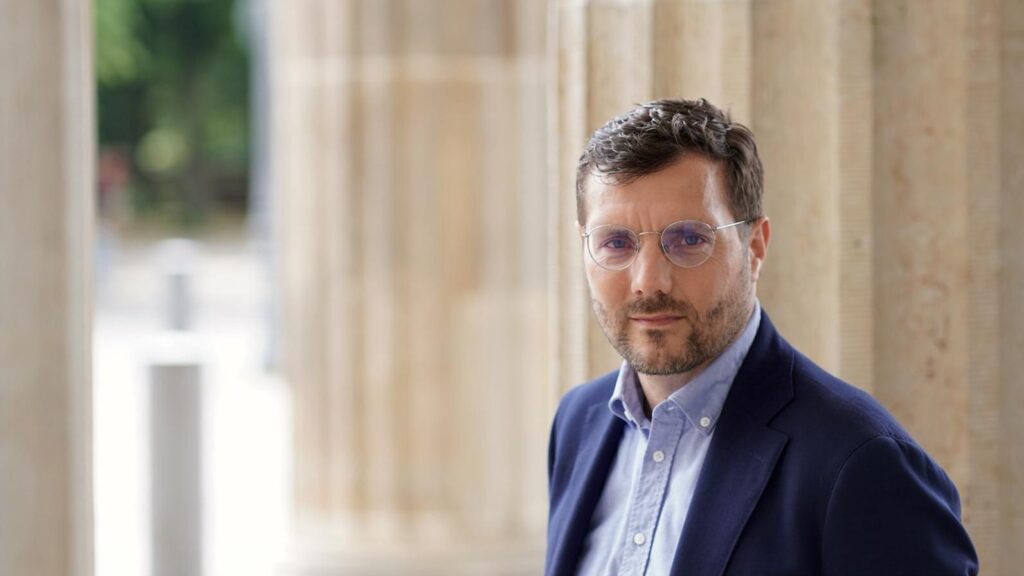
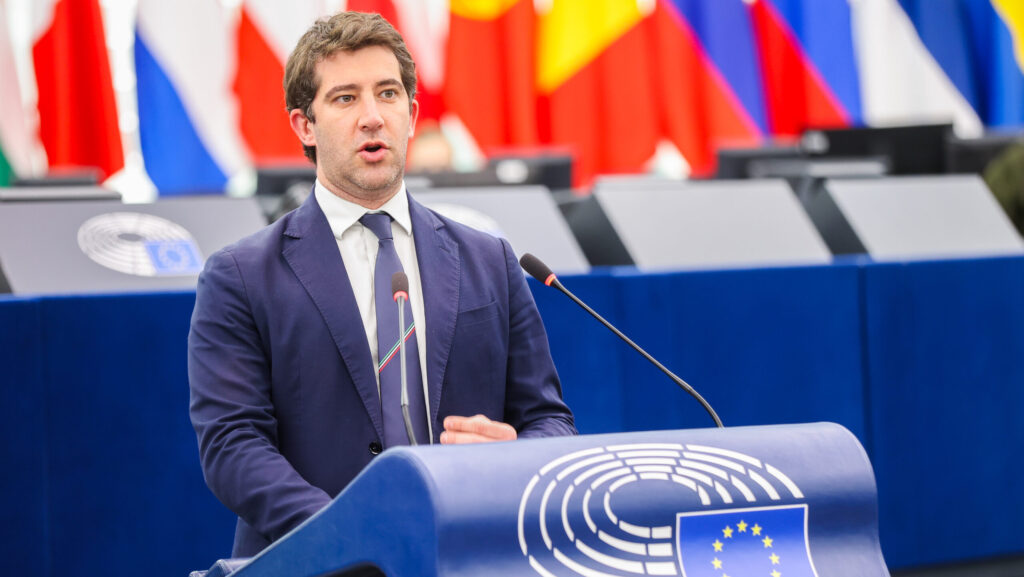
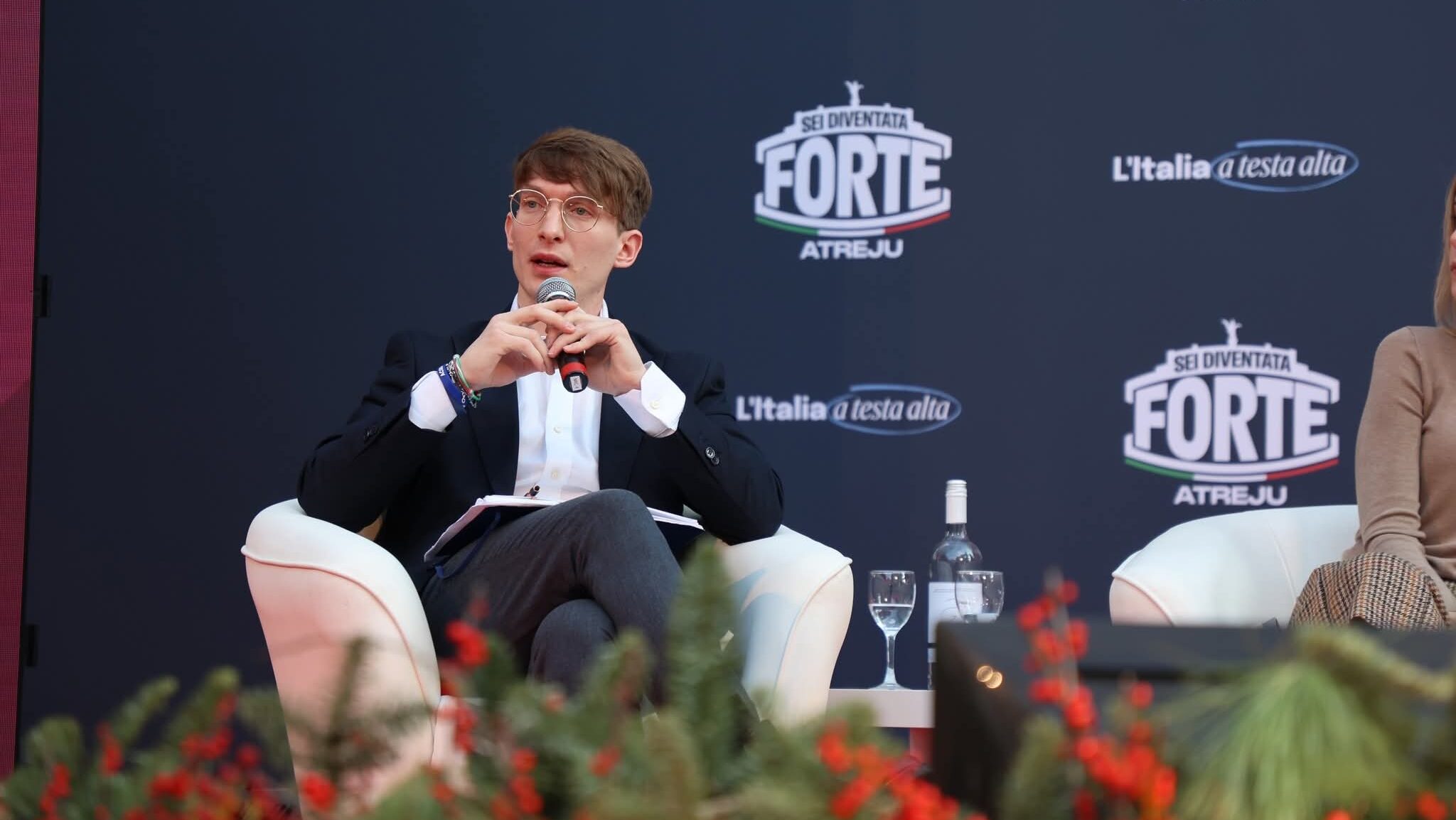
Maicol Pizzicotti Busilacchi is the international secretary of Gioventù Nazionale, the youth movement of Fratelli d’Italia. He talked to europeanconservative.com about Giorgia Meloni’s career in politics and appeal to the young generation, the stability of her government, and ‘anti-fascist’ violence in Italy and Europe.
To answer that, I’ll start with two different questions. The first: Can a prime minister deal specifically with young people? The answer is yes, as long as young people are not a separate chapter in politics, but a lens through which to view every government decision. And that is exactly what Giorgia Meloni has done. As minister of youth in Berlusconi’s fourth government (2008-2011), Meloni did not limit herself to managing a ministry without portfolio; she built a precise political architecture with the Diritto al Futuro (Right to the Future) package, where she facilitated loans for university students, provided mortgage facilities, offered bonuses for job stability, and supported youth entrepreneurship. The logic was precise: emancipate young people, don’t assist them.
This approach is now the guiding principle of the Meloni government: the fund for first-time home buyers has been refinanced with €670 million for the three-year period 2025-2027, and the fund for access to credit for deserving students has been simplified and strengthened. The philosophy has not changed: instead of assistance, tools for those with talent and determination.
Second question: Do ‘youth policies’ really exist as a separate category? Herein lies President Meloni’s more mature vision: to overcome the very concept of youth policies as a marginal sector and to insert a generational perspective into all decisions at the highest level. Good governance means leaving the next generation a country better than the one inherited from the previous one. It is a Burkean conception of politics: not the ambition to build utopias, but the duty to safeguard and improve what has been received.
One of the images that most impacted Italian public opinion, right after Giorgia Meloni’s election as president of the Council, was that of a very young Meloni with a megaphone in one hand and pamphlets from Azione Giovani, the youth movement of the time, in the other. To understand the significance of that image, we must remember where we came from: a long series of prime ministers with careers far removed from grassroots politics. The technocrats Draghi and Monti, the businessman Berlusconi, the bureaucrats Renzi, Gentiloni, and Letta. None of them had built their careers from the grassroots level of street politics.
Giorgia Meloni did. She started at the age of fifteen in the neighborhood headquarters, the historic Garbatella, handing out pamphlets and organizing information tables. She became the youngest minister in the history of the Republic at the age of thirty-one. This is not a biographical note: it is a political message. At a time when politics is perceived as a profession for co-opted elites, Meloni shows that the social ladder of activism still works. That passion, presence among the people, and perseverance are worth more than networks of power.
This is a message that goes far beyond Fratelli d’Italia. At a time when young people are dangerously choosing silence, partly out of mistrust, partly out of disillusionment, the example of someone who has risen from the neighborhood headquarters to Palazzo Chigi should be a powerful incentive to speak up again.
Rather than a “shift to the right,” we are witnessing an awakening of consciousness. For decades, declaring oneself to be on the Right in Italy, especially in student circles, required a great deal of courage. There was a Gramscian cultural hegemony, well described by Roger Scruton, which made the Right an almost unmentionable option in youth public debate. Today, that has been broken. And, paradoxically, it has been political correctness that has broken it. The forced repression of countercurrent ideas has had the opposite effect: a generation has rediscovered the value of freedom of expression and has begun to wonder who truly defends it.
There is also an international phenomenon. From the success of conservatives in the United States to the growth of right-wing parties across Europe, young people sense that the tide is turning. And in Italy, where Fratelli d’Italia governs with stability and measurable results, being right-wing is no longer an act of rebellion: it is a rational, common-sense choice. However, Italy still has a very strong left-wing tradition in academic and cultural circles, and we cannot talk about a mass conversion; we are talking about young right-wingers who finally have the courage to say so. And that is already a revolution.
The case of Askatasuna in Turin is an example of what these organizations do: a social center that for years acted as a free zone where the rules of the state did not apply, until it was discovered that they were carrying out activities far removed from civic activism. We would be hypocritical if we prevented the right to demonstrate after having fought in every possible way to guarantee freedom of expression; but equally, we cannot allow demonstrations to descend into violence, damaging entire cities, attacking citizens, and putting public safety at risk. Freedom of demonstration is sacred in a democracy, but it cannot become a cover for criminal acts. It is a simple distinction, yet part of the left systematically pretends not to understand it.
The political drama of our time—in Italy, but not only there—is that the left always talks about anti-fascism, never about anti-totalitarianism. And this is not a nuance: it is a precise ideological choice.
In 2019, Fratelli d’Italia wholeheartedly endorsed the European Parliament resolution “on the importance of European memory for the future of Europe,” which unequivocally condemned all forms of 20th-century totalitarianism: Nazism, communism, and fascism. It was a dividing line: those who accepted to look at history in its entirety, and those who continued to condemn only one part so as not to have to come to terms with their own past. The right wing has reflected on its own history. Today, it defends the free world from the totalitarian regimes that still remain. The left wing, on the other hand, continues to fight ghosts from the past so as not to look at the monsters of the present.
The murder of Quentin Deranque can be summed up in a single word: shame. The shame that certain self-proclaimed ‘anti-fascists’ should feel for still being unable to condemn political violence unequivocally. A 23-year-old man, beaten to death by at least six hooded men in Lyon, former members of an organization dissolved by the French government for its systematic violence and linked to Mélenchon’s La France Insoumise.
But I also want to say something that matters to me more than condemnation. Throughout Europe—and I see it every day in my work with young conservatives on the continent—there is a generation that has chosen ideas over iron bars, debate over slogans, study over intimidation, and that has the courage to defend its convictions openly. They are the real antidote to political violence: not decrees, not superficial condemnations, but a culture of debate that restores dignity to dissent. The best response to the violence against Quentin, Charlie Kirk, Shinzo Abe, and so many others is not hatred, but the daily courage of those who continue to believe that ideas are fought with other ideas. Never with violence.
The message that Italy was a congenitally unstable country had spread throughout Europe. The history of Meloni’s government, however, has disproved that this must be the only possible narrative. Let’s look at the continent. France has burned through six governments in three years; Germany has seen the collapse of the Grand Coalition and an unprecedented post-war political crisis; post-Brexit Britain has changed four prime ministers in six years; and Sánchez’s Spain is sustained by an alliance of convenience with separatists and anti-establishment groups that has no electoral future.
Italy today sees the center-right firmly in government, led by Giorgia Meloni and Fratelli d’Italia, thanks to their ability to build an alliance that, apart from some legitimate internal debate, has always remained steadfast in fulfilling its commitments to the Italian people. The opportunity is to repeat the victory in 2027. Polls indicate a relative advantage for the center-right. I don’t know how many outgoing governments in Europe can boast such popular consensus. Surely few.