Hillel Neuer
Courtesy of Hillel Neuer
Hillel Neuer is an international lawyer, writer, and activist and the executive director of UN Watch, a human rights NGO and UN watchdog organization based in Geneva, Switzerland. He is also the founding president of the Geneva Summit for Human Rights and Democracy, a coalition of 25 NGOs from around the world.
UN Watch was created more than three decades ago, in 1993. Its founder was a great American, Morris B. Abram, a civil rights leader who worked closely with Martin Luther King and helped draft the anti-racism resolution adopted by the UN in the 1960s. As a human rights expert and permanent representative of the United States to the United Nations in Geneva, he saw what was not working at the UN and had the idea of creating an external, independent group to monitor the organization so that it would not abandon its principles and fulfill its noble purpose of commitment to universal human rights, including combating antisemitism and the scapegoating of Israel, something the UN often does. That is the history and reason for being of UN Watch.
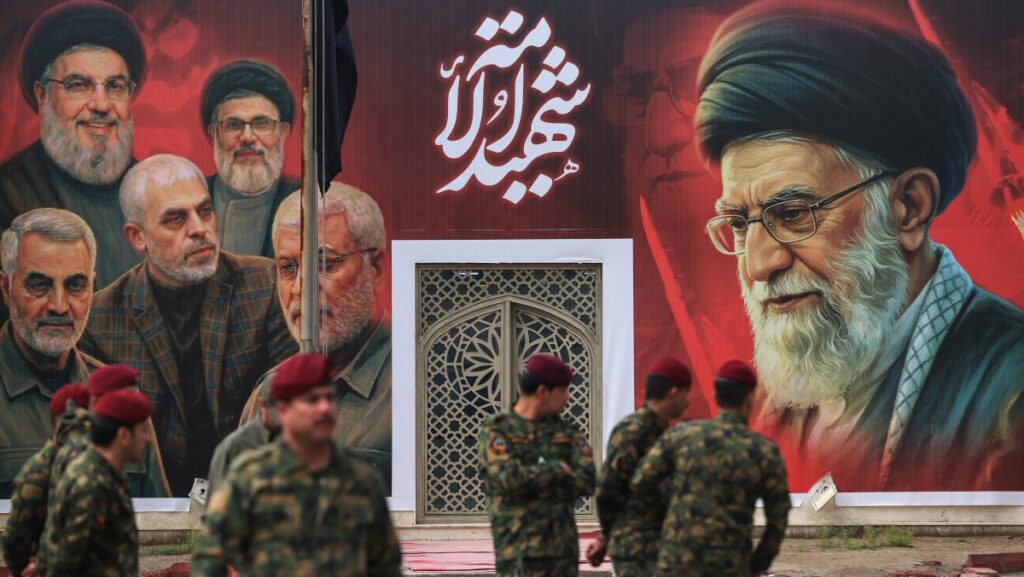
The UN’s position on Iran is shameful from any perspective and shows how twisted its priorities are. Among the members of the UNHRC are Qatar, China, and Pakistan, countries allied with the Islamic Republic of Iran. And the reason the meeting on [January] 23rd took place is that 21 democratic countries, including France, Germany, the UK, and Japan, signed a petition. The question is: why didn’t all these Western countries do so before? Unfortunately, this shows that these countries also have other priorities, and the same can be said of media outlets such as the BBC, which has been extremely concerned about what is happening in Gaza for two years and pays no attention to the thousands of people killed in Iran.
Absolutely. There are two categories of actors in the UN. On the one hand, we have the member states, 193 countries that hold different positions depending on the political interests of their governments, which is understandable. And then there are those who work for the UN, and here there are two other categories. First, there are those who are paid a salary and answer to Mr. Gutiérrez and the UN bureaucracy. There has been a huge silence here, starting with Gutiérrez and his boss in human rights, the Austrian Volker Türk. And when they have spoken, it has not been with an appearance in the Security Council, but through weak statements. Gutiérrez has been terrible and seems to be part of an alliance, or at least relies on it, of anti-Western countries. During the Gaza war, in some cases he legitimized the Hamas narrative. He condemned the attacks but justified them to a certain extent.
It must be understood that to reach an important position, you have to be very careful about who you condemn. If you condemn Israel, condemn capitalism, and invite Greta Thunberg, you become very popular because you criticize the West, and you make 120 countries, Russia, and China happy. You also make many Western academics and intellectuals happy. That is why they do not criticize Russia, China, or the Islamic Republic of Iran. However, it is appalling how weak and silent Gutiérrez and his staff have been.
The experts you mention, only five of whom have signed statements against repression in Iran, belong to the latter category: volunteers. These experts are known as special rapporteurs, the most famous being Francesca Albanese, although there are many others. Unfortunately, they are all appointed by the Human Rights Council, and the people who are chosen are those whose main interest is to condemn the West, colonialism, and capitalism.
Yes, they are very strong on ideology and narrative. If you follow this narrative, you will be elected, you will maintain your position, and you will be protected. The United Nations system encourages these people, and when it comes to Iran, the opposite of this narrative is true. It is the Iranian people who oppose the Islamic regime; they are not white Europeans, but Muslims, and the discourse of oppressors and oppressed does not apply here. What is happening in Iran shatters the fantasy of this ideology.
That is why it is very convenient for these experts, for the BBC, or even for groups such as Amnesty International, which finally spoke out because it was too embarrassing, to ignore this issue. I checked the profile of Amnesty International director Agnès Callamard several days after the start of the uprising in Iran, and there were 16 tweets and retweets posted since that day. Her posts condemned Israel, supported Francesca Albanese, and defended an Egyptian man imprisoned in his country who was released when he was granted British citizenship. It was later discovered that he had said horrible things, such as that he hated the police, the British, white people, Jews, and that they should all be killed… And she was defending him while remaining silent about Iran. They are all part of this narrative and are related. Callamard herself was previously a special rapporteur, and when the United States killed the terrorist Soleimani, it took her only hours to condemn the attack for violating international law, but now, when the Islamic regime kills its own people, she remains silent.
This case is outrageous, and no other UN agency has had hundreds of terrorists or supporters of terrorism working for it. Of the 13,000 UNRWA employees—13,000!—in Gaza, Lebanon, and Jordan, 99% are Palestinians and less than 1% are international staff: Germans, Swedes, Americans, etc. The latter are the visible face and the ones who get the money, and when you ask them about the presence of Hamas members, they have two answers. The first is that they did not know, and that as soon as they are presented with evidence, they will take care of it. This is not true, as we have been producing reports for ten years and they have shown no interest. And the second is that they admit the presence of Hamas people because they are part of Palestinian society, and Hamas is one of the main factions.
They do nothing because they don’t care and never have cared in the slightest. For example, our report last year identified the leaders of the teachers’ union in Gaza and Lebanon as Hamas leaders recognized by the terrorist organization itself, but it seems that everyone knew this except the UN.
The UN is at a very low point and unfortunately does not seem to be going anywhere, even though all European countries continue to support it. Trump is creating a “Peace Board,” and maybe someday that will replace the UN, but not anytime soon. The UN is there, and it has influence, and we need to make sure that our governments do everything they can to make the UN a less harmful place and more like it is supposed to be.