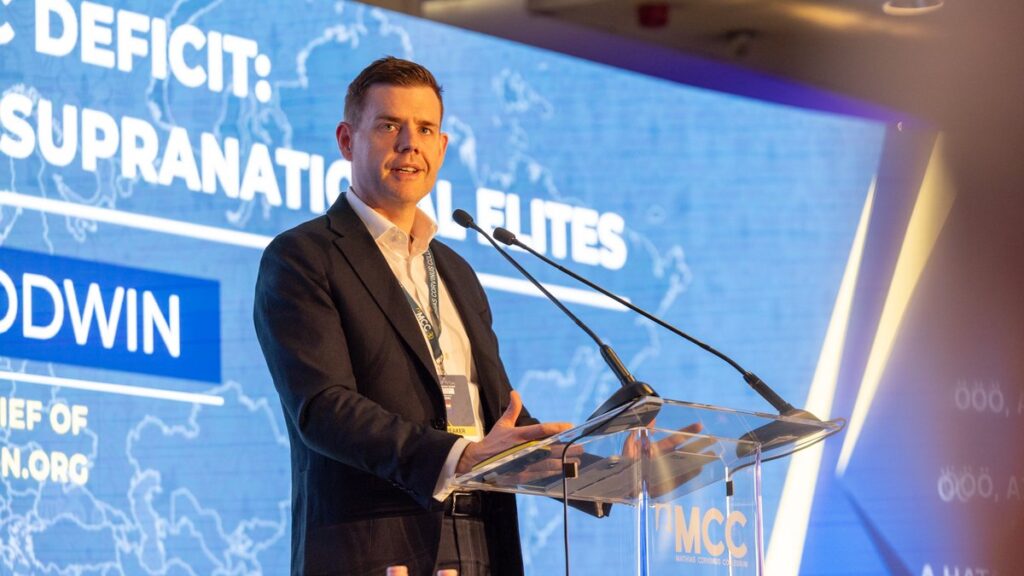
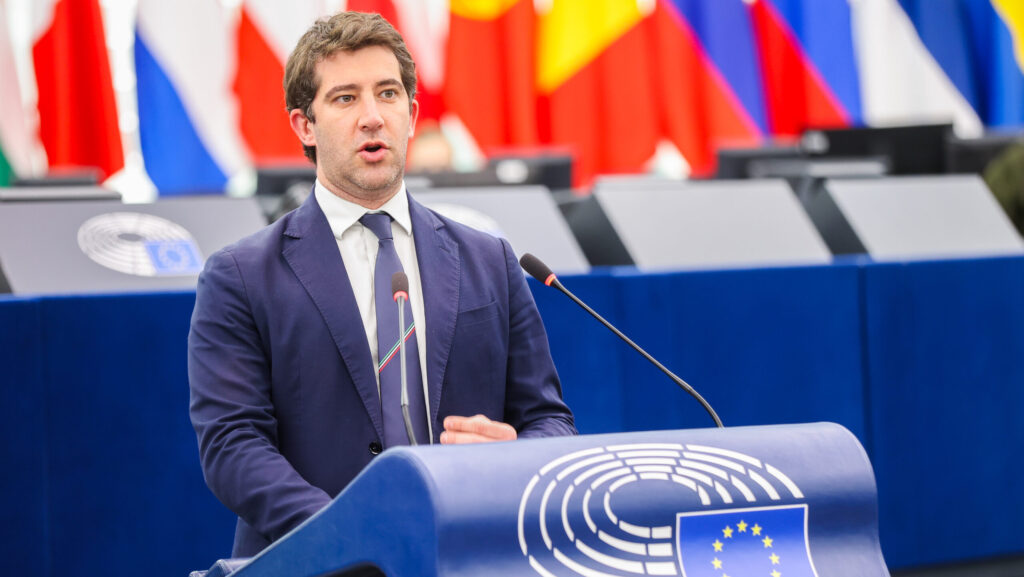
Jacek Saryusz-Wolski
Laurie Dieffembacq © European Union 2023 – Source : EP
Jacek Saryusz-Wolski—former vice-president of the European Parliament and veteran EU insider—is a veteran EU affairs expert. A former vice president of the European Parliament and Poland’s first Minister for European Integration, he is known for his strong advocacy of national sovereignty within the EU. Speaking with europeanconservative.com, he warns that the European Union is facing a coordinated assault on its economic vitality, constitutional order, and civilisational identity.
The challenges are longstanding and largely unaddressed. They include the need to revise the Green Deal; to fundamentally rethink the EU’s migration policy; to block the Mercosur trade agreement; to prevent the erosion of the Union’s constitutional order; and to resist the ongoing attempt to transform the EU’s budget into a tool of centralised financial coercion. The latter, in particular, threatens to replace the traditional Multiannual Financial Framework (MFF) with a permanent system modelled on the Recovery and Resilience Facility—essentially a mechanism by which Brussels issues funds only if member states meet politically determined ”milestones.”
Because it is crippling Europe’s economic competitiveness—and not in theory, but in practice. Even among its former advocates, there is now a reluctant recognition that the policy imposes unsustainable burdens. Yet the European Commission remains ideologically wedded to it. Instead of reassessment, we see escalation. It’s an exercise in regulatory self-har —and the consequences are becoming ever more apparent.
The EU’s migration policy has, in effect, dismantled the Schengen Area—one of Europe’s core achievements. The turning point came with Chancellor Merkel’s Willkommenskultur. Since then, internal border controls have been reinstated, external borders are porous, and frontline states—above all Poland—bear the brunt of policy failures made elsewhere. There is, however, a glimmer of hope. Denmark, which assumes the Council Presidency shortly, has signalled an intention to adopt a markedly firmer approach—one backed by a coalition of eleven member states including Italy. The focus will be on real border control and the return of illegal migrants.
The EU-Mercosur agreement, as it stands, is a textbook case of economic short-sightedness. It opens Europe’s markets to agricultural imports that do not meet our environmental or quality standards. Member states with advanced and heavily regulated farming sectors rightly fear they will be swamped by inferior and cheaper produce. But the issue goes deeper: food security is a strategic matter. Becoming dependent on transatlantic imports—via fragile supply lines—is reckless. Food shortages are not a theoretical risk. They can destabilise societies far more swiftly than energy crises ever could. And instability erodes military capacity. In other words: if one wishes to prepare for war, one must first ensure the nation is fed.
The Commission seeks to abolish the current MFF structure and replace it with three giant financial envelopes, one for each of the Union’s broad policy pillars. Each member state would receive national allocations subject to conditions and milestones—much like the RRF funds introduced during the COVID pandemic. However, these would not be exceptional measures. They would become permanent. And unlike traditional cohesion or agriculture funds, access would depend entirely on conformity with policy dictates from Brussels. No compliance, no money. This is an extra-treaty power grab — a silent constitutional revolution—carried out without the consent of parliaments or peoples. It centralises budgetary control and neutralises national sovereignty by tying it to financial blackmail.
Of course there is — if there is the political will. The recent Polish presidency of the Council of the EU was, regrettably, a missed opportunity in this regard. But take Denmark again: a small country, yet determined to reorient migration policy. That proves what is possible. Citizens across the continent are weary—of overreach, of ideology, of imposed transformation. Alliances can be built. Blocking minorities—requiring only a third of votes in the Council—can prevent these measures from advancing. But we must act. And we must choose our priorities wisely. Europe cannot finance the Green Deal, a dysfunctional migration policy, and a credible rearmament effort all at once. Something must give. As things stand, there is a shortfall of several hundred billion euros for defence alone. And without defence—well, then none of the rest matters.
In principle, yes. But the problem is not technical—it is political. The new Migration Pact does not address the crisis; it institutionalises it. It establishes mechanisms for relocating migrants across the Union, thereby rewarding illegal entry. The logic is perverse: traffickers bring people in, and EU states are then obliged to redistribute them. It is a perfect supply-and-demand loop. During the negotiations, Italy proposed the obvious: a naval blockade to stop the crossings. It would have worked. But it was rejected—not because it was impractical, but because it contradicted the aims of certain elites.
Let us not pretend this is accidental. Migration serves purposes. It provides cheap labour. It creates new voters for left-liberal parties. It dilutes national identities and undermines the sovereignty of member states. And finally, it is—for some—a vehicle for a broader cultural transformation. That is the vision. And unless it is opposed, that is the future.