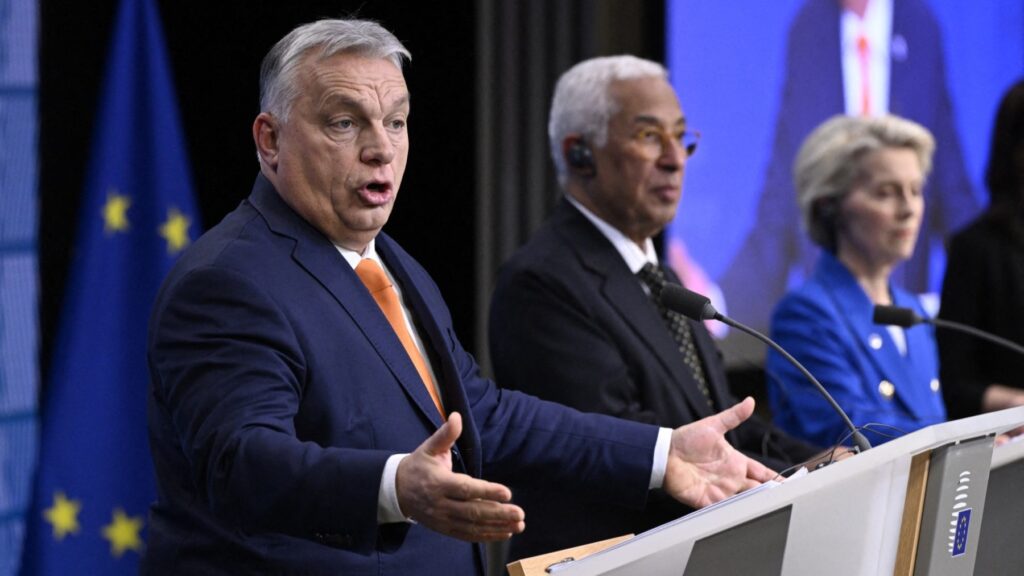
“If the European Union starts to consider democratically elected governments illegitimate simply because they do not share the dominant political line in Brussels, then the problem is no longer Viktor Orbán.”
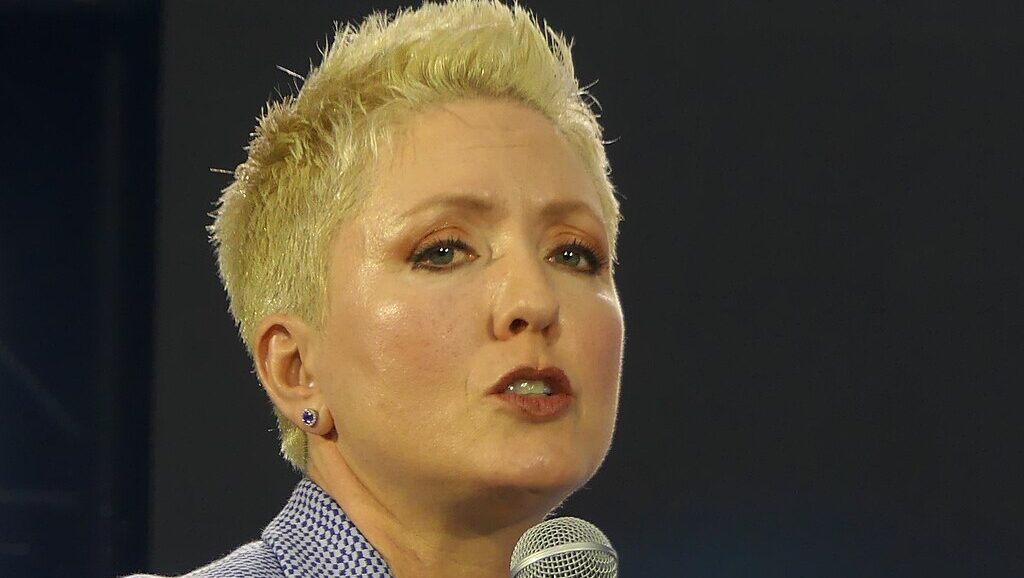
Shea Bradley-Farrell, Ph.D. is a strategist in national security and foreign policy in Washington, D.C., and president of Counterpoint Institute for Policy, Research, and Education. Her latest book is Last Warning to the West.
Yes, it is rooted in Marxist philosophy. Of course, we must protect minorities from discrimination, but wokeism (like Marxism) goes much farther: it divides society into “oppressed” and “oppressors,” then uses government power to upend law, culture, and economics in favour of certain identity groups. Policies or laws allowing biological men to compete on women’s sports teams are one example. Antisemitic riots in the U.S. supporting Palestinian Hamas terrorists and threatening Jews are also examples.
Proponents of wokeism want to destroy Western civilisation, which they see as the foundation of the “oppressors.” That is pure Marxist logic.
Read Chapter 10 of my book, where I outline the “Specific Goals of the Communist Effort.” Although published in 1961 in a U.S. national security manual, they read like a checklist of today’s political and cultural trends in the West. Not one point is irrelevant when describing the current Leftist elite in the EU and U.S.
Perhaps the most basic example is number 1: “The creation of a psychologically strong, obedient, disciplined, steadfast, and iron-willed leadership core which thinks and behaves in a certain way, in that way only, and in that way for a long time regardless of obstacles.” This reflects the Biden administration’s deep-state reach, especially through the heavily George Soros-influenced State Department. President Trump is working hard to unwind this. It also mirrors the EU’s powerful, ideologically rigid bureaucracy—hostile to conservative countries like Hungary.
The battle is not over. The West has spent the past 100 years allowing Marxism to infiltrate academia, government, and even our children. We must first relearn the difference between liberty and tyranny—between governments that serve the people and governments that rule them.
In 1998, Hungarian-born American citizen Balint Vazsonyi explained that Anglo-American political philosophy, on which democracy and Western civilisation are based, sees people as sovereign and the state as their servant. In contrast, the Franco-Germanic model—which shaped totalitarian ideologies like communism—holds that the state grants rights to the people.
Vazsonyi spoke from experience. He escaped to America after the failure of Hungary’s 1956 revolution against Soviet rule.
No—fighting wokeism helps us stay alert to those dangers. That’s my main message in Last Warning to the West. Western societies have been lulled into thinking wokeism is just a new form of liberal progressivism. It’s not. The suppression of speech, elections, and citizen voices by the EU and the Biden administration is not “business as usual” in a democracy. It’s Marxist, communistic-like behaviour dressed up in the language of progress.
We must keep reminding people of our fundamental values—and of basic common sense. If we forget our history, we will repeat it. That’s the purpose of Last Warning to the West.
Hungary shows us both the destruction of totalitarian regimes and the resilience of national identity. Its people endured fascism and communism—and overcame both. We must learn from that example.
That’s why I’m grateful for interviews like this and for publications like The European Conservative. We must be proactive, just as Orbán’s Twelve Points recommend. That’s also why I created the Counterpoint Institute for Policy, Research and Education—to defend sovereignty, borders, family, faith, and economic freedom.
We can’t just complain. We must organise and act.
I find it fascinating that Hungary—such a small country in the heart of Europe with fewer than ten million people—has been catapulted onto the world stage. It’s admired by conservatives, attacked by globalists.
Hungary is prosperous, sovereign, and a member of both the EU and NATO. But instead of being respected by the Left, it’s targeted with smear campaigns, lawfare, and political sabotage. And yet, it remains a global symbol of freedom and conservative values.
Hungarians founded a sovereign, Christian, European nation over a thousand years ago. They’ve survived Mongol invasions, Ottoman conquest, Habsburg control, Nazi occupation, and Soviet rule. Even today, they are still fighting for sovereignty—against the EU’s unelected elite. Brussels won’t accept Hungary’s rejection of the Ukraine war, radical gender ideology, mass immigration, and foreign interference.
And yet Hungarians have kept their identity, religion, and traditions. They know these must be protected.
It is in several ways: first, Hungarians remember what it is like not to be free, and their steadfast embrace of sovereignty, culture, and way of life is an example to us. Their experiences, especially the 46 years of oppression under the Soviet Union, are a warning to Westerners who are clueless that Marxist principles currently threaten our freedom and prosperity and are reflected in modern-day “woke” progressivism.
Second, you could say that today’s successful conservatism in Hungary is based on Prime Minister Viktor Orbán’s Twelve Points (outlined in my book), which are strategic and practical ways to maintain and protect conservatism. Some examples are: implement conservatism in domestic politics, i.e. secure borders, protect family values and religious freedom; keep national interests at the center of foreign policy; support and fund media and institutions that align with conservative views; and collaborate with and support your friends.
Most definitely the time period of the Nazi– (1944) and Soviet-led (1945-1991) occupying dictatorial regimes. If you wish to fully understand the events and history that have shaped modern Hungary, a visit to the museum of the House of Terror in Budapest is a must. The Terror Háza, is the former headquarters of both the Nazi– and Soviet-led regimes. While the Nazis occupied Hungary for less than a year, the Soviets remained for four and a half decades.
Two things stand out: first, Hungary’s endurance through the destruction of WWII and the Holocaust; second, the Sovietisation of Hungary, which systematically crushed faith, identity, freedom, and the will to resist.
I interviewed a Hungarian gentleman who was just a boy when the Soviet Red Army took over Budapest. He told me that his first feeling after liberation, when the Soviets left 46 years later, was: “No more fear … no more fear … a big and good feeling, finally after 45 years the Soviets left. I was able to travel. To speak my mind freely. It was freedom. The whole system, the structure of the official Soviet world collapsed. I was happy for me. I was happy for my children.” What an experience.
Biden’s administration was a direct attack on American civilization. If Kamala Harris had won the U.S. election in 2024, it would have had dire consequences for both the U.S. and our allies. These are only two of the reasons why:
By November 2024, the Biden administration had strategically destroyed the physical and legal borders of the United States—allowing roughly 20 million illegal, mostly unvetted migrants into the country. Biden’s actions constituted the largest human and sex trafficking scheme in history and created an enormous social and financial burden on American communities.
At the same time, drugs flowed across the U.S. border in record numbers. Fentanyl-related deaths became the number one killer of Americans ages 18 to 45. Violent crime in the U.S. increased by 41%. Americans are relieved that President Trump, in his first 100 days, reduced illegal border crossings nationwide by 93% and drastically cut the flow of illegal drugs.
In addition, under a Harris administration, Americans would have continued to bear the financial burden of a “forever war” in Ukraine indefinitely, with the increasingly greater risk of a worldwide, possibly nuclear, war. Biden repeatedly backtracked on previous U.S. policies to increase the number and lethality of weapons sent to Ukraine, even lifting restrictions to allow strikes inside Russian borders with U.S.-weapons, risking a U.S.-NATO direct conflict with Russia.
Biden-Harris had neither a plan nor a strategy to end the war, but pledged ongoing and long-term support for a war of over one million casualties. Thankfully, President Trump is working to put an end to the war and does not believe that enabling ongoing war is in America’s interest.