Marcel García
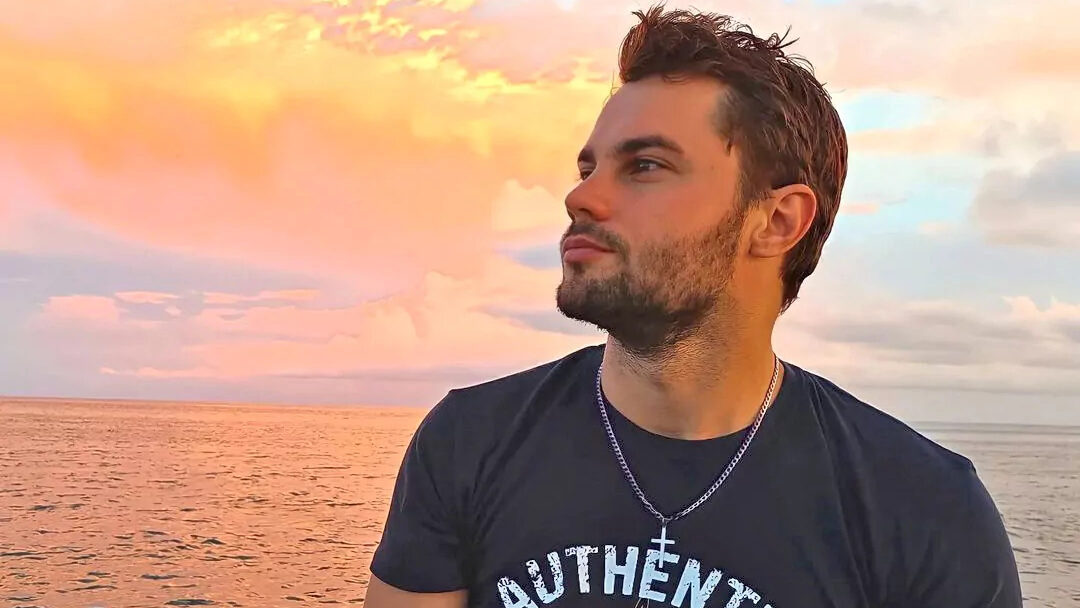
Courtesy of Marcel García
“If the European Union starts to consider democratically elected governments illegitimate simply because they do not share the dominant political line in Brussels, then the problem is no longer Viktor Orbán.”
Marcel García is a singer-songwriter and social media influencer. With almost 900,000 subscribers on his YouTube channel, García is one of Spain’s leading critics of wokeism, radical feminism, and gender ideology.
No, I think we are still in the midst of battle. It is true that the situation has improved because wokeism is being confronted head-on on social media, and even some media outlets are now daring to say things that until recently seemed unthinkable. It is clear that Trump’s victory in the United States has marked a fundamental change, as has Elon Musk’s purchase of Twitter, now X. We have seen Facebook CEO Mark Zuckerberg publicly apologize for censorship and many large companies distance themselves from woke ideology. The return of freedom of expression to social media is allowing people to find content that was previously censored and to make their own decisions. That is what the cultural battle is all about.
We run the risk of relaxing and believing that everything has already been accomplished, but we can still see cases such as Spain, where woke ideology has enormous political and media support.
My public activity began in 2018, when I released my music video for the song “Transfobia,” a satirical song that provoked an angry reaction from the LGBT lobby. The first few years were quite tough, but since then I’ve seen a huge change, and we’ve gone from brutal censorship to breaking new ground. People who turned their backs on me because of that song are now my followers and even hold stronger views. However, there is still no complete freedom. In a way, you have to self-censor to avoid being canceled, although it used to be much worse.
Yes, in Spain there is a clear reaction among young people, especially boys, against woke ideology, and I am even seeing many of them developing an interest in Catholicism. They are fed up with the barrage of ideology they receive in schools, with being blamed for being men, and with attempts to make them docile. With girls, however, it’s different. On one occasion, I was invited to give a talk on gender ideology at a high school, and while the boys applauded, the girls remained silent. They have been victimized more, and that makes them more confused.
Absolutely, doubt is normal in childhood and adolescence, and everything is absorbed. That is why the propagators of wokeism are obsessed with these stages and try to inject their ideology into education in an attempt to mold and manipulate the identity of young people.
Yes. Young men are turning away from wokeism, but at the same time, they often fall into a very individualistic view, and the normal thing, which is for both sexes to interact, stops happening. We’ll see what happens in the future, but this is not characteristic of a healthy society. In my videos, I try to convey a conciliatory message and explain that all this confrontation is not spontaneous, but rather that they have been led to it. The sexes are different, but they are designed to cooperate, to team up, not to fight each other.
There are countries such as Argentina and Chile where the situation is very similar to Spain, but in others, gender ideology has not taken hold with the same force, and society offers more resistance, especially for religious reasons. However, wokeism has spread everywhere. In Peru, a very Catholic country, I took part in a debate with 14-year-olds, and the situation was very similar to the talk I gave in Spain: the boys applauded me, and the girls called me “transphobic” for saying that a man cannot be a woman.
When I see the responses to my videos, which come to me from 25 different countries with very different contexts, I realize that we must not stop repeating the obvious over and over again. Yes, wokeism is absurd, but we have seen how it has come to prevail because many did not raise their voices.