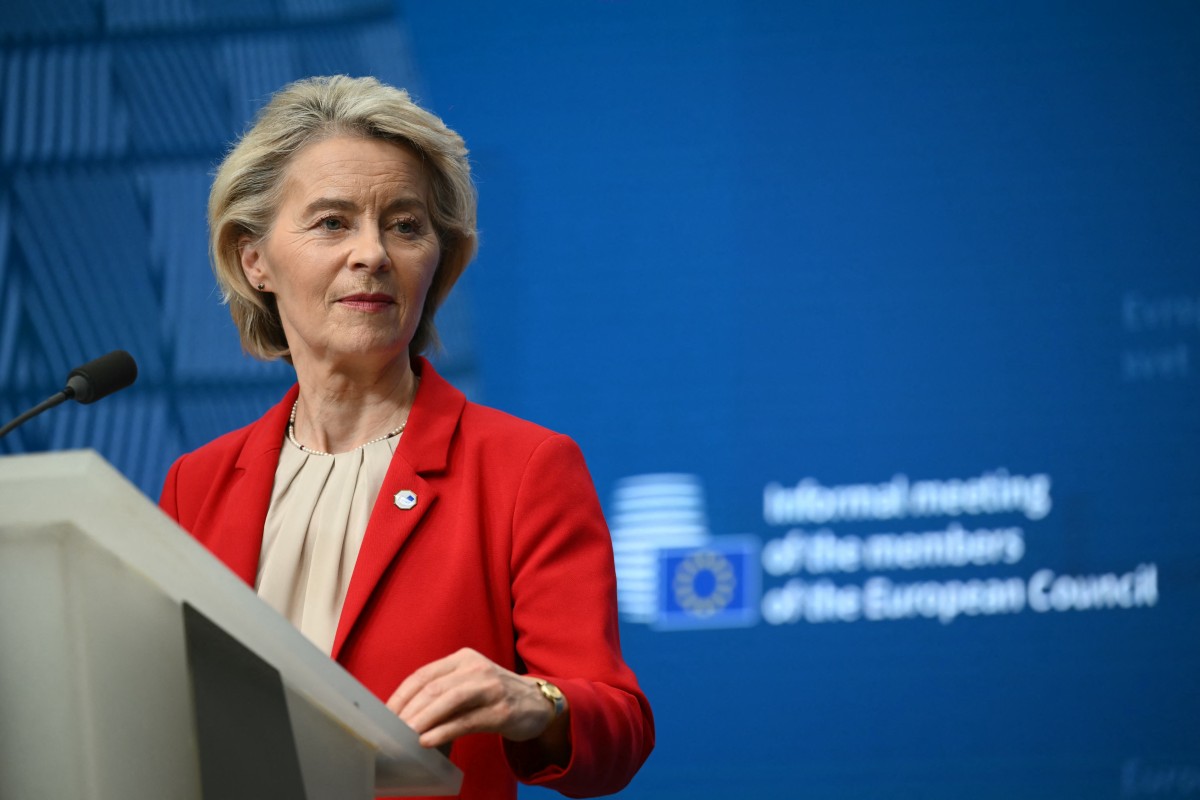
European Commission President Ursula von der Leyen delivers a speech for a closing press conference after an emergency meeting of the European Council on January 22, 2026.
NICOLAS TUCAT / AFP
The European Parliament on Wednesday, February 11th approved a €90 billion loan package for Ukraine, providing financial support to Kyiv.
Lawmakers voted 458 to 140 in favour of the measure, which is intended to cover roughly two-thirds of Ukraine’s financial needs for 2026 and 2027.
The loan will be backed by the European Union’s common budget after plans to use frozen Russian central bank assets were abandoned. Under the scheme, Ukraine will be allowed to spend up to €60 billion on weapons, with the remaining funds earmarked for general budget support.
Brussels has said Kyiv would only be required to repay the loan once Russia pays compensation for war-related damages, while the EU will cover interest costs estimated at around €3 billion per year.
With this massive loan, the EU is transferring long-term financial burdens onto European taxpayers, undermining fiscal responsibility and pursuing a course that extends the lifespan of the conflict rather than resolving it.
The decision has triggered strong criticism from across Europe’s political right. Hungarian MEP Enikő Győri of the Patriots for Europe group said the loan was approved “mostly with the votes from the EPP to the communists,” adding that the EU was continuing to finance a strategy that “hasn’t taken us a millimeter closer to the end of this devastating war.”
Hungarian prime minister Viktor Orbán warned that the joint borrowing shifts long-term financial risks onto European taxpayers, stressing that if Ukraine cannot repay the loan, member states will be forced to cover the costs. Hungary, Slovakia, and the Czech Republic secured opt-outs from the financial guarantees.
Criticism also came from leaders in Slovakia, the Czech Republic, the Netherlands, Germany, and Croatia.
Croatian MEP Stephen Nikola Bartulica said the agreement “must be openly criticized.” He warned that the money would “very likely never be repaid,” while “the war continues without a clear end.”