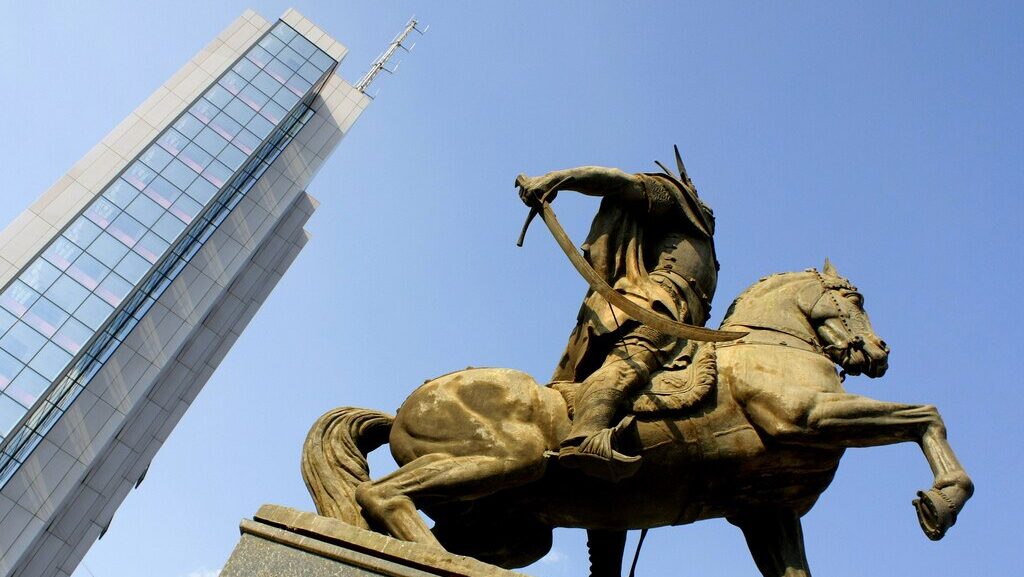
Statue of Gjergj Kastrioti (c. 1405–1468), known as Skanderbeg, in front of the Government building in Prishtina, Kosovo.
Lali / Lulzim McColly / Makolli from Prishtina, Republic of Kosova, CC BY 2.0, via Wikimedia Commons
On Friday, October 10, Kosovo formed its new parliament after months of political deadlock, but the country’s interim leader faces another uphill battle as he struggles to secure support from a bitterly divided political class.
Lawmakers in the tiny Balkan nation selected a deputy speaker, taking another step toward forming a new government after indecisive elections in February.
Parliamentary Speaker Dimal Basha declared in the capital of Pristina:
The parliament has been constituted.
But for Kosovo’s interim Prime Minister Albin Kurti, whose Vetevendosje party (VV) lacks a governing majority, the path to re–election could still be fraught with challenges. Despite topping the polls, his party has spent eight months cajoling a deeply divided parliament into electing a speaker and deputy speaker.
It must now cobble together enough support to form a government. However, the largest opposition parties have repeatedly ruled out joining a coalition with Kurti’s party, which holds 48 seats—13 short of a majority.
Lumir Abdixhiku, leader of one of the largest opposition groups, told reporters that
the path to forming a government has been opened, while we invite VV to prove that it has the votes for this.