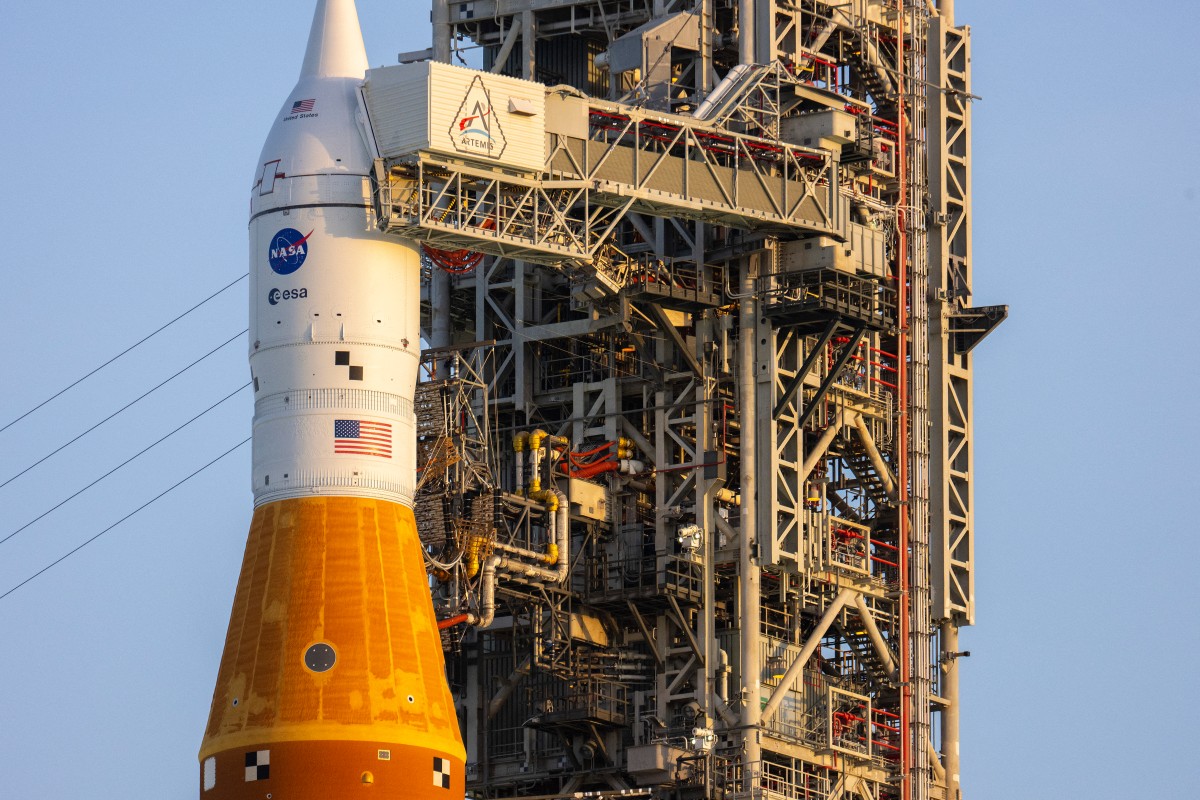
NASA’s Artemis II Space Launch System rocket and Orion spacecraft rest on Launch Pad 39B at Kennedy Space Center in Cape Canaveral, Florida, on March 31, 2026, ahead of the crewed lunar mission.
JIM WATSON / AFP
On April 1st three men and one woman are set to embark on the first crewed journey to the Moon since 1972, a landmark odyssey that aims to launch the U.S. into a new era of space exploration.
The NASA mission dubbed Artemis II has been years in the making after facing repeated setbacks, but is finally scheduled to take off from Florida as early as April 1st at 6:24 pm (2224 GMT).
The team—comprising Americans Reid Wiseman, Victor Glover, and Christina Koch, and Canadian Jeremy Hansen—will embark on the approximately 10-day mission and hurtle around Earth’s natural satellite without landing (much like Apollo 8 did in 1968).
Astronaut Koch told a press conference
The moon is a witness plate to our entire solar system’s formation.
It’s a stepping stone to Mars, where we might have the most likelihood of finding evidence of past life, but it’s also a Rosetta Stone for how other solar systems form.
If Wednesday’s launch is canceled or delayed, there are more liftoff opportunities until April 6th, although officials say weather later in the week was looking slightly less favorable.
“We’ll have to monitor those feisty cumulus clouds and potentially a few showers and breezes as well,” said launch weather officer Mark Burger on March 31st, who added that even if there are a few rain showers, “none of those look particularly vigorous” and would likely be intermittent on Wednesday—when “we should be able to find some clear air to launch Artemis.”