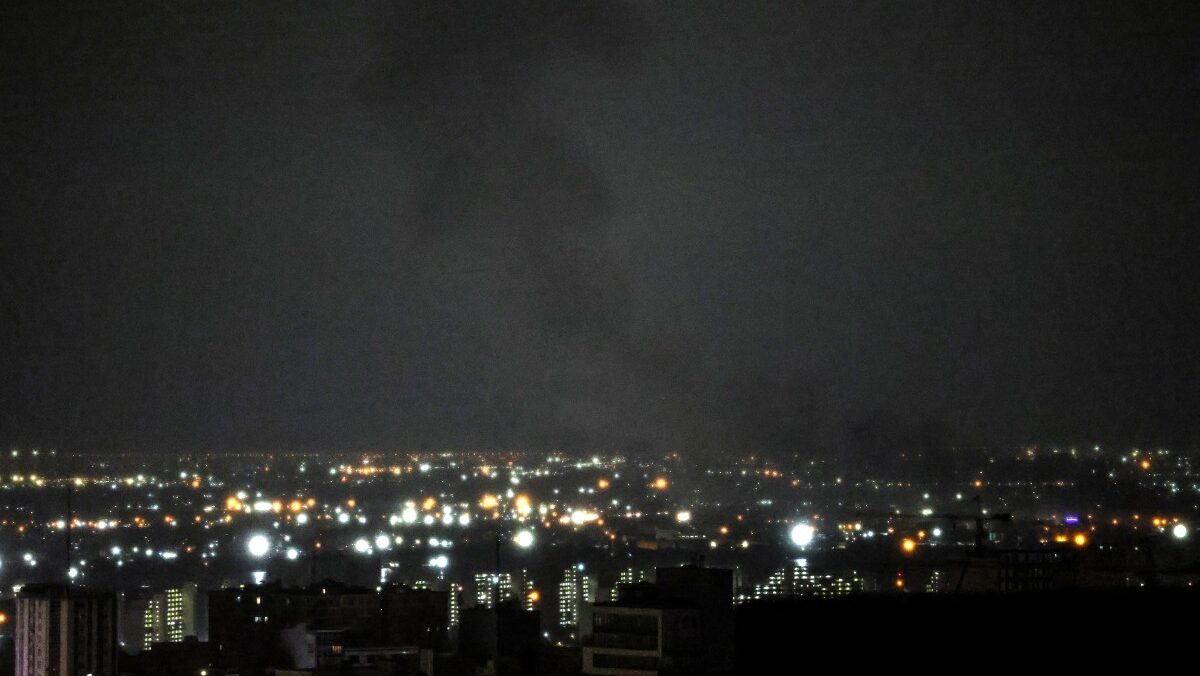
A plume of smoke rises from the site of a strike in Tehran early on March 28, 2026.
ATTA KENARE / AFP
Gulf states and Israel came under renewed missile and drone attacks on Saturday as Israel intensified strikes on Iran, with the war now entering its second month and spreading across the region.
In a sign of further escalation, Israel’s military said it intercepted a missile launched from Yemen—the first since the conflict began on February 28—after threats from Iran-backed Houthi forces to join the fighting.
The war was triggered by U.S.-Israeli airstrikes that killed supreme leader Ayatollah Ali Khamenei. One month on, there is little sign of de-escalation.
Israeli strikes hit Tehran again overnight, with reports of multiple explosions and thick smoke over the capital.
Across the Gulf, the conflict is increasingly spilling beyond Iran and Israel. In the UAE, debris from an intercepted missile caused fires in an Abu Dhabi industrial zone, injuring five Indian nationals. Saudi Arabia reported intercepting a missile and drones, while Bahrain said a blaze caused by what it called “Iranian aggression” had been contained.
In Israel, air raid sirens sent civilians into shelters, including in Tel Aviv, where one man was killed and two others wounded. In the north, media reported coordinated attacks involving Iran and Hezbollah.
An Iranian strike on Prince Sultan Air Base in Saudi Arabia wounded at least twelve U.S. soldiers, two seriously, according to U.S. media reports.
A central flashpoint remains the Strait of Hormuz, whose near-closure has rattled global markets and pushed oil prices higher.
U.S. envoy Steve Witkoff said Washington remains hopeful Iran will enter talks “this week,” citing a proposed 15-point peace plan. President Donald Trump has extended a deadline for Tehran to reopen the strait until April 6, warning of further strikes if it fails to comply.
Meanwhile, Israel confirmed strikes on nuclear-related sites, including facilities at Khondab and Ardakan. Iran said there was no radioactive release.
Iranian foreign minister Abbas Araghchi warned of retaliation, while Israel reported multiple waves of missile attacks within hours.
The conflict is drawing in regional actors. Iran’s Revolutionary Guards warned they would target industrial sites across the Gulf, and Yemen’s Houthi movement said it was ready for direct intervention.
Lebanon has also been pulled deeper into the war after Hezbollah attacks triggered Israeli strikes on Beirut’s southern suburbs. The UN warns more than one million people have already been displaced.