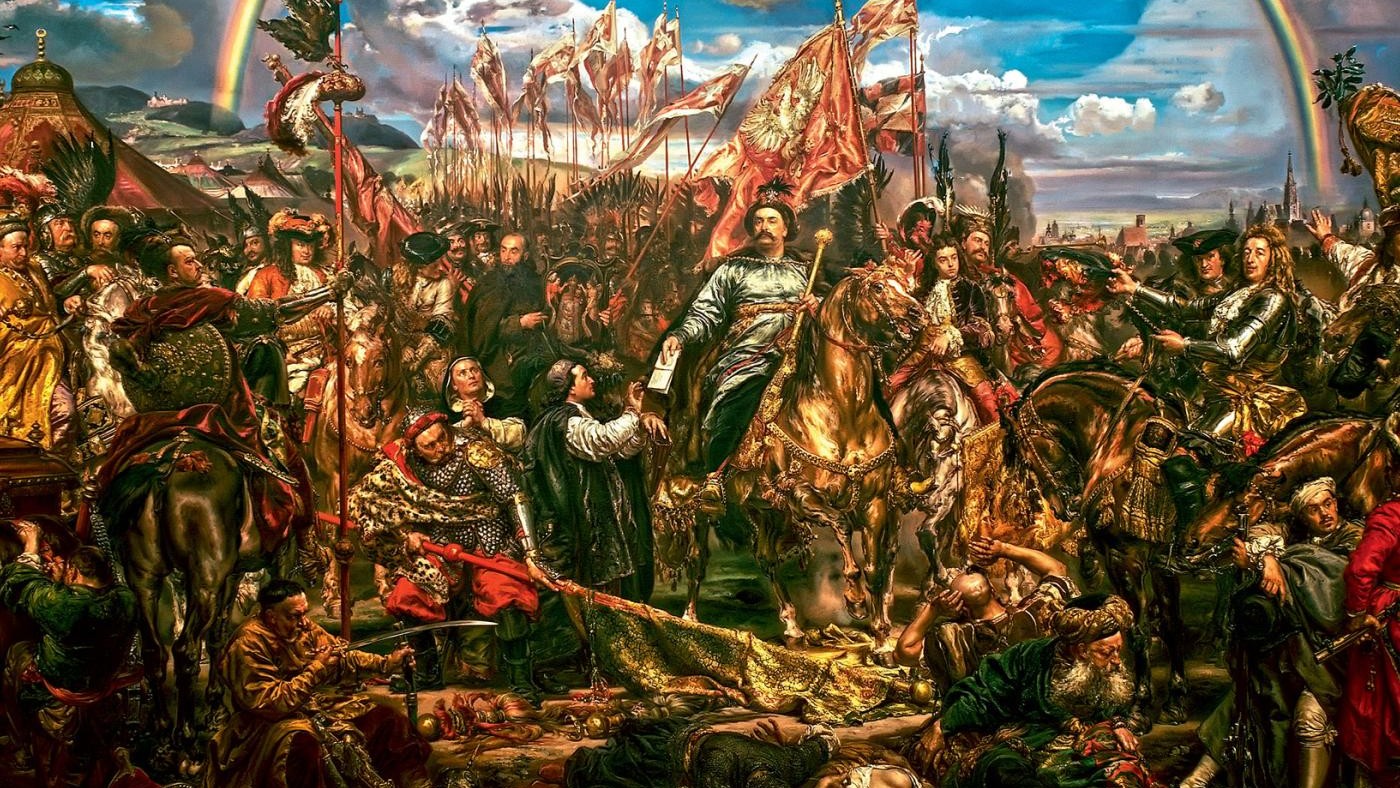
Jan III Sobieski sending the message of victory to the Pope after the Battle of Vienna (cropped) (Oil draft 58 x 100 cm by Jan Matejko (1838-1893))
Public Domain, https://commons.wikimedia.org/w/index.php?curid=467778
The debate over Vienna’s historical identity has reached a boiling point as SPÖ city councilor Aslıhan Bozatemur formally opposed a planned monument to King Jan III Sobieski. Bozatemur argues that “there is no place in Vienna for a monument that promotes xenophobia, Islamophobia, or anti-Turkish sentiment,” characterizing the project as a “heroizing” tribute that risks inciting hatred and exclusion. She maintains that memorial sites must instead reflect a “diverse and balanced” historical context.
This stance has triggered a sharp defense of European heritage from conservative and right-leaning parties. Maximilian Krauss (FPÖ) condemned the SPÖ’s position as “historical amnesia,” asserting that Sobieski was the essential “liberator of Vienna.” Similarly, Caroline Hungerländer (ÖVP) emphasized that “integration also means integrating oneself into the history and culture of a country,” arguing that the defense against the 1683 Turkish siege is a non-negotiable pillar of the city’s past.
Historically, Sobieski’s leadership at the Battle of Kahlenberg was the decisive factor in breaking the Ottoman siege, a victory that preserved Vienna and shifted the course of European history. While the relief was a coalition effort, the Polish King’s authority was the glue that held the alliance together.
The controversy is further intensified by reports regarding Bozatemur’s alleged ties to Turkish nationalist circles, leading critics to question whether the opposition stems from a desire for inclusivity or an attempt to surrender the city’s history to “false political correctness.”