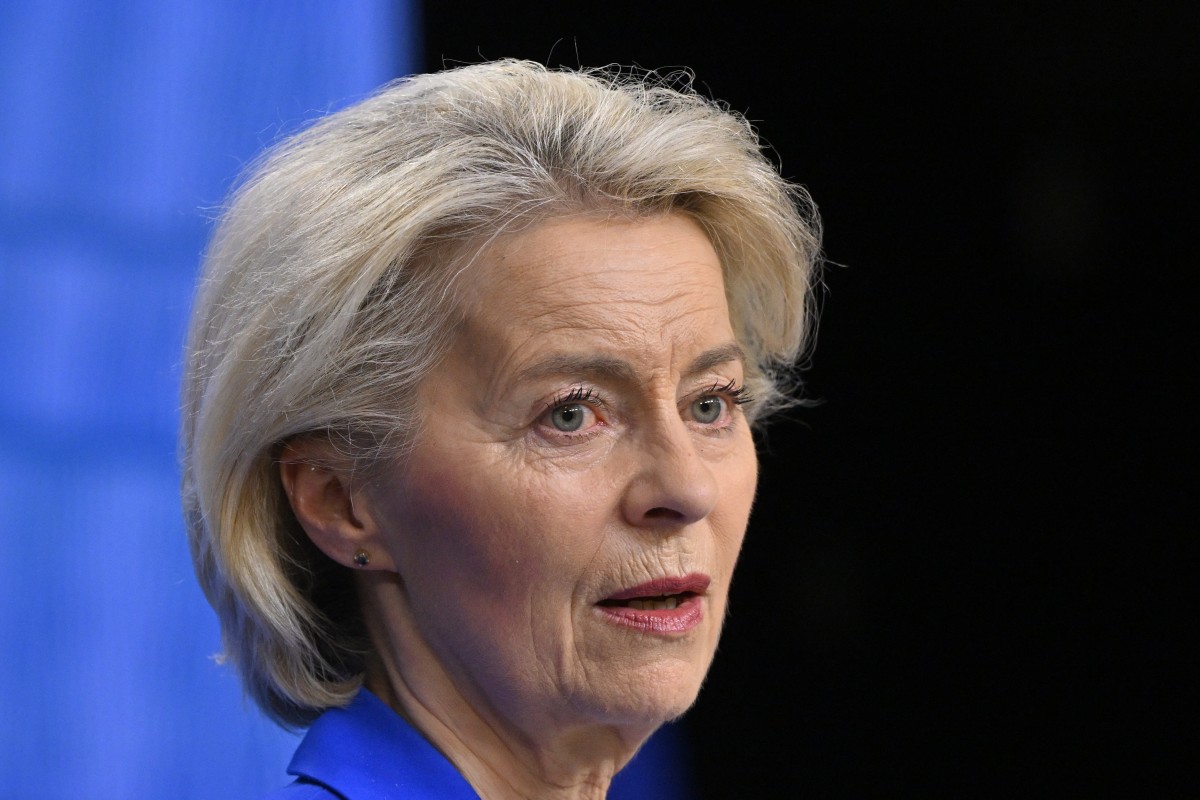
The president of the European Commission Ursula von der Leyen speaks at a press conference during the European Union Summit at the EU headquarters in Brussels, on March 19, 2026.
JOHN THYS / AFP
Hungary has come under renewed pressure from the European Commission over its fuel pricing policies introduced during the ongoing energy crisis. The Hungarian government adopted Government Decree 50/2026 (III. 9.) in March to protect the country’s fuel supply, including measures that allow lower fuel prices for vehicles with Hungarian license plates compared to those from other European Union member states.
In a letter to Budapest, the Commission argued that the measures may violate EU law, claiming they restrict the free movement of goods, services, and people. It also raised concerns about indirect discrimination, stating that the policy places a heavier burden on citizens from other member states. Furthermore, Brussels criticized Hungary for failing to notify the measures under relevant single market transparency rules.
The Commission has called on Hungary to justify the measures and even suggested suspending them until their compatibility with EU law is clarified—another example of Brussels overreach during a time of crisis and making the Hungarians pay the price of its flawed policies.
Balázs Orbán, Political Director to Prime Minister Viktor Orbán, strongly criticized the Commission’s position in a post on X, warning that Hungary
cannot accept that, in such a situation, the Commission attacks instead of helping.
He stated that the country is facing both a Ukrainian oil blockade and a looming global energy crisis.
According to the government, maintaining protected fuel prices is essential to shield Hungarian families, businesses, and farmers from rising costs. Officials insist that Hungary will not allow its citizens to bear the consequences of external pressures.