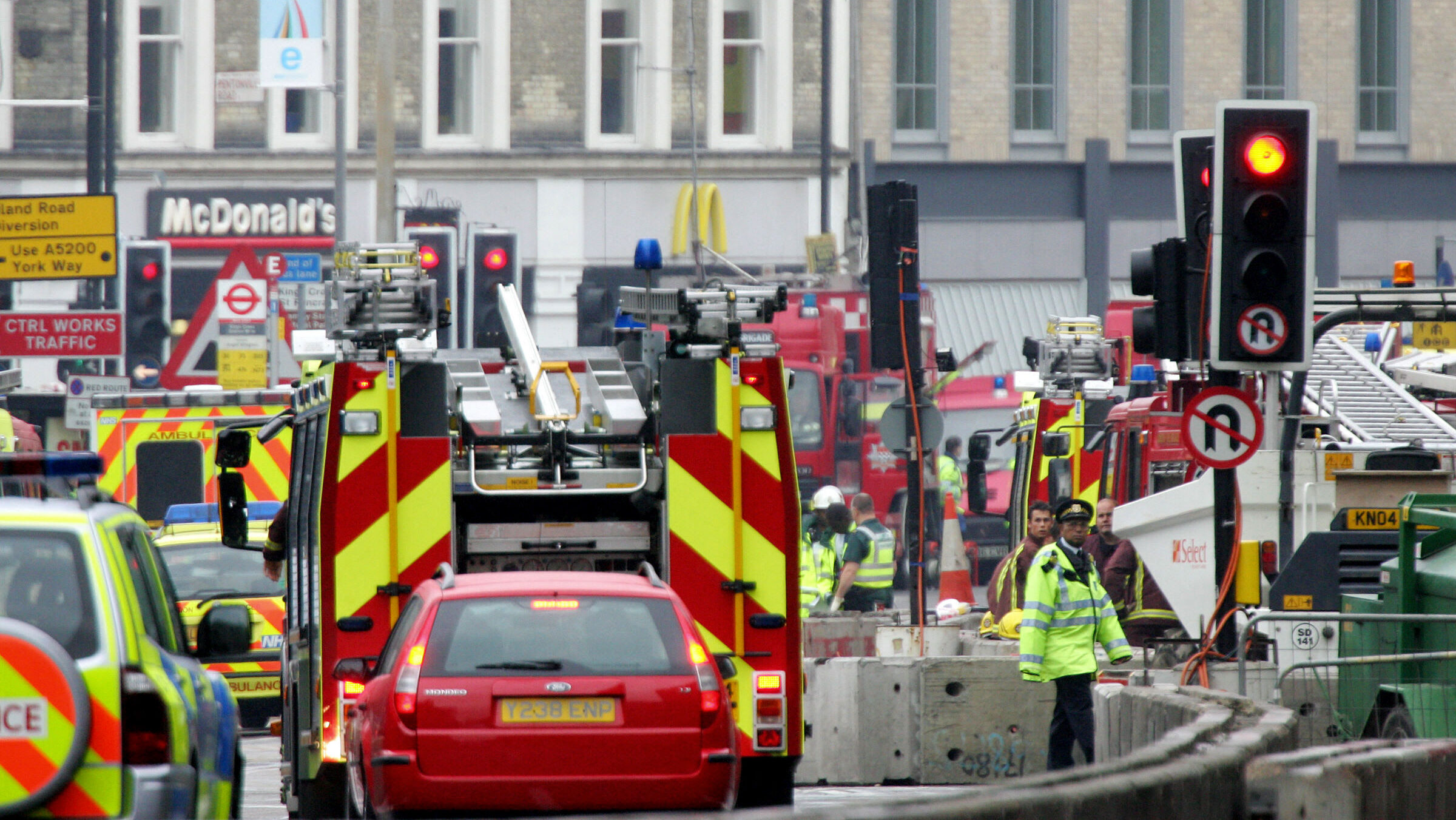
Emergency services surround Kings Cross station after the terrorist attack in London on 7 July 2005.
ADRIAN DENNIS / AFP
Monday, July 7th, is the 20th anniversary of the 7/7 terror attacks which killed 52 Londoners and injured almost 800 more. A gang of Islamist suicide bombers from Leeds, West Yorkshire, arrived in the capital and targeted public transport.
Three London underground trains were hit; a fourth bomber, Hasib Hussain, detonated his bomb on a bus, killing 13 passengers in Tavistock Square.
King Charles, PM Keir Starmer, and home secretary Yvette Cooper have all issued official messages on the 20-year anniversary. Whereas the King emphasised his solidarity with the victims—his “heartfelt thoughts and special prayers remain with all those whose lives were forever changed on that terrible summer’s day”—government messaging was predictable in that it avoided confronting the Islamist motivation for the violence. Starmer asserted:
Those who tried to divide us failed. We stood together then and we stand together now—against hate and for the values that define us of freedom, democracy, and the rule of law.
This is wishful thinking, with homegrown Islamist terror going on to claim dozens of lives— sometimes in mass casualty attacks on London, again—in the 20 years since 7/7. Worryingly, this level of violence is now routinely treated as something akin to a natural disaster, typified when the lyric “don’t look back in anger” was trotted out as a response to the 2017 Manchester Arena bombing, which killed 22 and injured 1,017. Starmer’s idea of unity is one where public fury with the Islamists is strongly discouraged.
Two weeks after 7/7, a similar plot involving five would-be suicide bombers was averted when their devices failed to detonate. The spouse of Jamaican-born 7/7 terrorist Germaine Lindsay (“Abdullah Shaheed Jamal”), Samantha Lewthwaite (“the White Widow”), remains at large, accused of involvement in more than 240 murders in Africa between 2012 and 2019.
Meanwhile UK anti-terror strategy emphasises the equivalence of Islamist terror and ‘the far right,’ scouring social media for evidence of potential threats, such as concern about mass immigration.