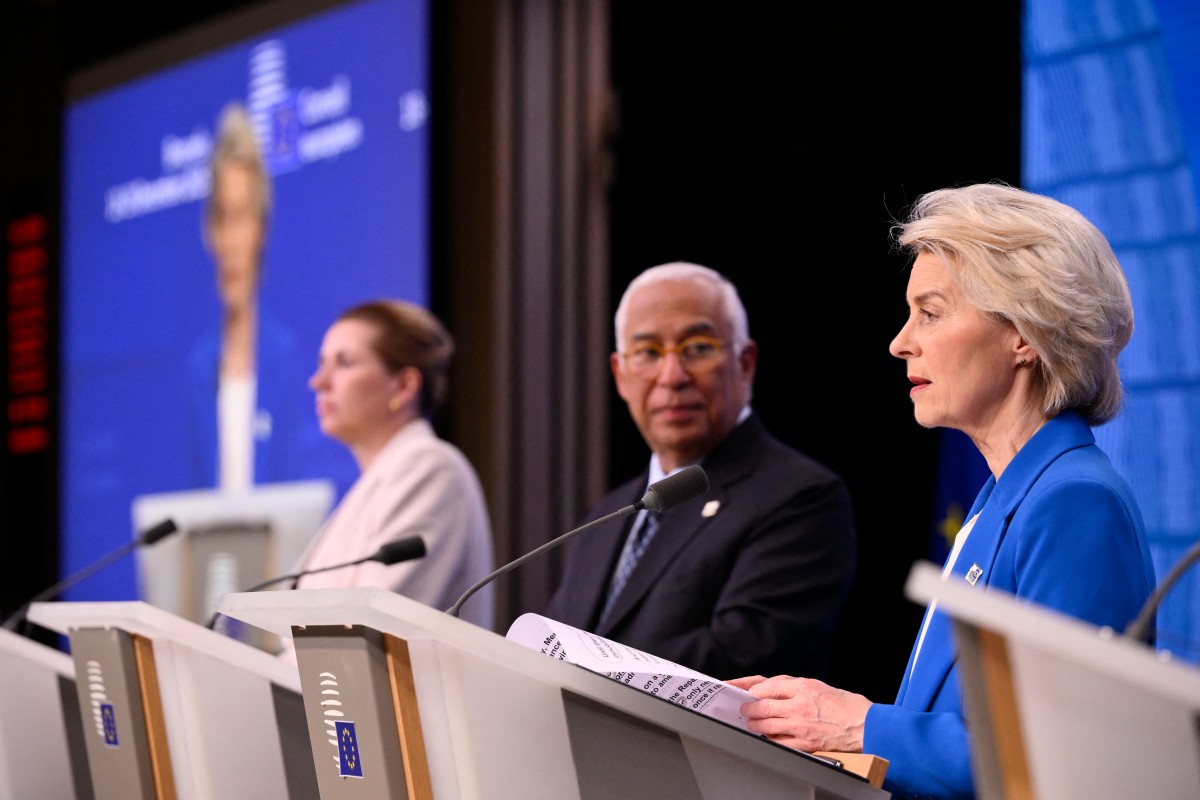
European Commission President Ursula von der Leyen (R) speaks as European Council President Antonio Costa (C) and Denmark’s Prime Minister Mette Frederiksen listen during a press conference after the European Council meeting in Brussels, Belgium on December 19, 2025.
JOHN THYS / AFP
European Union bigwigs struck a deal on Friday, December 19th to provide Ukraine a loan of €90 billion to plug its looming budget shortfalls—but failed to agree on using frozen Russian assets to provide the funding.
European Council head António Costa, who chaired the summit, posted
Today’s decision will provide Ukraine with the necessary means to defend itself and to support the Ukrainian people.
Ukrainian president Volodymyr Zelensky declared on X that the deal “is significant support that truly strengthens our resilience,” adding:
It is important that Russian assets remain immobilized and that Ukraine has received a financial security guarantee for the coming years.
In a post on Telegram, the Kremlin’s top economic negotiator Kirill Dmitriev welcomed the failure to “illegitimately use Russian assets to finance Ukraine,” adding that “for the time being, the law and common sense have won a victory.”
Using joint debt requires a unanimous decision by the EU’s 27 member states, meaning Kyiv sceptics Hungary, Slovakia, and the Czech Republic were given an exemption from the commitment to avoid a veto on voting for the financing package.