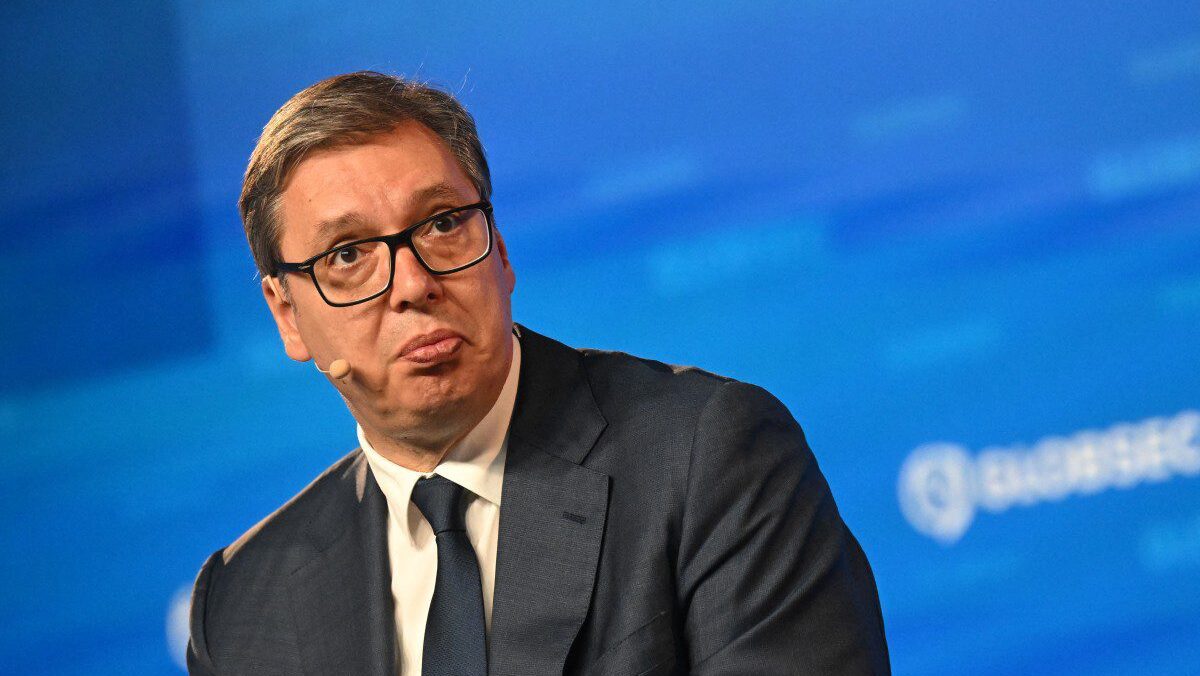
Serbia’s President Aleksandar Vučić
Michal Cizek / AFP
The European People’s Party (EPP) has decided to “initiate a scrutiny process” regarding Serbia’s ruling Serbian Progressive Party, EPP president Manfred Weber announced on Tuesday, September 9th.
The decision comes as questions arise regarding President Aleksandr Vučić’s policies and the ongoing protests against the Serbian SNS government—an associate member of the EPP group.
Ongoing anti-government demonstrations since November were sparked initially by the collapse of a canopy at the renovated Novi Sad train station, killing 16 people. Over the past week, protests have escalated, with demonstrators—often wearing face masks—damaging or even demolishing SNS offices in Belgrade, Novi Sad, and Valjevo. Student-led demonstrations in Novi Sad on the evening of September 5th turned violent after clashes with riot police.
“The EPP has not turned a blind eye to what is happening in Serbia,” Weber told reporters in Strasbourg. Vučić’s SNS maintains close ties to the party but has limited voting rights. Weber said the investigation into SNS membership will be carried out by an EPP working group “in the coming days.”
The EPP has also criticized Vučić’s close ties with Russian President Vladimir Putin and Hungarian Prime Minister Viktor Orbán. Despite European Union sanctions, Vučić attended Moscow’s Victory Day parade on 9th May alongside Putin.
Vučić defended his record on the demonstrations, saying he is ready for dialogue, telling Euronews:
Any kind of violence that we saw in the streets is not good for this country.
While the European Green Party has urged the EPP to press for free elections, the European Parliament will host a debate on protests in Serbia.
From time to time, the Brussels mainstream takes an interest in authoritarianism abroad, this often acts as a cover for attacking sovereigntist states which don’t toe its official line on the war in Ukraine.