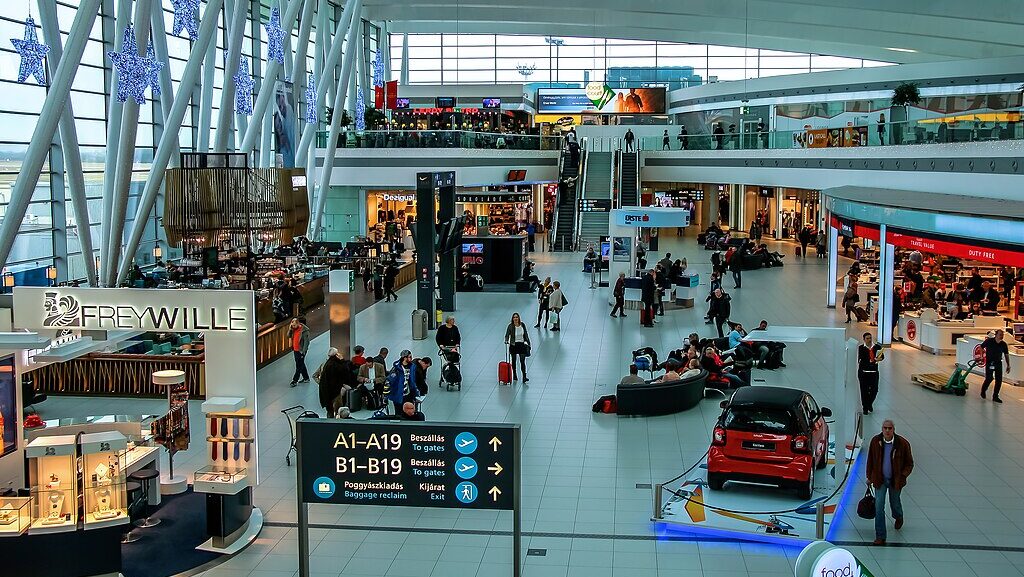
Budapest Ferenc Liszt International Airport
Jorge Franganillo from Barcelona, Spain, CC BY 2.0, via Wikimedia Commons
Liszt Ferenc International Airport has emerged as a strategically important air cargo hub in Central and Eastern Europe, with record cargo volumes and ongoing infrastructure expansion.
The airport of the Hungarian capital handled nearly 300,000 tonnes of cargo in 2024, and forecasts suggest this could reach 400,000 tonnes by 2025, making it one of the region’s leading air freight centres.
A key milestone in this growth was the so-called BUD Cargo terminal complex, built specifically for handling large volumes and enabling Budapest to compete with major Western European airports while maintaining strong connections with Asia, particularly China.
The local logistics community and international carriers, including DHL, FedEx, and UPS, have strengthened Budapest’s position, as air freight dynamically grows alongside e-commerce demand.
The airport also holds IATA CEIV Lithium Batteries certification for safely handling batteries and other specialised goods, a crucial factor for Hungary’s automotive industry.
Combined with strong sea and rail links, modern infrastructure, and a favourable location, Budapest is becoming a central player in global supply chains and a key logistics hub in Central and Eastern Europe.