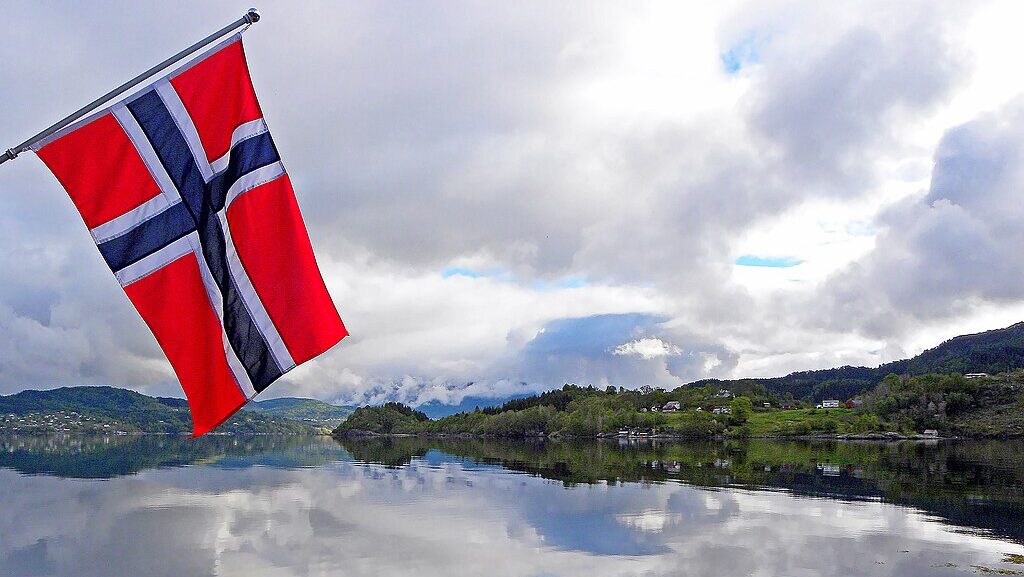
A flag celebrating Norwegian Constitution Day, May 17th, hangs on the photographer’s boathouse on Osterøy.
Odd Roar Aalborg, CC BY-SA 4.0, via Wikimedia Commons
A new poll shows that 55% of Norwegians oppose joining the EU, while 33% are in favor and 12% are undecided. Support for membership has fallen since March, when 40% said yes. Older voters (60+) are most positive, while young people under 30 are most skeptical. Support is strongest in Oslo and southern Norway and weakest in the central and northern regions.
The Center Party (SP) is the most strongly opposed, with 96% of its voters against EU membership. Its leader, Trygve Slagsvold Vedum, welcomed the result and warned that a new EU debate could emerge if Venstre (which, despite its name, meaning ‘Left,” is a center-right party) and conservatives gain power, since they may push for an investigation likely to favor membership.
Liberal Party deputy leader Sveinung Rotevatn, however, argues that global challenges like trade wars, the climate crisis, and European security make EU membership more important, and he wants a new referendum. The Liberal Party is the most pro-EU, with 63% of its voters supporting membership.
The last referendum on EU membership was in 1994. Vedum insists nothing has changed to justify joining, while Rotevatn believes Norway’s lack of influence under the EEA (European Economic Area) agreement weakens its economy and security.
Political analyst Martin Stubban suggests the earlier rise in support for the EU was linked to fears about Trump and trade wars, which have now subsided. He predicts the EU issue will not play a major role in the upcoming election, as only a small percentage of voters consider it decisive.
At the same time, a recent debate highlighted by observers on X underlined how only three of nine major parties openly support pursuing membership, with the governing Labour Party itself firmly saying no—a stance that makes near-term EU accession moves even more unlikely.