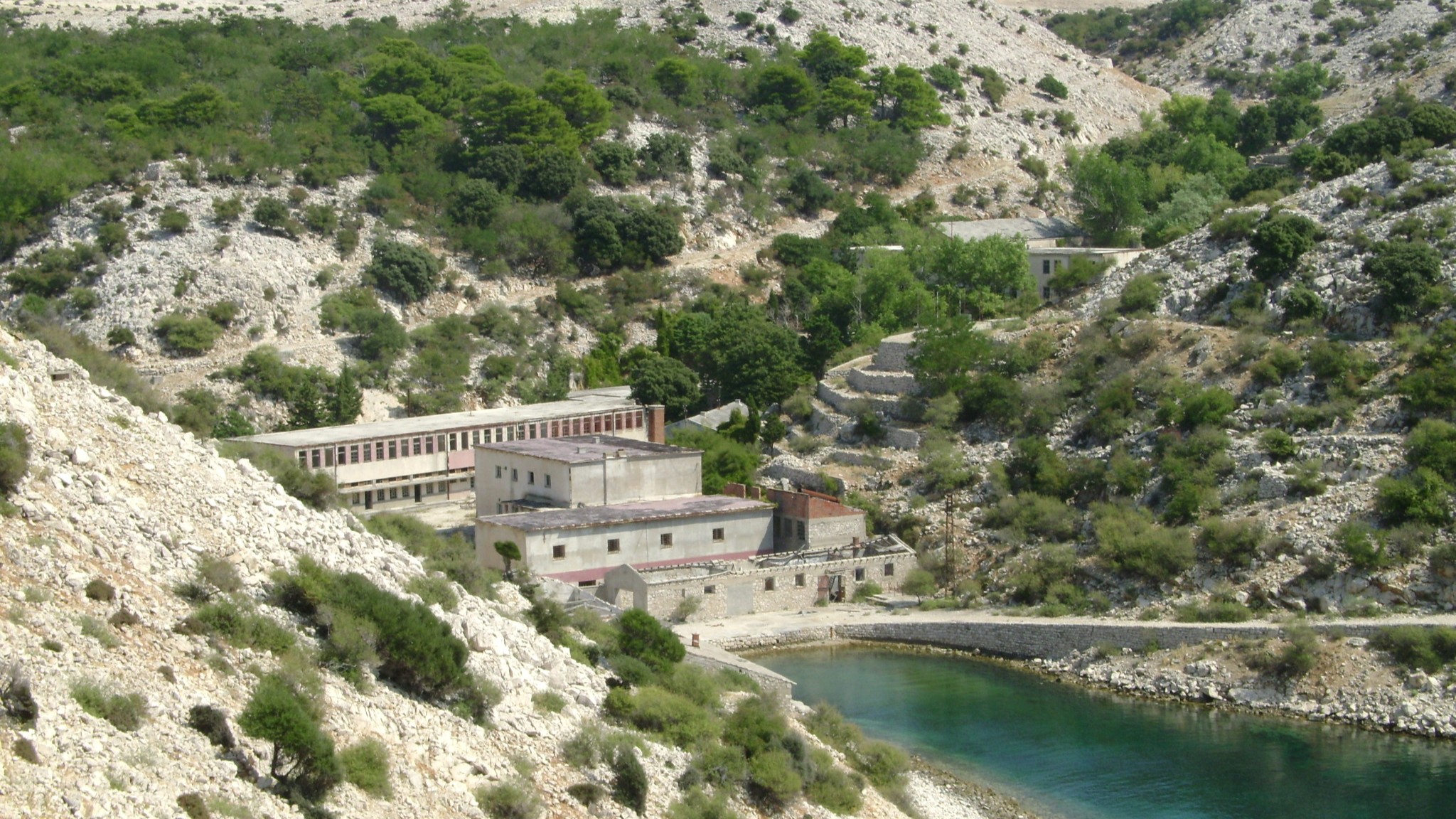
The pentitentiary on the island of Goli Otok where political prisoners were held until 1989 under the Communist Yugoslav regime
Marko Jukić -Majkl – Own work, CC BY-SA 4.0, https://commons.wikimedia.org/w/index.php?curid=110301445
Croatia held a burial on August 23rd for the victims of the communist Yugoslav regime, decades after they were killed during World War II.
The ceremony took place in Sošice on the Žumberak Mountains, on the European Day of Remembrance for victims of totalitarian and authoritarian regimes.
The remains exhumed from the Jazovka pit in 2022 included 814 people, mostly aged 20 to 35, including women, nuns, and children.
Many victims were taken from hospitals in Zagreb or captured by Yugoslav Army forces in 1945.
Zagreb Archbishop Dražen Kutleša celebrated mass and called for acknowledgement of the regime’s crimes.
Deputy Prime Minister Tomo Medved said: “Behind every number is a human life and families plagued with sorrow, but also the murderers who committed these bestial acts.”
Commemorations were also held at the former labor camps on Sveti Grgur and Goli Otok.
The Croatian government stated it “permanently cherishes the culture of remembrance and resolutely condemns the murders, political assassinations and mass violations of human rights committed under previous totalitarian regimes.”
Government representatives visited Zagreb’s Mirogoj cemetery, paying their respects at the grave of political dissident Bruno Bušić, the memorial to Croatian victims of the Bleiburg repatriations, the Stations of the Cross, and the grave of the first Croatian President, Franjo Tuđman.