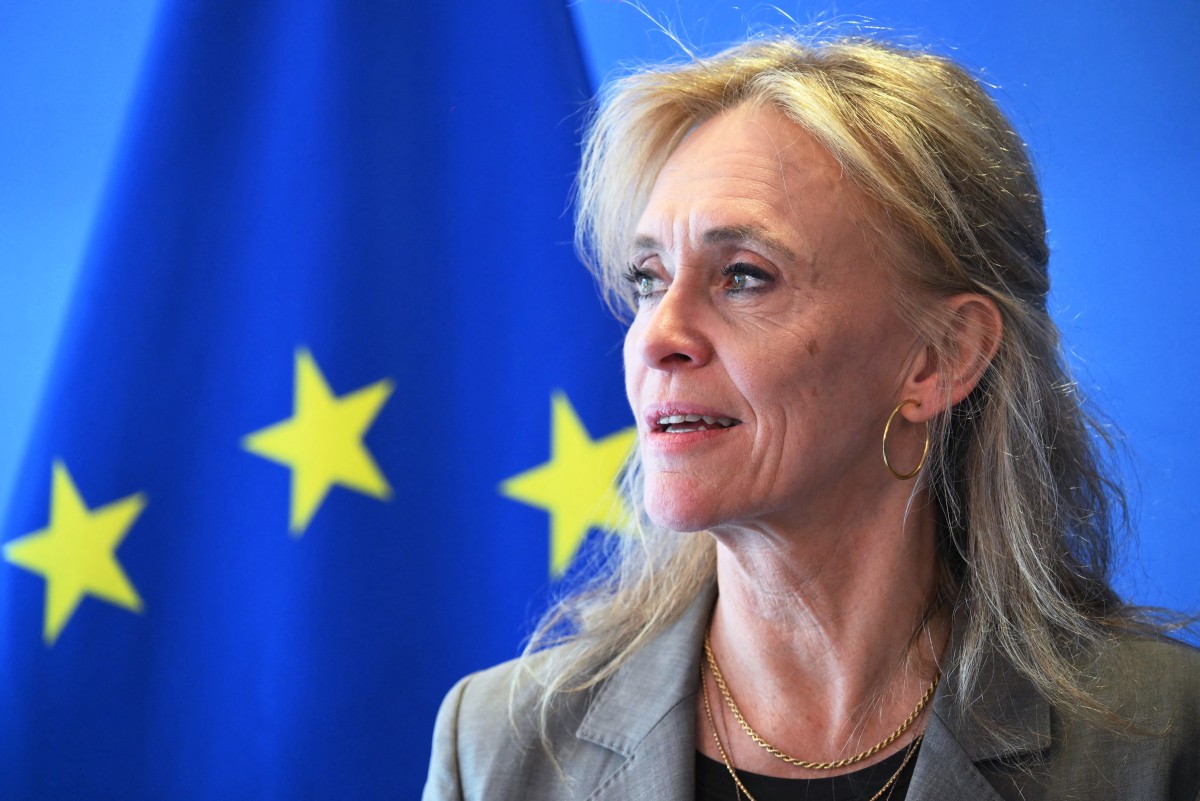
Iceland’s foreign affairs minister Þorgerður Katrín Gunnarsdóttir
NICOLAS TUCAT / AFP
The EU has signed a new defence pact with Iceland, deepening security ties in the Arctic just months before Reykjavik votes on whether to revive stalled membership talks.
The agreement—signed Wednesday in Brussels by EU foreign policy chief Kaja Kallas and Icelandic foreign minister Þorgerður Katrín Gunnarsdóttir—aims to strengthen cooperation in a region of growing strategic importance as melting sea ice opens new routes and resources.
In a statement, the Commission described the deal as a “milestone” that would give fresh momentum to relations with the North Atlantic island.
The pact forms part of a broader push by Brussels to expand defence cooperation with like-minded partners, following similar agreements with countries including the UK, Canada, and India.
Its timing is politically significant. Iceland’s government has proposed holding a referendum on August 29 on whether to resume EU accession talks, which were abandoned in 2015 amid domestic opposition.
Security concerns have also sharpened. U.S. president Donald Trump’s renewed interest in acquiring Greenland has unsettled the region, highlighting Iceland’s strategic vulnerability. The country has no standing army and relies on NATO—principally the United States—for its defence.
Although not an EU member, Iceland already participates in the bloc’s single market through the European Economic Area, alongside Norway and Switzerland.