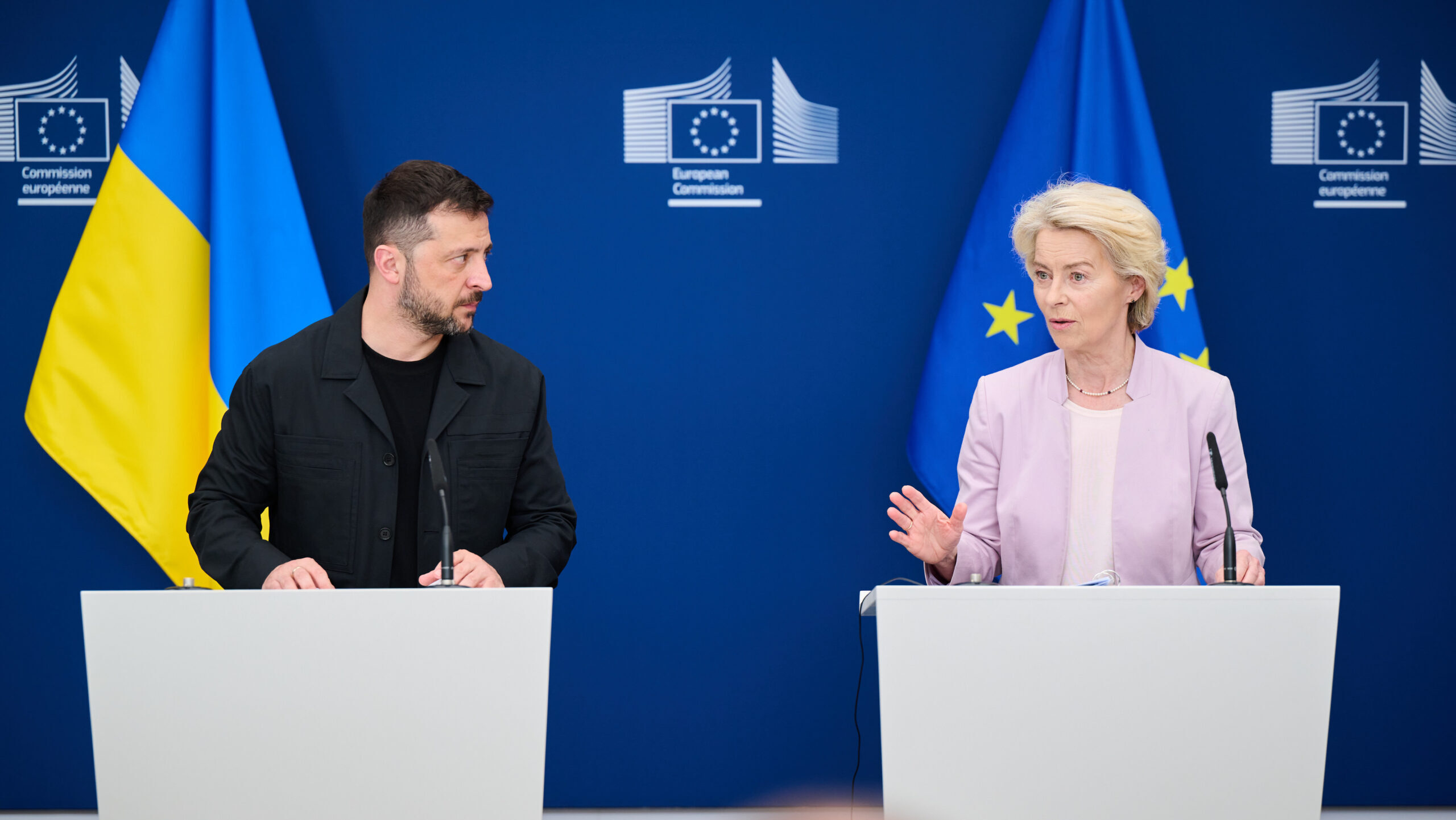
Volodymyr Zelensky and Ursula von der Leyen
© European Union, 2025, CC BY 4.0, via Wikimedia Commons
EU leaders are quietly preparing an emergency workaround to keep money flowing to Ukraine after Belgium sharply escalated its opposition to the Union’s proposed “reparations loan”—a plan to leverage €185 billion in Russia’s immobilised central-bank assets held in Brussels.
Belgian prime minister Bart De Wever has effectively frozen the scheme by demanding sweeping, legally binding guarantees to shield Belgium and Euroclear from all possible financial, legal, and geopolitical fallout. In a blistering letter to European Commission president Ursula von der Leyen, De Wever denounced the loan as “fundamentally wrong” and warned it would expose Belgium to retaliation from Moscow and enormous hypothetical liabilities that other EU states appear unwilling to share.
The backlash leaves the EU scrambling for a Plan B ahead of December’s summit. Officials are now weighing a bridge loan funded by market borrowing that would hand Kyiv a non-repayable grant for its core budget and military needs in 2026. But this option requires either national guarantees or changes to the EU budget rules—both politically fraught, especially with Hungary still opposing Ukraine aid outright.
Brussels is also anxious about timing: Ukraine expects fresh support by mid-2026, and the IMF has made its own $8.1 billion package conditional on solid EU commitments.
The dispute comes as Washington pursues a secretive peace push with Moscow, prompting De Wever to warn that the EU risks undermining potential negotiations by rushing to seize Russian assets. The row is further complicated by a corruption scandal in Kyiv that forced the resignation of President Volodymyr Zelensky’s powerful chief of staff, Andriy Yermak—an unwelcome backdrop as Brussels seeks unanimous backing for yet another multi-billion commitment.