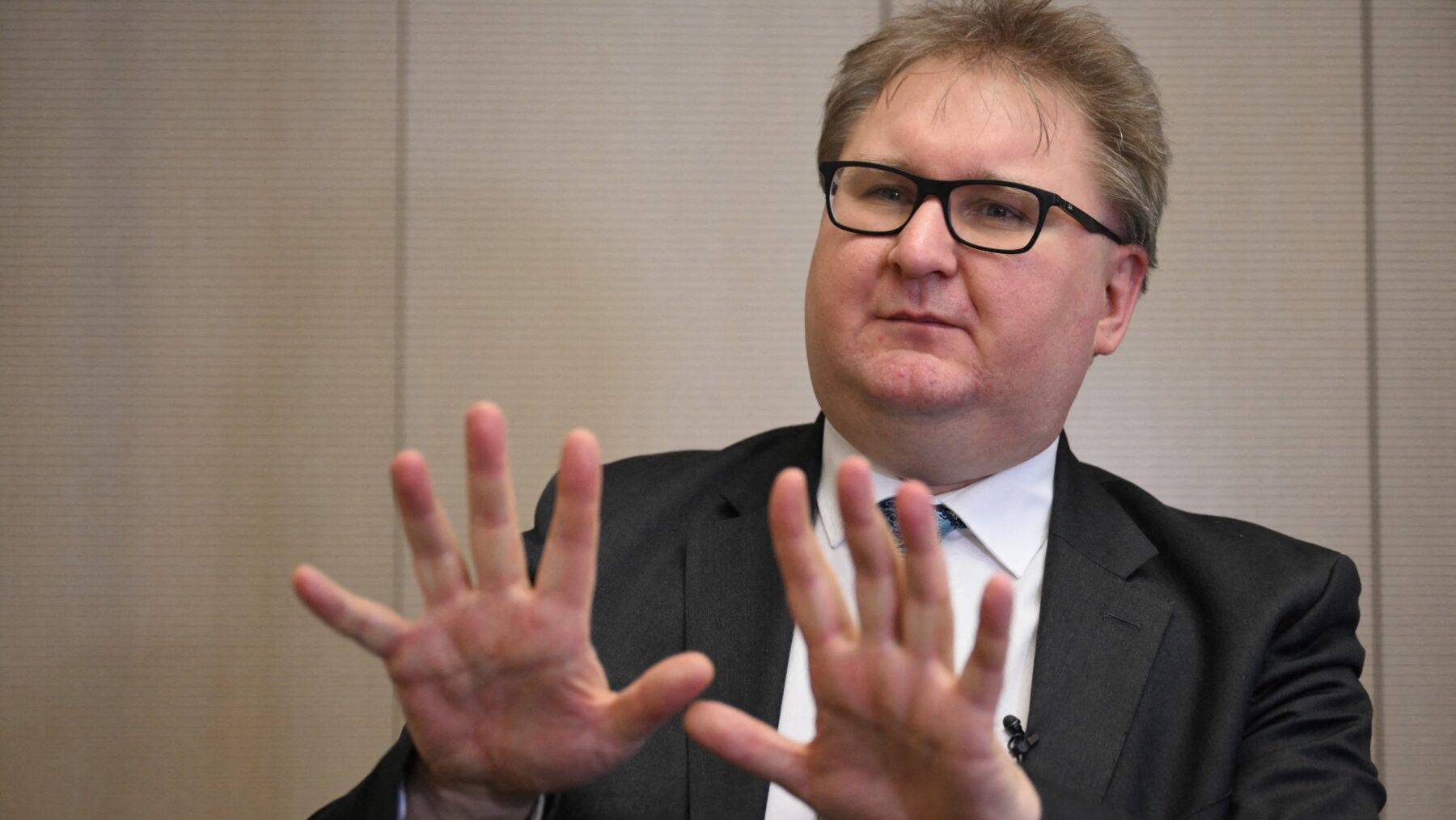
Ukraine’s Deputy Prime Minister Taras Kachka.
John Thys / AFP
The European Union has agreed on a “unique” solution to allow Ukraine and Moldova’s accession process to move forward despite Hungary’s veto, Ukraine’s deputy prime minister announced during talks in Budapest on Saturday.
Deputy PM Taras Kachka explained that normally, if even a single member state objects, negotiations would be blocked. In this case, however, the EU and the European Commission will continue to set benchmarks and carry out technical preparations while awaiting Budapest’s approval.
Formal accession talks still require unanimous consent, but by the time Ukraine meets all the necessary conditions, Hungary may lift its veto. Most EU member states support bypassing Hungary in order to open negotiating “clusters,” echoing Lithuania’s proposal to continue technical discussions without Hungary, the Kyiv Independent reported.
According to the article, Hungary remains the only member state opposing Ukraine’s accession, citing threats to Hungarian farmers and food security. The EU is considering ways to limit Hungary’s ability to block the process and reportedly has “Plan B and Plan C” ready.
EU treaties clearly state that major decisions must be taken unanimously, and enlargement policy is no exception: all member states must agree before a new country can join. Excluding Hungary from this requirement would effectively override the treaty framework and create a dangerous precedent. If one member state can be sidelined once, any other could be sidelined later. In the long term, this would undermine confidence that all member states’ voices carry equal weight and deepen existing divisions within the European Union.
Hungarian Prime Minister Viktor Orbán, explaining Hungary’s opposition to Ukraine’s accession, has said it would be a financial tragedy for the bloc, and that the long-term damage to the European economy would be devastating.