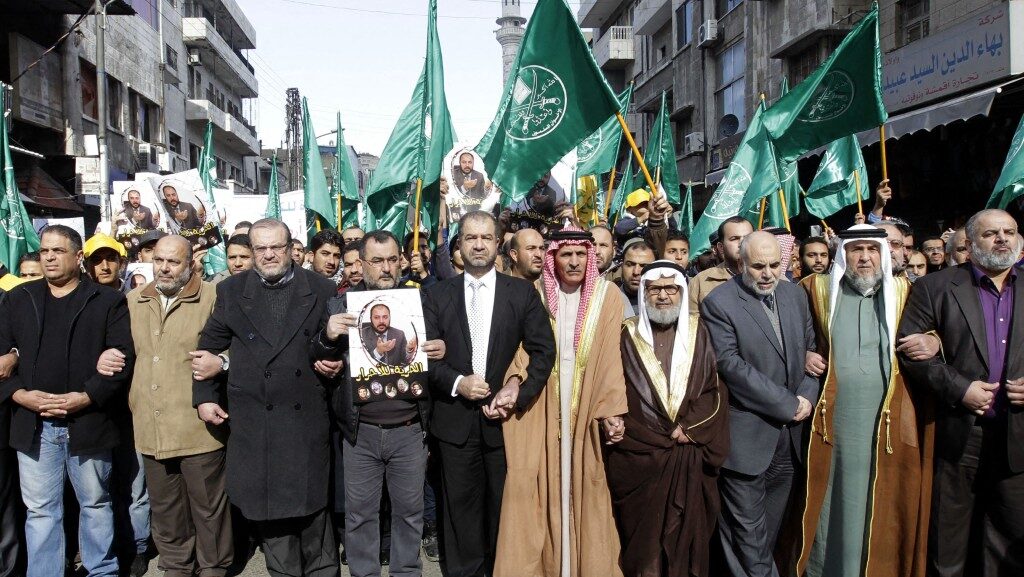
Leaders of the Muslim Brotherhood in Jordan in 2014
KHALIL MAZRAAWI / AFP
European governments are split over how to deal with the Muslim Brotherhood, as fresh warnings point to the Islamist network’s growing influence across the continent.
Attempts to take coordinated action at EU level have stalled, with lawmakers earlier this year rejecting a proposal to begin a formal assessment of whether the group should be designated as a terrorist organisation, citing legal and political concerns.
At the national level, scrutiny of organisations linked to the Brotherhood has increased, but approaches remain uneven across member states, reflecting broader divisions over how to respond.
A March 26 commentary in the Washington Post by Tareq Alotaiba said the group’s influence is declining in the Middle East but expanding in Europe, where authorities have been reluctant to act. The article pointed to Britain, Belgium, Germany, and Sweden as examples of what it described as the movement’s growing presence.
It also referenced a French government report published last year warning of the Brotherhood’s spread in European society, although some academics and civil society groups dismissed its findings as alarmist.
The Muslim Brotherhood, founded in Egypt in 1928, operates through a loose network of affiliated organisations across multiple countries.