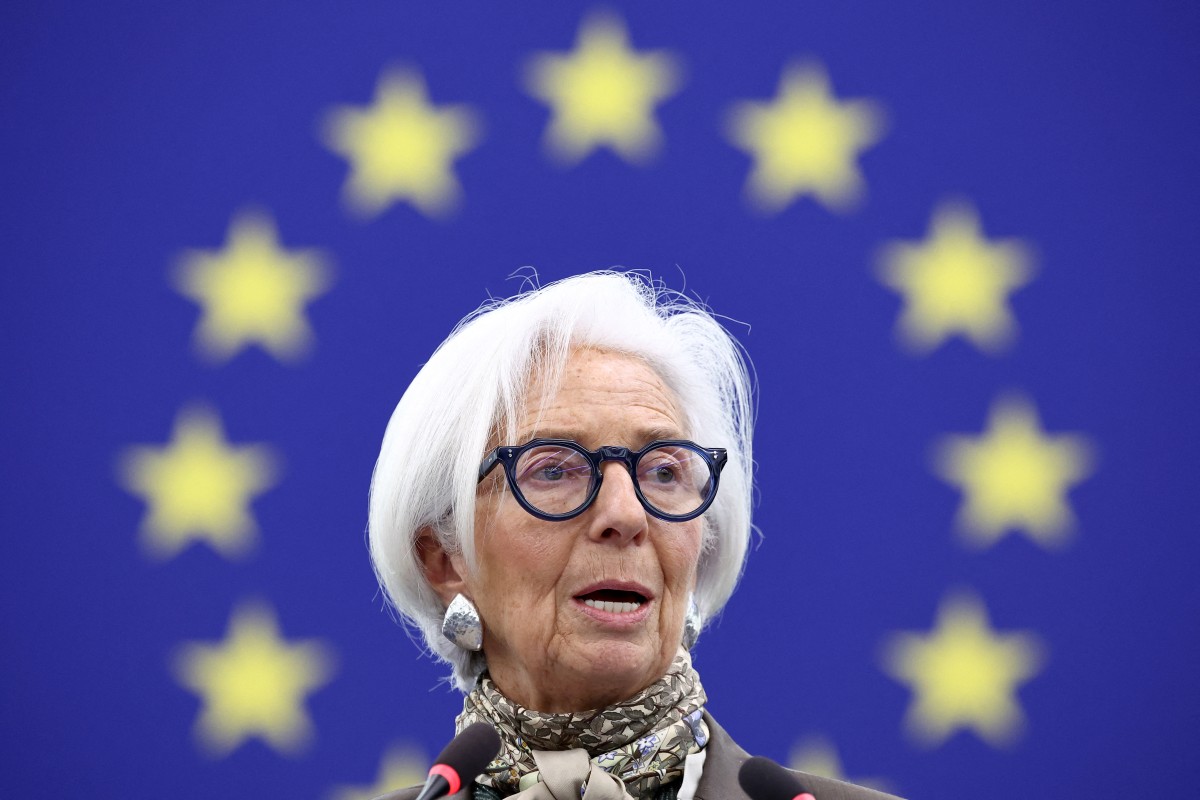
European Central Bank president Christine Lagarde speaks to present the bank’s 2025 Annual Report to the European Parliament, in Strasbourg, eastern France, on February 9, 2026.
FREDERICK FLORIN / AFP
European Union lawmakers on Tuesday, February 10th expressed support for the introduction of a digital euro. They approved two amendments to an annual report on the European Central Bank (ECB), signaling backing for the digital currency initiative.
The digital euro would serve as an electronic version of the euro for the 21-nation currency area, usable free of charge in shops, online, or in person-to-person transactions. One of the approved amendments emphasized that the digital euro is
essential to strengthen EU monetary sovereignty, reduce fragmentation in retail payments, and support the integrity and resilience of the single market.
The vote passed with 438 in favor and 158 against.
First proposed by the ECB, the project has been under consideration for around six years. The EU executive formally introduced the digital euro proposal in June 2023, and while EU member states granted preliminary approval in December, adoption still requires full member state and parliamentary support. Tuesday’s vote does not create law but signals the current stance of EU lawmakers.
Unlike cash, the digital euro would leave a permanent record of every transaction, purchase, and financial activity. Linked directly to a digital account or wallet overseen by the ECB and national authorities, it would eliminate the possibility of operating outside the centralized system. Every payment could be monitored, controlled, or even subject to restrictions or sanctions.
This system could enable measures previously unimaginable, such as limiting spending in specific categories, restricting donations to specific organizations, or implementing “expiration dates” on funds to encourage consumption.
What is promoted as a technological shield against foreign dependence could ultimately evolve into a far‑reaching system of internal monitoring, critics say.