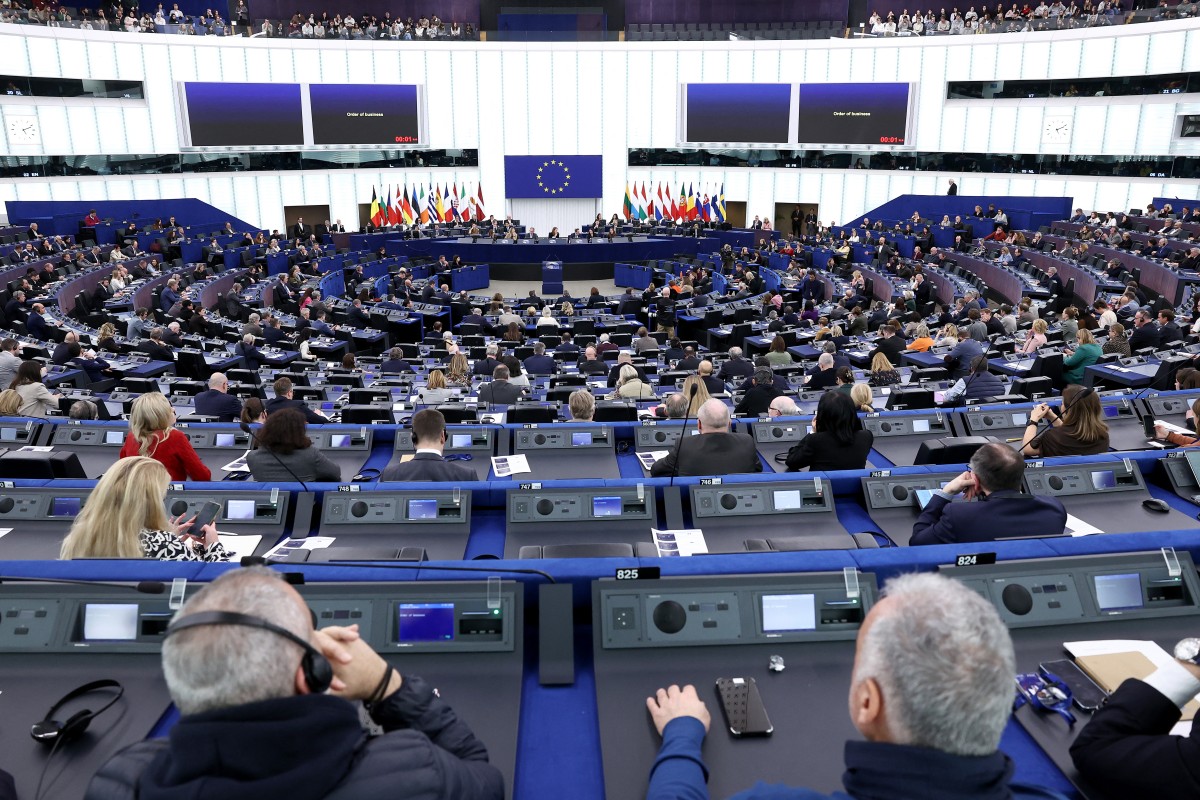
Members of the European Parliament attend a debate during a plenary session in the European Parliament, in Strasbourg, eastern France, on February 9, 2026.
FREDERICK FLORIN / AFP
Tuesday, February 10th saw the European Parliament formally adopt a target by 2040 to reduce greenhouse gas emissions by 90%, compared to levels in 1990.
Lawmakers voted 413 to 226 in favor of the measure, which allows for limited use of carbon credits from projects outside the 27-nation bloc to help reach the target. The deal now awaits final approval from European Union member states.
In a compromise to address concerns from several countries, including Italy, the final text allows up to 5% of emission reductions to be offset via international carbon credits. Further provisions could permit an additional 5% through global carbon markets if necessary.
The agreement also delays by one year, to 2028, the implementation of an emissions trading system for road transport and building heating.
Several voices from Europe’s political right have strongly rejected the “aggressive green ideology,” such as Polish conservative former prime minister Mateusz Morawiecki,, slammed the proposal as “suicide of the European economy.”
Hungary’s Minister for EU Affairs, János Bóka, condemned the proposal as “unrealistic” and “extremely damaging.” He argued that countries like China, India, and the U.S. would never adopt such voluntary commitments—leaving the EU at a competitive disadvantage.