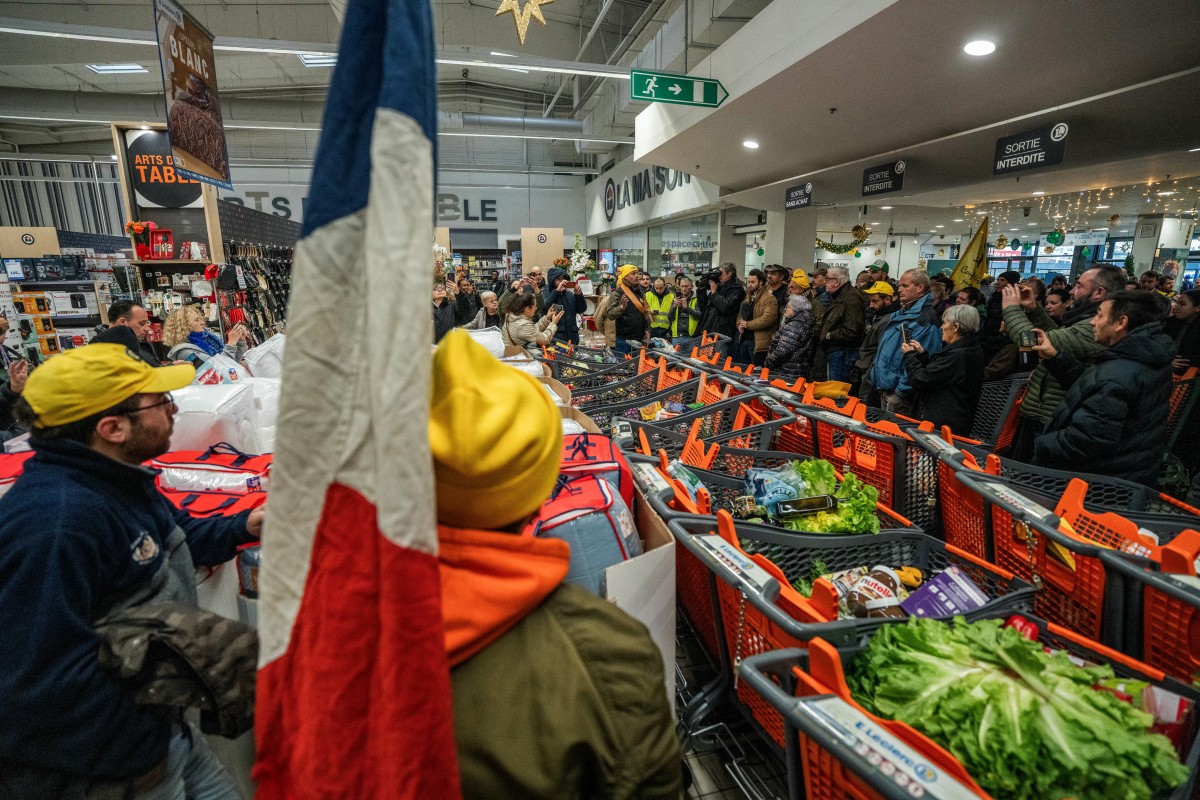
Members of the Confederation Rurale and Confédération Paysanne farmers’ unions fill shopping carts with imported goods during an action to denounce the import of foreign products at a supermarket in Carcassonne, southern France, on December 30, 2025.
IDRISS BIGOU-GILLES /AFP.
Sunday, January 4th saw French Prime Minister Sébastien Lecornu announce that the government would take new steps to protect domestic agriculture—including suspending imports of certain products—following growing opposition to the Mercosur trade agreement.
The measure aims to support farmers who have been protesting over the unfair competition from South American imports and the government’s handling of recent livestock health issues. Lecornu emphasized that the action is intended to safeguard supply chains, protect consumers, and ensure fairness for French farmers:
Avocados, mangos, guavas, citrus fruits, grapes, and apples from South America or elsewhere will no longer be allowed to enter the national territory.
The announcement follows demonstrations in the European Union capital. On December 18th, 2025, Brussels witnessed the latest farmer protest. Convoys of tractors from Belgium, France, and other neighbouring countries blocked major access routes to the European quarter, coinciding with the final European Council meeting of 2025. Protesters decried the EU’s perceived neglect of the agricultural sector, intensified by political pressure to finalize the Mercosur trade agreement.
While Germany and Spain continue to support the Mercosur deal, its French opponents argue that the agreement would allow cheap South American commodities, particularly beef, to enter the EU market without meeting European environmental and food safety standards.