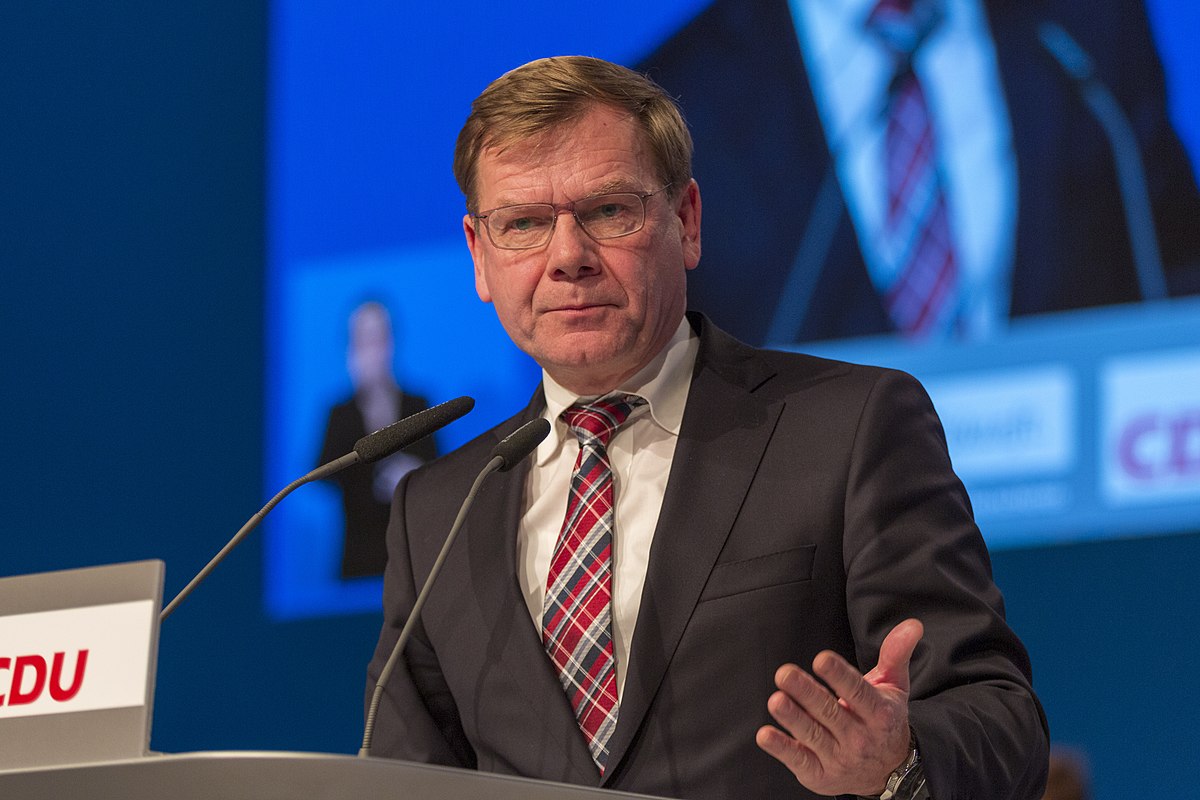
Johann Wadephul (2018).
Foreign Minister Johann Wadephul of Germany appeared alongside his Serbian counterpart in Belgrade, telling reporters that the Balkan nation needs to decide on its future.
Wadephul asked Serbia to make up its mind on whether to
align itself with European positions in foreign and security policy or send mixed signals that are incompatible with the fundamental values of the European Union.
The remarks came at the latest stage of his tour of the Balkans. By “mixed signals,” Wadephul refers to Serbia not sanctioning Russia since its invasion of Ukraine in 2022.
Foreign Minister Marko Đurić said that Serbia remained “unequivocally and firmly committed” to joining the Brussels bloc—including accepting its foreign and security policies—but his country still needed various reforms.
“Serbia has certain national interests in the region and issues related to the decades behind us, which we will strive to resolve constructively,” Đurić said. He also emphasized that negotiations were still ongoing over the future of the Petroleum Industry of Serbia (NIS), and the government would take “all necessary measures” to avoid fuel shortages.
Wadephul, meanwhile, highlighted “repeated instances of violence against peaceful demonstrators,” referring to reports of police brutality against the year-long anti-government protest movement.
Đurić admitted that the past year had been “politically very challenging” but rejected accusations that the government was suppressing protests. He said thousands of demonstrations were held without “casualties” and this summer’s unrest—which resulted in dozens of arrests—and the destruction of ruling party offices, painted a “very poor picture” of politics in his country, asserting “All political actors in the country share the responsibility for overcoming such a situation.”