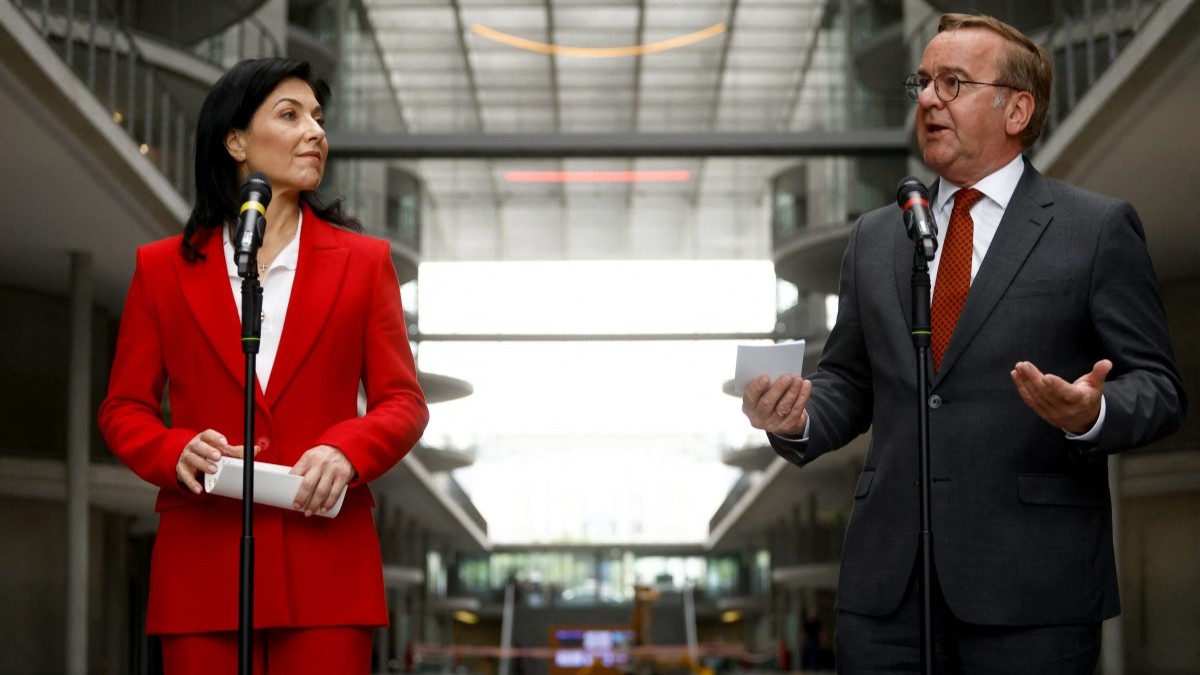
German Economy and Energy Minister Katherina Reiche and German Defence Minister Boris Pistorius address a press conference in Berlin on a new bill that seeks to speed up procurement for the German armed forces, on July 23, 2025.
Odd Andersen / AFP
Germany’s government on Wednesday, July 23rd, approved a draft bill to speed up military procurement as Berlin moves to build up its armed forces in the face of wavering U.S. commitment to European security. Berlin has rushed to rearm itself following the Russia-Ukraine war, accelerating that process after U.S. President Donald Trump urged Europe to take more responsibility for its own defence.
The plans would make it easier for defence firms to receive advance payments from the state to start production sooner, Defence Minister Boris Pistorius told journalists.
Contracts worth less than 443,000 euros ($520,000) will also be exempt from the full procurement process, up from a current limit of 15,000 euros, Pistorius said. The threshold will rise to one million euros for construction projects, he added.
He said the proposed bill represented a “quantum leap” for Germany’s armed forces, unblocking progress on about 12,000 procurement processes. The changes will address the “jumble of regulations” that hindered “quickly building up Germany’s defence readiness”, he added.
Presenting the bill alongside Pistorius, Economy Minister Katherina Reiche said Germany needed to become “technologically and industrially stronger than potential aggressors.”. “That is how we preserve peace,” Reiche added.
Chancellor Friedrich Merz has vowed to build Europe’s “strongest conventional army” to counter a perceived threat from Moscow.