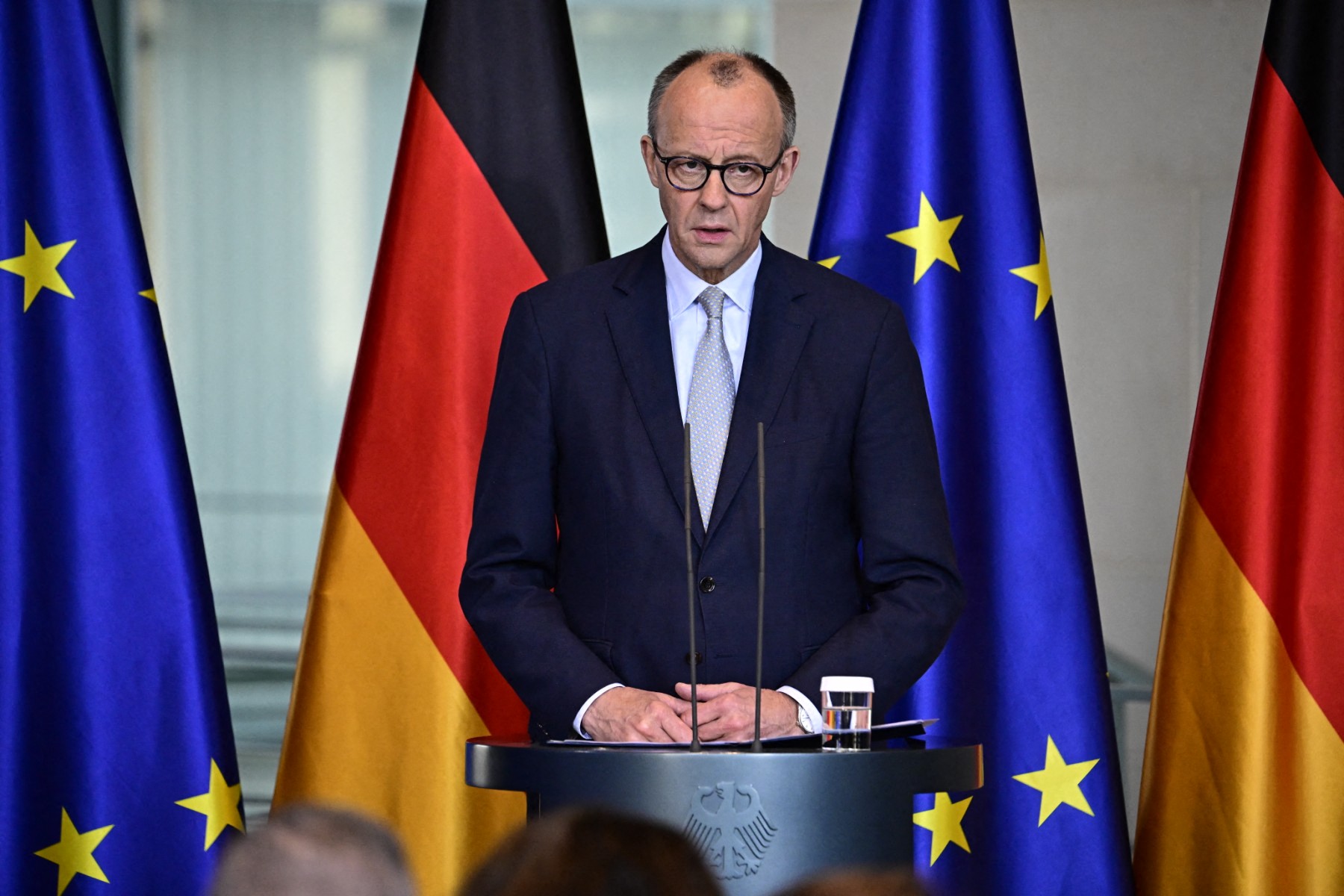
German Chancellor Friedrich Merz addresses a press conference on the situation in the Middle East at the Chancellery in Berlin on March 1, 2026.
Tobias SCHWARZ / AFP
Germany’s leading enterprise associations have issued a stark warning to Chancellor Friedrich Merz, asserting that
Germany as a business location is under pressure like rarely before in post-war history.
In a joint statement following their meeting in Munich, the BDA, BDI, DIHK, and the Zentralverband des Deutschen Handwerks (ZDH) cautioned that after three years of stagnation, the nation’s economic resilience is
eroding and heading towards a tipping point.
The associations criticized recent government initiatives as being “far from sufficient,” demanding that politicians show “significantly more courage to change” and act with much greater urgency.
Their proposed reform agenda focuses on fiscal discipline and labor flexibility, including raising the retirement age, abolishing early retirement, and ruling out hikes in social insurance contributions. To restore competitiveness, they advocate for immediate electricity tax cuts and accelerated corporate tax relief, while firmly rejecting any increased taxation on business assets or inheritance as a “wrong way.”
On the regulatory front, the groups called for a massive reduction in red tape (echoing the previous government’s wish-list), by targeting the removal of one-third of all reporting obligations. They specifically warned that pending legislation such as the Fair Wages Act would only add unnecessary bureaucracy. With GDP growth forecasts recently downgraded to just 1.0%, industry leaders insist that these fundamental changes must be secured by 2026 to prevent a permanent economic decline.