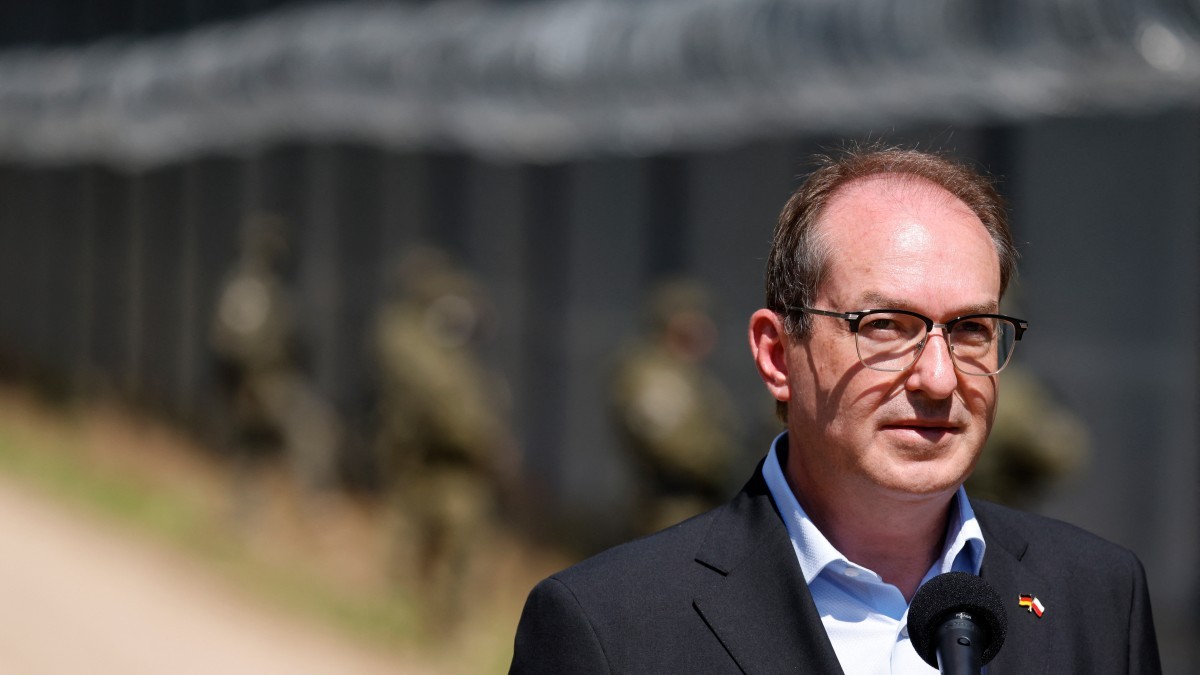
German Interior Minister Alexander Dobrindt
Wojtek Radwansk / AFP
Alexander Dobrindt’s remarks criticizing the simplification of the naturalization process follow reports that Berlin intends to double the number of foreigners granted German citizenship to 40,000 by the end of 2025.
To meet this goal, the German State Immigration Office (LEA) has introduced a new practice: whereas applicants previously had to attend in-person interviews, the procedure is now digital.
Dobrindt argued that the agency should prioritise thoroughly assessing applicants over “meeting quotas.” He stressed the importance of the applicants’ commitment to Germany’s free democratic order and to historical responsibility, in particular the protection of Jewish life. “I find it hard to imagine that this would work without a personal interview,” he said.
Speaking to Bild magazine, LEA head Engelbert Mazanke clarified that the 40,000 target was set by his decision, “because there are 40,000 pending naturalisation cases from Berlin’s districts.”
However, an anonymous employee from the same organisation accused the office of granting passports to candidates who did not meet the criteria for citizenship, such as lacking sufficient German language skills. It was also claimed that the staff were allowed to work from home as an incentive if they met the weekly application quotas.
The LEA’s ambitious naturalisation drive has sparked criticism from Berlin’s CDU mayor Kai Wegner and his fellow conservative politicians, who are calling for tighter immigration control and an end to fast-track citizenship procedures this autumn.
A total of 292,000 foreigners became German citizens 2024, a record since the statistics began in 2000. Of these, 21,802 were naturalised in Berlin. Among the new citizens, 28% were Syrian, 8% Turkish, 5% Iraqi, 4% Russian and 3% Afghan.