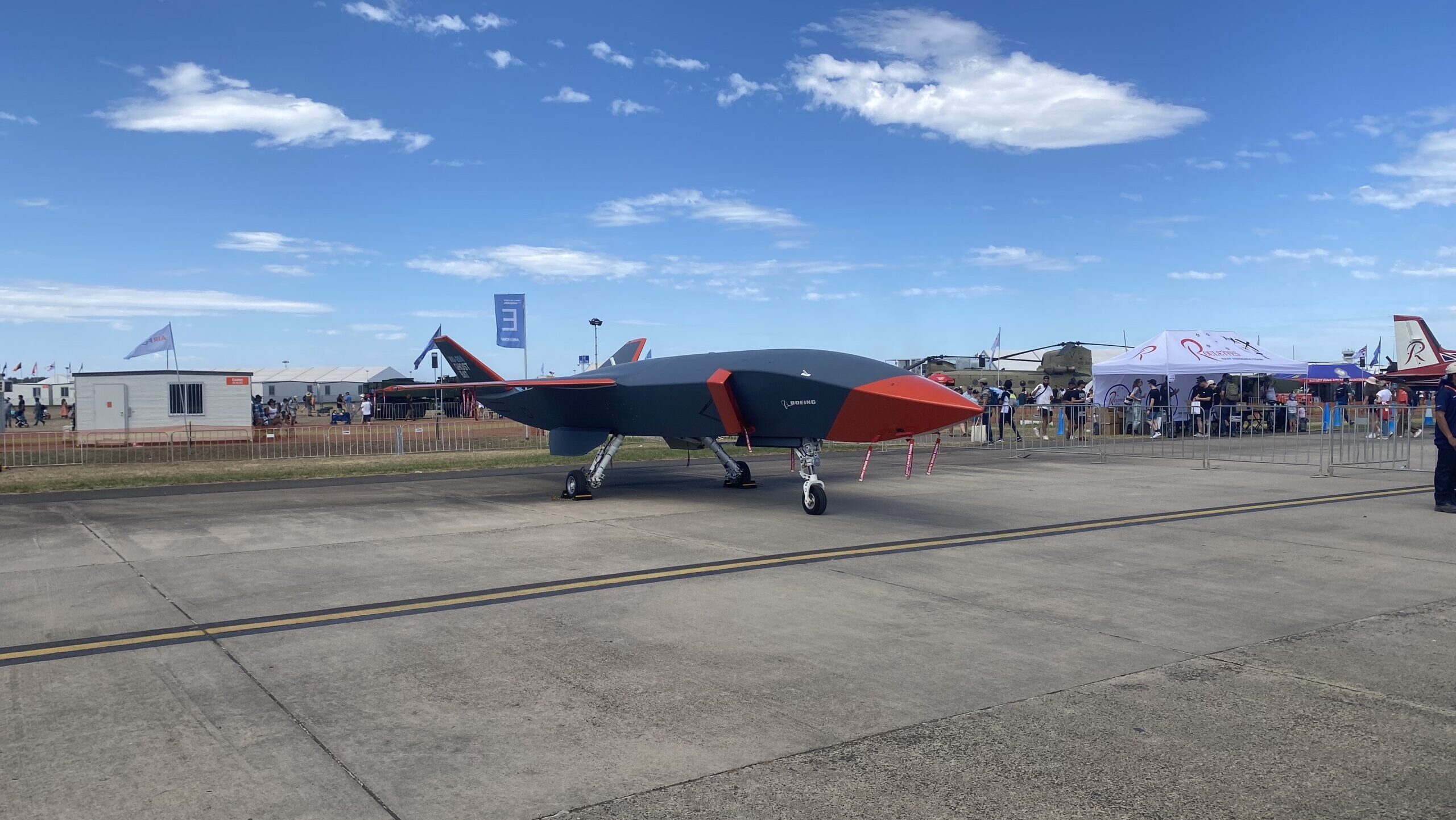
Boeing MQ-28 Ghost Bat at the 2023 Avalon Airshow
HoHo3143, CC BY-SA 4.0, via Wikimedia Commons
Germany is considering Australia’s “Ghost Bat” robot fighter as it looks to select a combat drone to modernise its air force.
Defence Minister Boris Pistorius said on Friday that the system, jointly developed by Boeing Australia and the Royal Australian Air Force, is a “serious competitor” after he inspected it in Queensland, adding that Berlin will “make a decision as soon as possible.”
Germany aims to field hundreds of unmanned fighter jets by 2029 and is weighing German, European, and U.S. projects under its “collaborative combat aircraft” programme.
Australian officials have indicated Canberra would consider transferring the technology to Germany, allowing the Ghost Bat to be manufactured in Europe—similar to an existing arrangement under which German defence firm Rheinmetall produces troop carriers in Brisbane.
Unlike some rival systems, the Ghost Bat is not subject to strict U.S. export controls, potentially simplifying any deal.
Australia has prioritised the development of uncrewed systems—including submarines and fighter jets—driven by its vast coastline, relatively small population, and concerns over China’s growing naval presence in the Indo-Pacific.
The aircraft is designed to operate alongside crewed jets, returning to base after missions rather than acting as a one-way “kamikaze” drone.
Defence analyst Malcolm Davis of the Australian Strategic Policy Institute said the system reflects a shift in air combat doctrine.
“This is a new type of approach to air power where you have a crewed fighter giving directions to four or five Ghost Bats flying in formation with it,” he said.
“It is a robot fighter that is told to go off and patrol that target, shoot that down.”
Pistorius also pointed to lessons from recent conflicts in Iran and Ukraine, highlighting the growing role of low-cost drones.
“We can’t ignore high-end products as well as low-cost products—we need both,” he said.