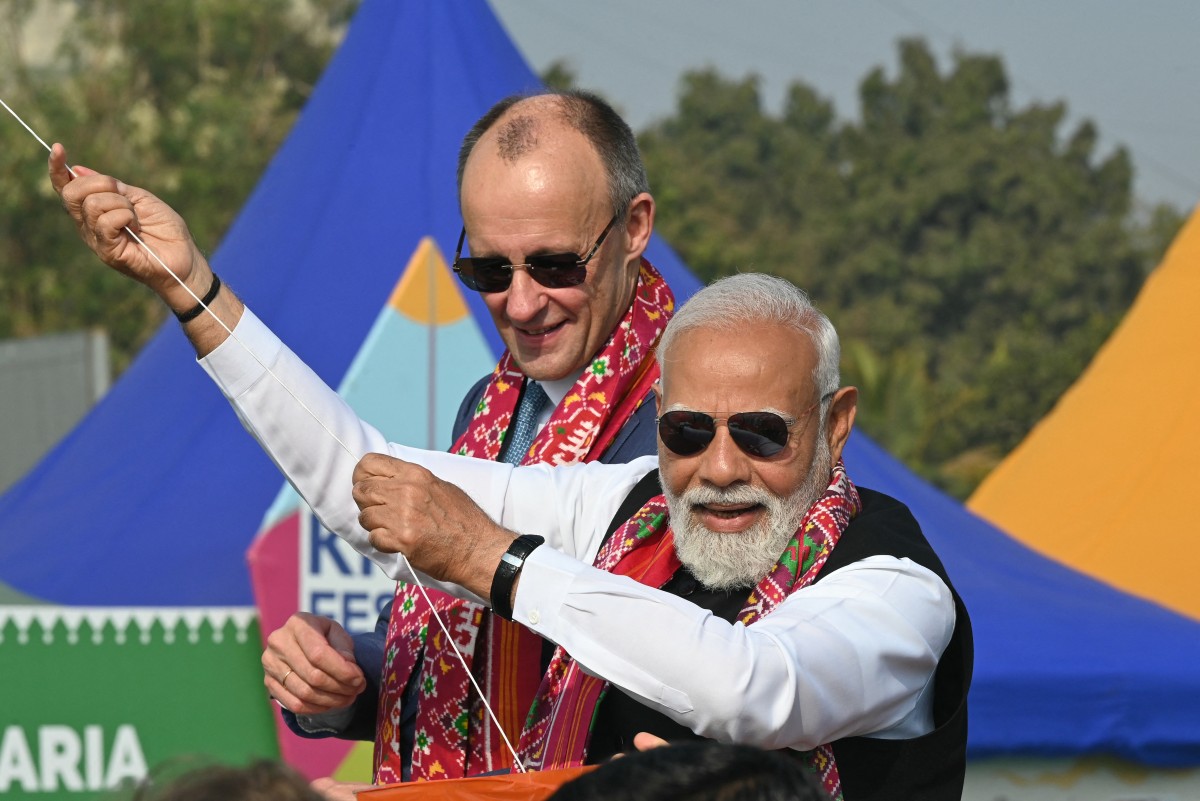
India’s Prime Minister Narendra Modi (R) flies a kite alongside German Chancellor Friedrich Merz during the International Kite Festival in Ahmedabad on January 12, 2026.
SHAMMI MEHRA/AFP.
Germany has allocated a total of €6 million in development aid to support a project aimed at strengthening gender-responsive management of forest ecosystems and agroforestry systems in India. The initiative is managed by the German Society for International Cooperation (GIZ) GmbH.
The project, which runs until August 2028, is structured around three main pillars:
CDU chancellor Friedrich Merz visited India to further strengthen bilateral relations and economic ties with the country, which has a population of 1.5 billion.
At the same time, domestic debates over public funding persist: despite earlier promises by the CDU/CSU government to limit support for certain NGOs, the federal budget continues to fund programs linked to left-leaning organizations and civil society projects. For instance, the Federal Ministry for Family Affairs allocated €182 million this year to the “Living Democracy” program, supporting organizations such as the Amadeu Antonio Foundation and the leftist online platform Correctiv.