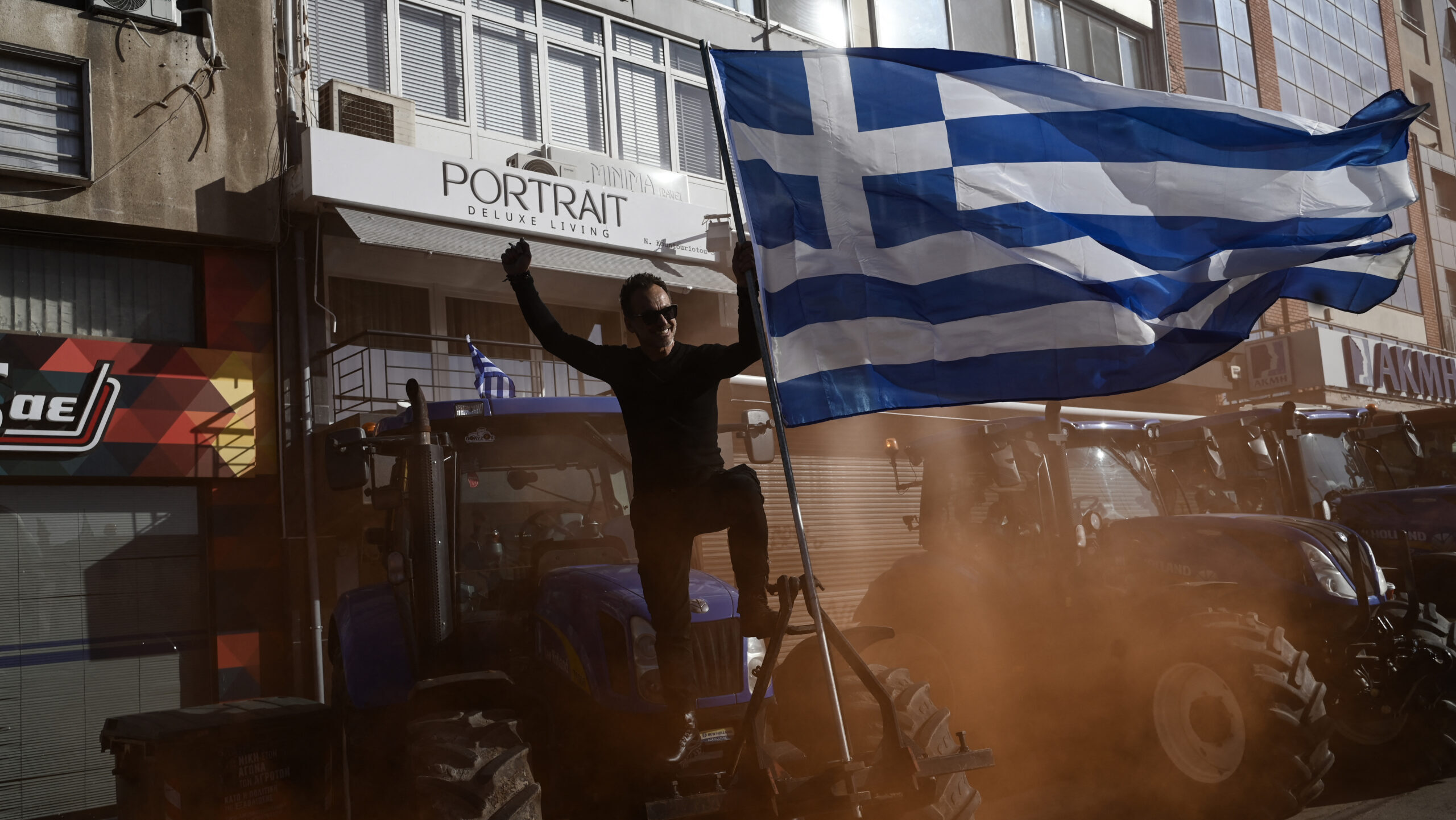
A farmer holds a Greek national flag on a tractor during a protest, blocking the port of Thessaloniki on December 12, 2025.
Sakis Mitrolidis / AFP
Greek authorities are bracing for an escalation in nationwide farmer protests after talks broke down over delayed subsidies, rising costs, and mounting financial pressure on the agricultural sector.
Government spokesman Pavlos Marinakis said on Thursday that officials would move to prevent farmers from continuing to block major transport routes, warning that the state would “not allow the country to be cut in two.” Speaking to Mega TV, Marinakis insisted there was “no room for additional measures” beyond proposals already on the table.
Farmers, however, rejected the government’s latest offer—which included limited relief on electricity and fuel costs—and announced plans to intensify roadblocks for at least two days. The protest movement, which began in late November, has seen thousands of tractors intermittently blocking motorways and border crossings across the country.
While farmers temporarily eased disruptions over the Christmas holidays, anger has continued to build in rural areas, driven above all by long delays in subsidy payments. Those delays stem from an investigation into fraudulent claims for European Union agricultural aid worth millions of euros, a scandal that has left legitimate farmers waiting months for funds they rely on to survive.
The investigation was launched last year by the European Public Prosecutor’s Office, prompting authorities to suspend scheduled payments while cases are reviewed.
Beyond subsidy delays, farmers say they are being squeezed by falling produce prices, soaring energy costs, and increasingly harsh climate conditions. Many are also reeling from the forced culling of more than 450,000 sheep and goats during a recent pox outbreak, a blow that has devastated livestock farmers in several regions.
Tensions have been escalating for weeks. Farmers rejected an invitation last month to talks with Prime Minister Kyriakos Mitsotakis, accusing the government of failing to grasp the scale of the crisis facing the sector.
Government officials, for their part, have accused opposition parties of encouraging farmers to harden their stance and walk away from negotiations. Farmers deny acting at anyone’s behest, saying their demands reflect basic economic survival rather than politics.