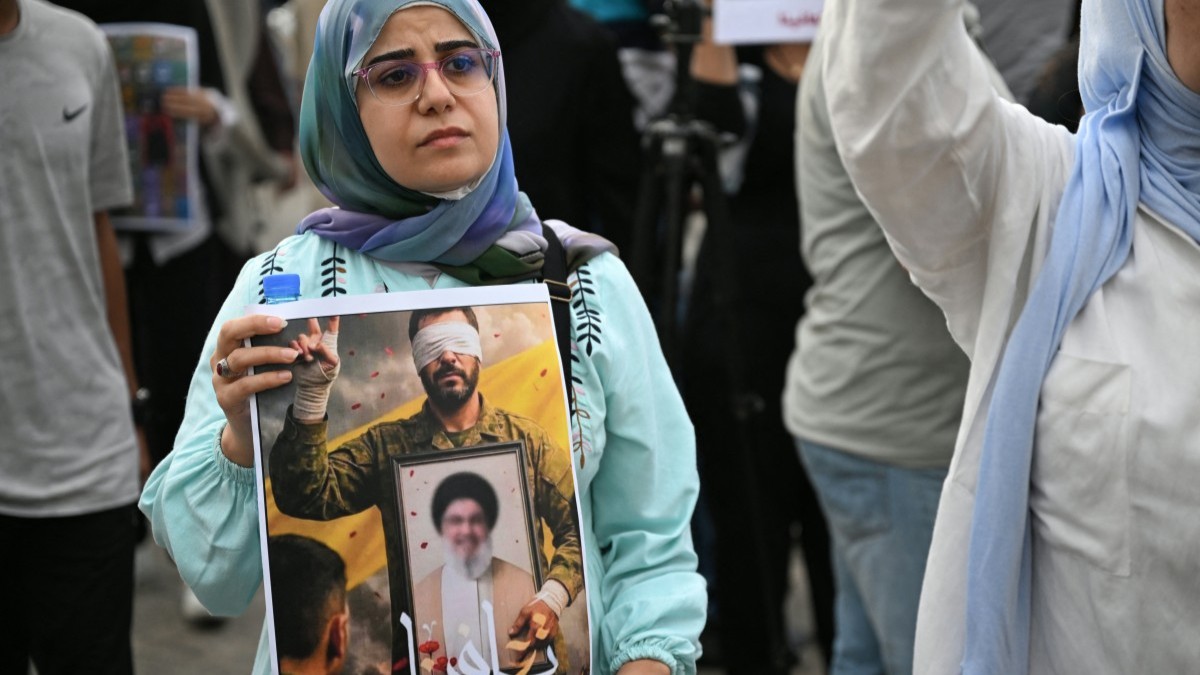
A supporter of Hezbollah carries a poster during a gathering in Beirut on September 17, 2025, to mark the one year anniversary of the Israeli operation in Lebanon that detonated hundreds of pagers and walkie-talkies used by Hezbollah.
Joseph Eid / AFP
One year after its war with Israel, Iran’s terror proxy Hezbollah is clinging to its finances even as pressure mounts to dismantle its militia and choke off its funding networks.
The killing of longtime leader Hassan Nasrallah in an Israeli strike on September 27th last year dealt a heavy blow to the group’s leadership. Yet under his successor Naim Qassem, Hezbollah has so far kept its command structure intact—thanks largely to continued cash infusions from Iran.
U.S. envoy Tom Barrack revealed the terror organisation has been raking in “$60 million a month” since a November ceasefire. Fighters themselves admit the money is still flowing: AFP spoke to several Hezbollah members who confirmed the group has not missed a single payment.
Its fighters enjoy monthly salaries of $500 to $700—far above Lebanon’s official minimum wage of $312—while families of Hezbollah “martyrs” still get stipends covering rent and other essentials. Researcher Joseph Daher notes that through its schools, hospitals, and charities, Hezbollah has made itself “one of the largest employers in Lebanon,” tightening its grip on desperate communities.
But the noose is tightening. Authorities have ramped up scrutiny of cash entering Lebanon, particularly from Iran, while the central bank has blacklisted Al-Qard al-Hassan, a Hezbollah-linked financial institution.
Washington accuses Hezbollah of financing itself through global criminal networks—smuggling, drug trafficking, and even African “blood diamonds.” Western and Gulf states also point to its alleged role in the captagon trade, which the group denies.
Daher concedes the group is “definitely under political and economic pressure,” yet admits it is unclear how much damage the financial crackdown has inflicted—an ambiguity that underlines both Hezbollah’s resilience and the urgency of cutting off its lifelines for good.