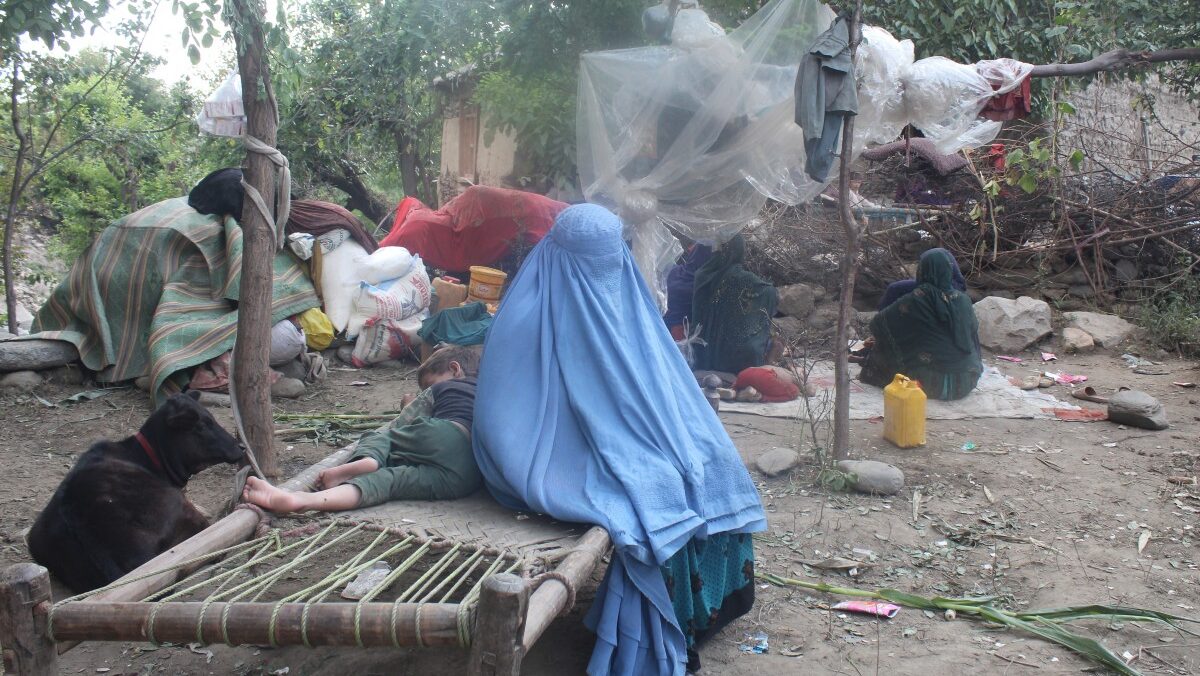
An Afghan womean and children sit in a makeshift camp in the aftermath of an earthquake, in the Nurgal district of Kunar Province, on September 4, 2025.
Stringer / AFP
On Monday, September 1, a magnitude‑6.0 earthquake struck eastern Afghanistan, followed by a 5.2 aftershock. The hardest hit areas were Nangarhar and Kunar provinces. Taliban sources report more than 1,400 people killed and 3,120 injured. The Red Crescent estimates over 8,000 homes were destroyed.
Many women remain trapped under rubble, yet rescue efforts are hampered by laws preventing men from touching them. Only their husband, father, or brother may assist. Freed women often face denial of medical care and dead women’s bodies are removed from the debris by grasping their clothing to avoid skin contact.
In response to the earthquake, the European Commission has dispatched €1 million in emergency aid and 130 tonnes of relief supplies—including tents, clothing, medicines, and water‑purification kits—with two humanitarian flights heading to Kabul. Crisis Management Commissioner Hadja Lahbib declared
This aid package is urgently needed to help those affected.
Between 2015 and 2025 the EU allocated €125 million to NGOs in Iran for Afghan migrant support. Even prior to the earthquake, Afghanistan faced a humanitarian crisis exacerbated by decades of conflict, and political instability, with nearly 23 million people in urgent need of assistance.