

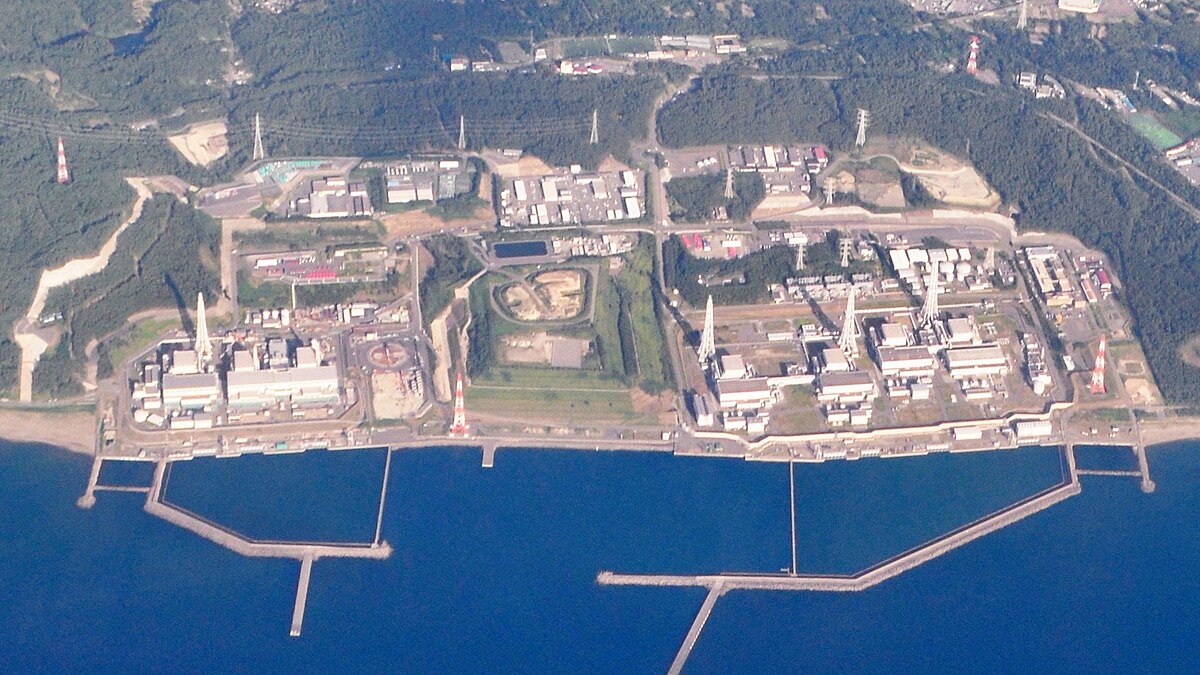
Aerial view of the Kashiwazaki-Kariwa Nuclear Power Plant, seen from the seaside in 2019.
皓月旗/Bright Moon Flag.
Japan’s Niigata regional assembly on Monday, December 22nd, backed a plan to restart the Kashiwazaki-Kariwa nuclear plant—the world’s largest—taking it a step closer to resumption for the first time since the 2011 Fukushima disaster. The approval follows last month’s endorsement of the restart by Niigata Governor Hideyo Hanazumi.
The plant, which was taken offline after the earthquake and tsunami triggered meltdowns at Fukushima, is part of Japan’s broader strategy to reduce reliance on imported fossil fuels, meet rising energy demands and achieve carbon neutrality by 2050.
Tokyo Electric Power (TEPCO) is expected to submit a formal request to Japan’s Nuclear Regulation Authority before the end of the year. One of the seven reactors at the site could be restarted around January 20, pending final approval.
Prime Minister Sanae Takaichi has expressed support for nuclear energy, which previously supplied about a third of Japan’s electricity. The restart is seen as a key step in reducing fossil fuel use, which currently accounts for nearly 70% of the country’s power generation.




.jpg)