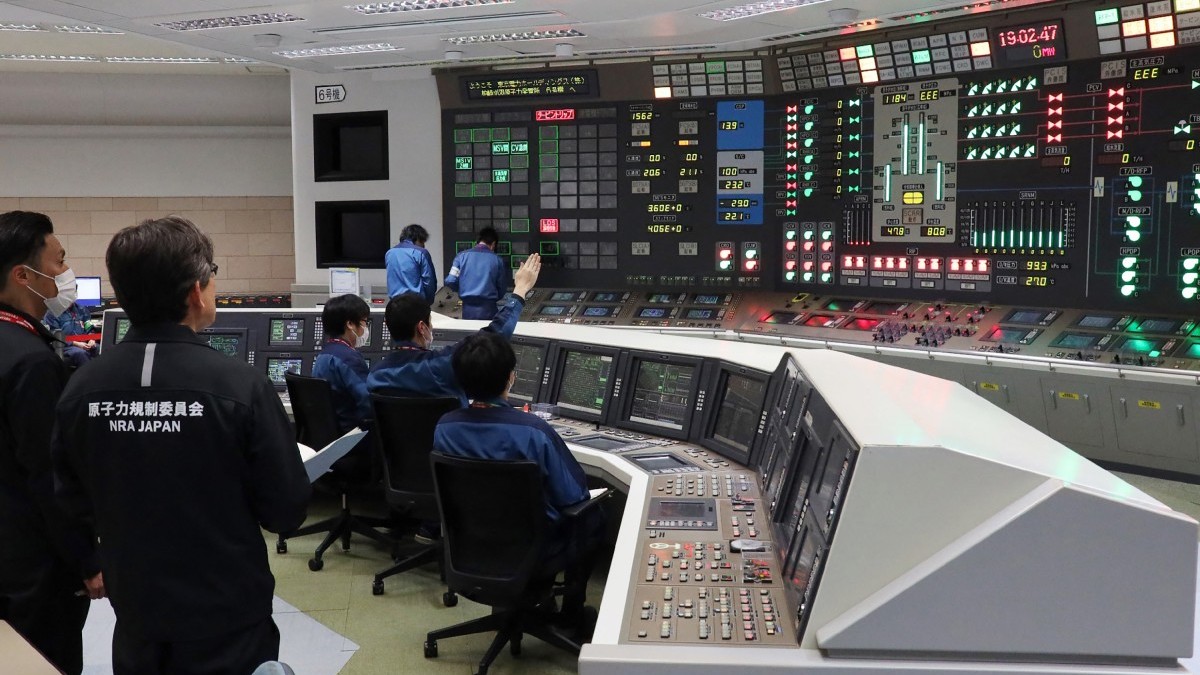
The reactor startup procedure for Unit 6 at the Tokyo Electric Power Company Kashiwazaki-Kariwa Nuclear Power Plant’s central control room in Kariwa Village, Niigata Prefecture on January 21, 2026
STR / JAPAN POOL / JIJI PRESS / AFP
Japan restarted the world’s largest nuclear power plant on Wednesday, January 21st for the first time since the 2011 Fukushima disaster, its operator Tokyo Electric Power Company (TEPCO) announced. The Kashiwazaki-Kariwa plant, located in Niigata prefecture along the Sea of Japan, resumed operation of one of its seven reactors today.
The restart comes after approval from the regional governor last month, despite public opposition. According to a survey conducted in September, about 60% of local residents oppose the resumption, while 37% support it. On Tuesday, a small group of protesters demonstrated near the plant, citing safety risks.
TEPCO stated it would “proceed with careful verification of each plant facility’s integrity” and address any issues transparently. The company also operates the Fukushima Daiichi plant, which is still being decommissioned following the 2011 triple meltdown triggered by an earthquake and tsunami.
Kashiwazaki-Kariwa is the largest nuclear facility in the world by potential capacity, although only one reactor has been restarted. Japan, with limited domestic energy resources, aims to revive nuclear power to reduce fossil fuel reliance, achieve carbon neutrality by 2050, and meet growing energy demands driven by artificial intelligence.
Prime Minister Sanae Takaichi has voiced support for nuclear energy as a key part of the country’s energy strategy. Fourteen reactors across western and southern Japan have resumed operations since the post-Fukushima shutdown, with 13 currently running.
UPDATE: On Thursday, January 22 it was announced that the relaunch was no longer going ahead as scheduled. Operator TEPCO said that “an alarm from the monitoring system… sounded during the reactor startup procedures,” causing it to suspend operations.