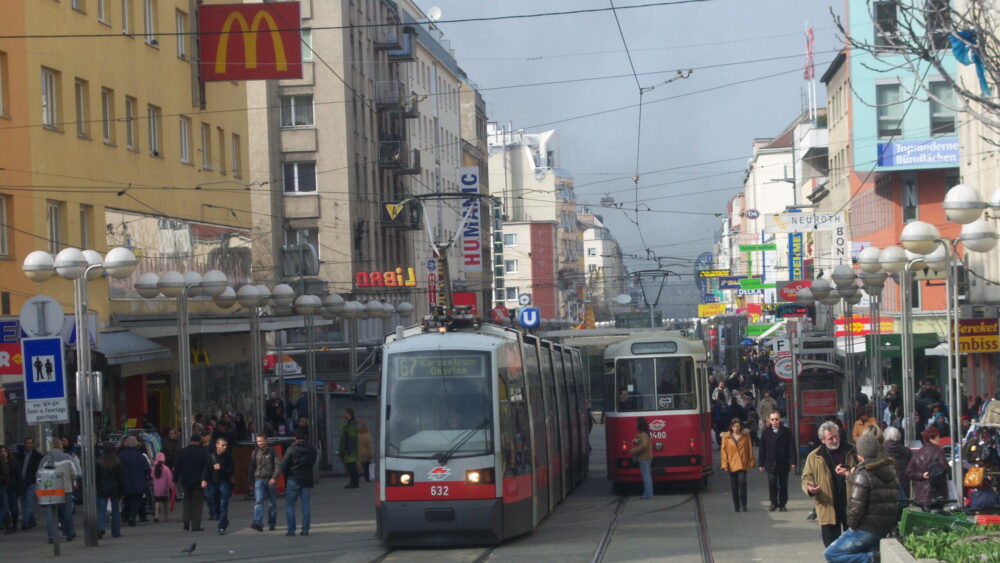
Reumannplatz, Vienna
User:My Friend, CC BY-SA 3.0, via Wikimedia Commons
Violent knife attacks in Vienna’s Favoriten district have sparked outrage in Austria, but the interior minister has defended his response.
On June 16th, a man was robbed of his wallet at Reumannplatz. Two perpetrators stabbed the victim with a knife and seriously injured him. Two courageous men who tried to intervene were also injured. Several attackers, aged between 16 and 24 and identified as Syrian nationals, have since been named in connection with the case.
Similar incidents include two separate assaults on June 20th at Keplerplatz and Senefeldergasse, which left three men—aged 19, 26, and 38—wounded. One of the attackers was a 19-year-old Syrian.
At the beginning of June, a 33-year-old Syrian was slightly injured, and another Syrian suffered a stab in the stomach in May.
Despite the district’s established weapons ban zone, in place since March 2024, such violent crime has persisted, prompting growing alarm.
On Tuesday, July 15th, Interior Minister Gerhard Karner said the weapons ban zone was “an effective measure,” because since its enactment, authorities have confiscated a total of 187 weapons—131 of which were knives.
But the fact remains that 2,596 crimes involving knives were registered in Austria last year—a record high. In Vienna alone, the number was 956, which is almost three knife attacks per day.
Of the 2,471 suspects, 56% were foreigners. But the ratio of migrants may even be higher as Austrian nationals of a migrant background are not included in the statistic.
While the number of minors involved in crime has decreased nationally by 5%, in Vienna it has increased by 9%.
The problem is particularly evident among Syrians and Afghans: from 2020 to 2024, the number of suspects under the age of 14 from Syria increased by seven times, the number of Afghans by five times.